
Beautiful Plants For Your Interior
Beautiful Plants For Your Interior
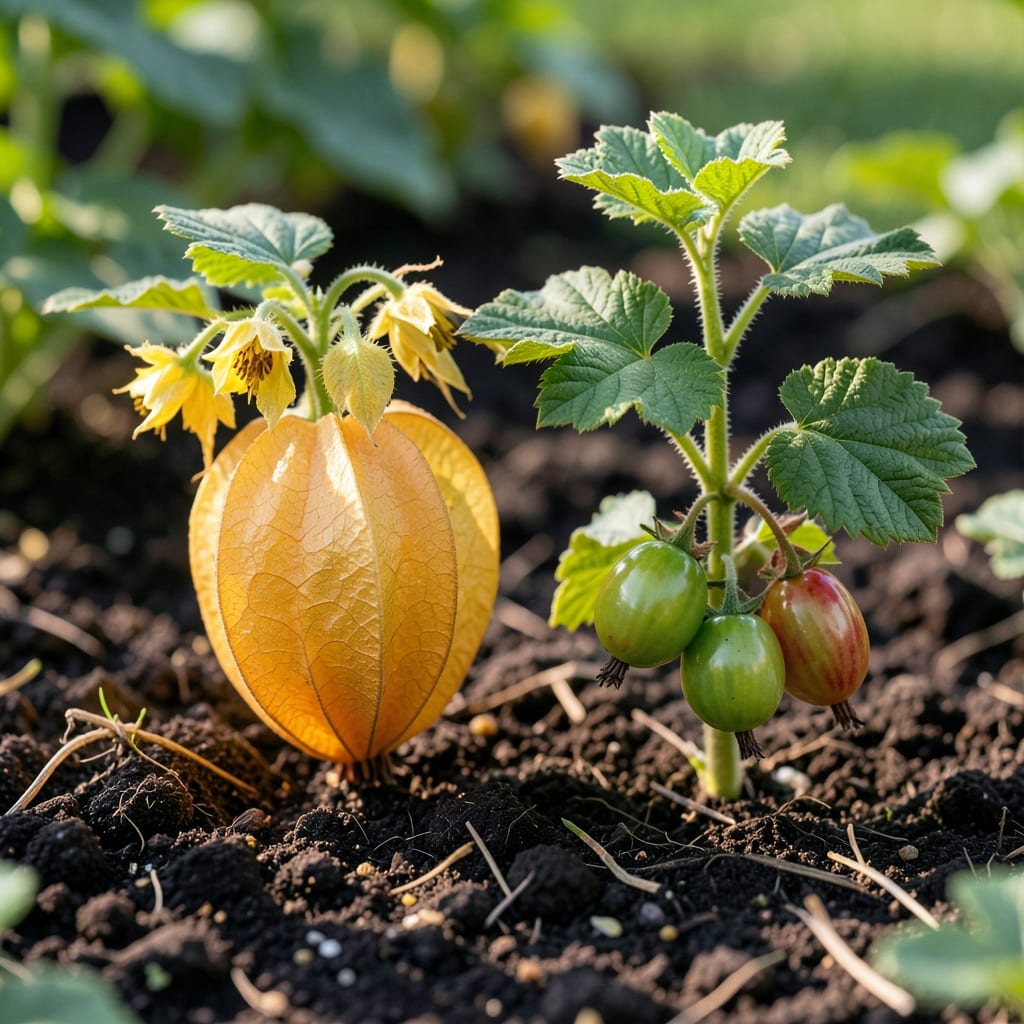
No, golden berries and gooseberries are different fruits. Golden berries (Physalis peruviana) are tropical, sweet-tart fruits in the nightshade family, while gooseberries (Ribes uva-crispa) are tart berries from the currant family.
I often get asked about this mix-up, and the confusion usually stems from their similar size and berry-like appearance. What sets them apart goes beyond taste—golden berries thrive in warm climates with paper-like husks, while gooseberries prefer cooler regions and grow on thorny bushes. 🔥
From a culinary standpoint, their uses differ significantly too, with golden berries shining in desserts and gooseberries favoring jams and pies.
💡 In This Article
Golden berries belong to the Solanaceae (nightshade) family, sharing lineage with tomatoes and eggplants. Their scientific name, Physalis peruviana, reveals their Peruvian origins. The plant grows as a sprawling bush with distinctive lantern-like husks that encase each fruit, protecting it from pests and harsh sunlight in its native tropical Andes. 🔥
Gooseberries, scientifically known as Ribes uva-crispa, are part of the Grossulariaceae family, which includes currants. These plants thrive as deciduous shrubs in temperate climates, originally hailing from Europe and parts of Asia. Their berries grow directly on the bush without protective husks, developing a waxy bloom that gives them a slightly dull appearance.
The growth habits differ dramatically too. Golden berries require warm climates (USDA zones 8-11) and well-draining soil, often growing as perennials in frost-free regions. Gooseberries prefer cooler temperatures (USDA zones 3-8) and can tolerate partial shade, with some varieties producing thorny stems for protection. ✨
These botanical distinctions extend to the fruits’ internal structures as well. Golden berries contain numerous tiny seeds embedded in a jelly-like pith, while gooseberries have a translucent center with seeds arranged in a star pattern when cut crosswise. This structural difference affects how they’re used in cooking, with gooseberries often requiring straining for smooth preparations.
Even their pollination processes vary. Golden berries are typically self-pollinating, while many gooseberry varieties need cross-pollination between different plants to set fruit. This makes gooseberries more dependent on insect activity in the garden, whereas golden berries can produce consistently with just one plant. 💫
Golden berries offer a unique sweet-tart flavor often compared to pineapple or mango. Gooseberries are distinctly more tart, often requiring added sugar for eating fresh.
Not directly. Golden berries work well raw or in light desserts, while gooseberries need cooking to balance their tartness. Their textures differ too—golden berries are juicier.
Golden berries thrive in containers and warm climates with minimal care. Gooseberries need cooler temperatures and more space but tolerate partial shade. Both require well-draining soil.
Both are rich in vitamin C, but golden berries contain more vitamin A and iron. Gooseberries have slightly more fiber. Their calorie counts are nearly identical.