
Beautiful Plants For Your Interior
Beautiful Plants For Your Interior
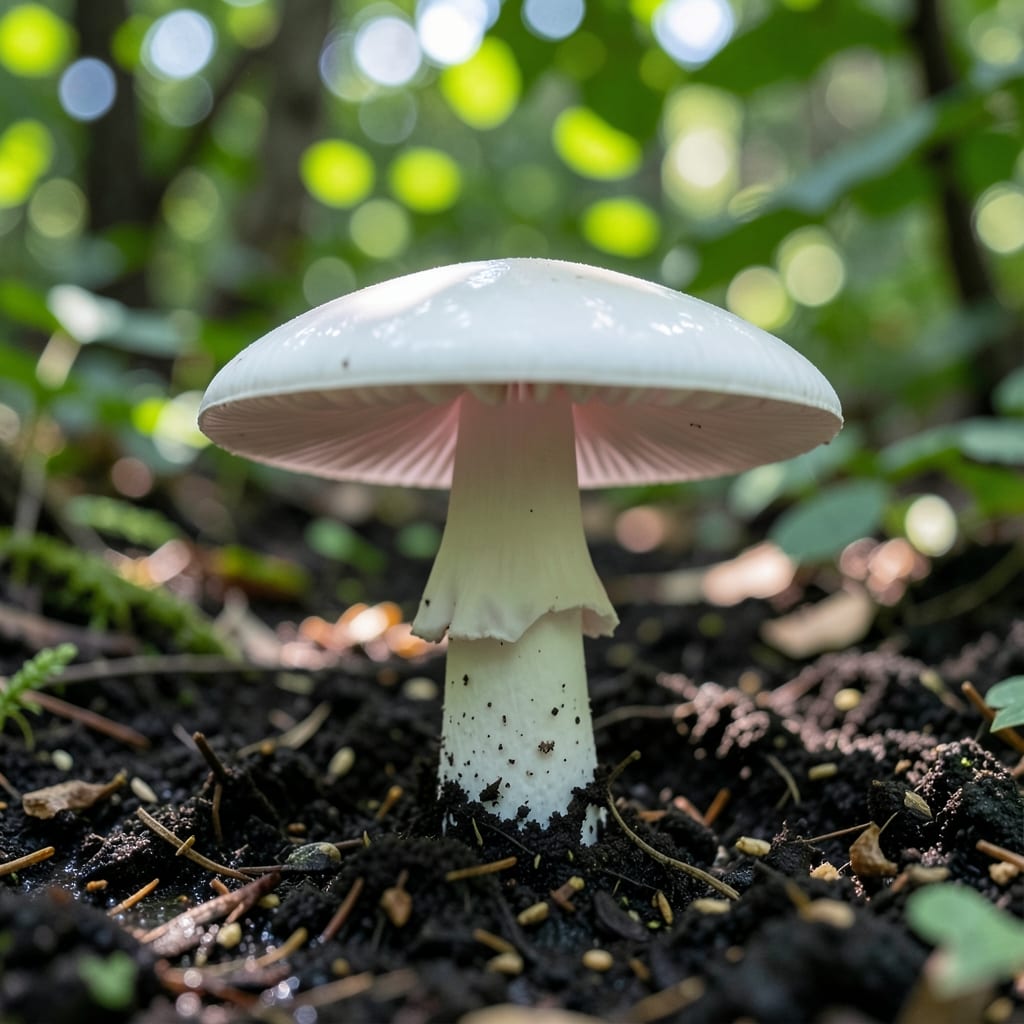
Some garden mushrooms are highly poisonous, while others are safe. Never eat wild mushrooms without expert identification, as toxic varieties can cause severe illness or death.
I’ve seen deadly varieties like the destroying angel that look harmless but pack lethal toxins. Even experienced foragers rely on spore prints and microscopic analysis to confirm safety. The risk isn’t worth it—when in doubt, remove them with gloves and dispose of them in a sealed bag. ✨
Many edible types have lookalikes that are toxic, so visual identification alone isn’t reliable. 💫
💡 In This Article
The destroying angel (Amanita bisporigera) is one of the deadliest, with a pure white cap, stem, and gills that can fool even seasoned foragers. Its smooth, egg-like base (volva) is a key warning sign. Another highly toxic variety, the death cap (Amanita phalloides), has a greenish-yellow hue and a membrane-like ring on its stem.
These mushrooms contain amatoxins, which inhibit RNA polymerase II, a critical enzyme for cell function. Even 0.1 mg per kg of body weight can be fatal, with symptoms appearing 6-24 hours after ingestion when liver and kidney damage has already begun. The delay often leads people to underestimate the severity. ✨
Edible mushrooms like morels or oyster mushrooms have distinct features: morels have a honeycomb cap, while oyster mushrooms grow in shelf-like clusters on wood. However, the false morel (Gyromitra esculenta) mimics true morels but contains gyromitrin, which releases monomethylhydrazine—a compound used in rocket fuel—when metabolized. 🔥
Spore color is another clue. Toxic species often produce white or brown spores, while many edible varieties have pink, black, or purple spores. Yet, this isn’t foolproof: the deadly funeral bell (Galerina marginata) has rusty-brown spores, similar to some safe species. Always use multiple identification methods.
When in doubt, consult a mycologist or use a field guide with microscopic details. Apps like iNaturalist can help, but they’re not 100% reliable. The safest approach? Assume every wild mushroom is toxic until proven otherwise. 💫
Look for warning signs like a white cap with a smooth base, a membrane-like ring on the stem, or brown spores. Never rely on taste or smell alone—some deadly varieties smell pleasant. When in doubt, assume it’s toxic.
Remove any remaining mushroom fragments from their mouth and contact your vet or the ASPCA Poison Control at 888-426-4435 immediately. Bring a sample of the mushroom in a sealed bag for identification.
Wear disposable gloves to avoid skin contact with potential toxins. Use a trowel to dig up the entire mushroom, including the base, and place it in a paper bag for disposal. Never touch your face or food afterward.
Not all, but many deadly species, like the destroying angel, are white. Without expert identification, it’s impossible to tell. Always treat unknown white mushrooms as toxic.