
Beautiful Plants For Your Interior
Beautiful Plants For Your Interior
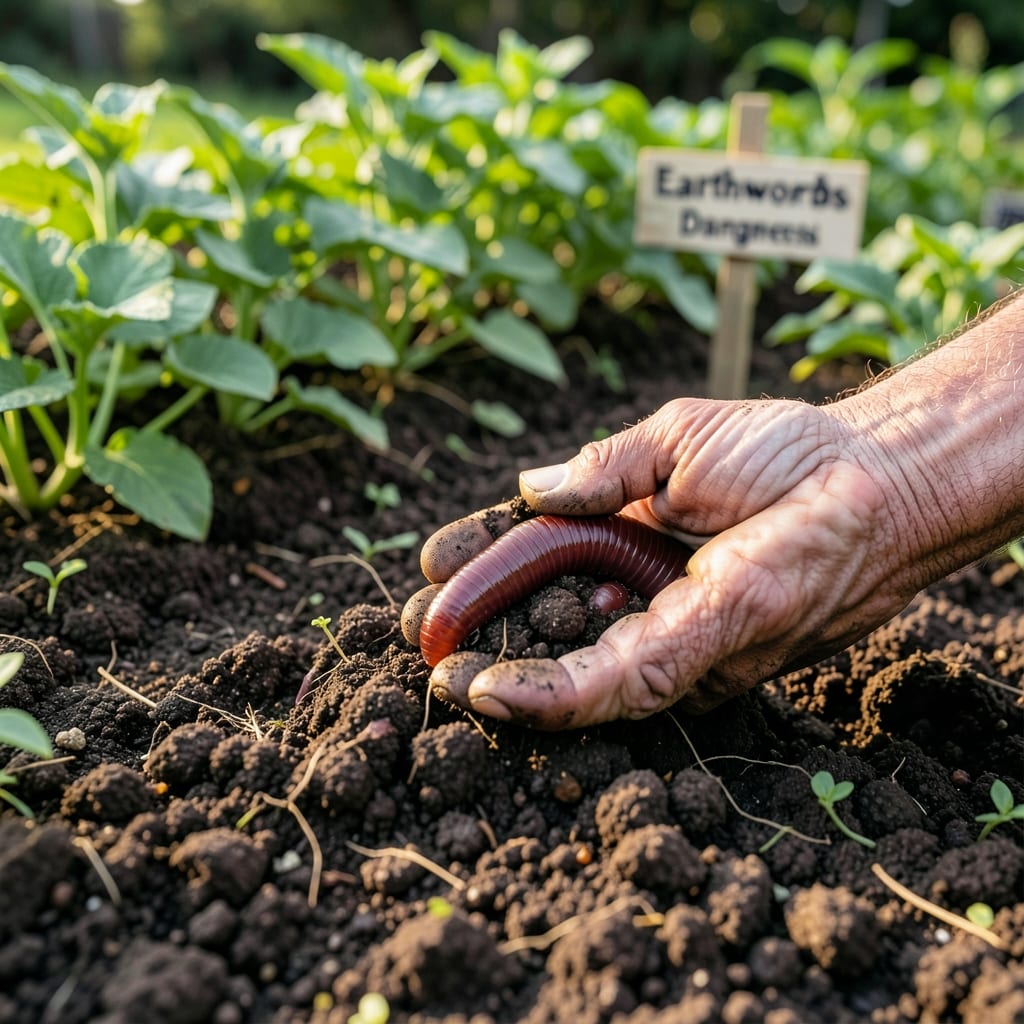
Earthworms are not dangerous to humans or plants. They are beneficial garden allies that improve soil health, aerate the earth, and break down organic matter.
I’ve seen firsthand how these wiggly workers transform compacted soil into rich, fertile ground. Their tunnels create pathways for water and air, while their castings add vital nutrients that plants crave. 🌱 In fact, gardens with healthy earthworm populations often need less fertilizer and produce more vigorous growth. They’re nature’s original soil engineers!
💡 In This Article
These subterranean engineers create intricate tunnel networks as they burrow, which dramatically improves soil aeration. A single earthworm can move up to 36 tons of soil per acre annually, creating channels that allow oxygen to reach plant roots 6-8 inches deeper than in compacted ground. This process also enhances water infiltration by 4-10 times. ⚡
Earthworms consume organic matter—like leaves and dead roots—at a rate of up to half their body weight daily. Their digestive systems break this down into nutrient-rich castings, which contain 5-11 times more nitrogen, phosphorus, and potassium than the surrounding soil. These castings also contain beneficial microbes that form symbiotic relationships with plant roots. ✨
The mucus they secrete acts as a natural glue that binds soil particles into stable aggregates. This improves soil structure, preventing erosion and creating ideal conditions for root growth. Studies show earthworm activity can increase crop yields by 25-30% without additional fertilizers.
Gardens with active populations often see faster seedling emergence and more robust plant development. 🌟
Their movement also brings subsoil closer to the surface, mixing mineral nutrients with organic matter. This natural tilling action saves gardeners hours of manual labor while creating a more fertile topsoil layer. The tunnels they create become highways for plant roots to explore, often leading to 40% deeper root penetration in worm-worked soils. 💫
From a biological standpoint, earthworms are ecosystem facilitators. They host nitrogen-fixing bacteria in their guts, which convert atmospheric nitrogen into plant-available forms. This relationship means a handful of healthy soil can contain thousands of earthworms, each contributing to a complex nutrient cycling system that benefits the entire garden ecosystem. 🔥
No, they have no teeth or stingers. Their mouths are too small to bite humans, and they lack any defensive mechanisms that could harm you. They’re completely harmless to touch.
While unpleasant, it’s not dangerous. Earthworms are non-toxic and have been used in some traditional medicines. Just rinse your mouth and drink water to clear any residue.
They don’t transmit human diseases. However, always wash your hands after handling them or working in soil, as you would with any gardening activity.
Quite the opposite! They improve soil structure and nutrient availability. The only “damage” might be minor root disturbance, which actually stimulates healthier growth.
Invasive jumping worms can disrupt ecosystems, but common garden earthworms are beneficial. Check with local agricultural extensions if you suspect invasive species.