
Beautiful Plants For Your Interior
Beautiful Plants For Your Interior
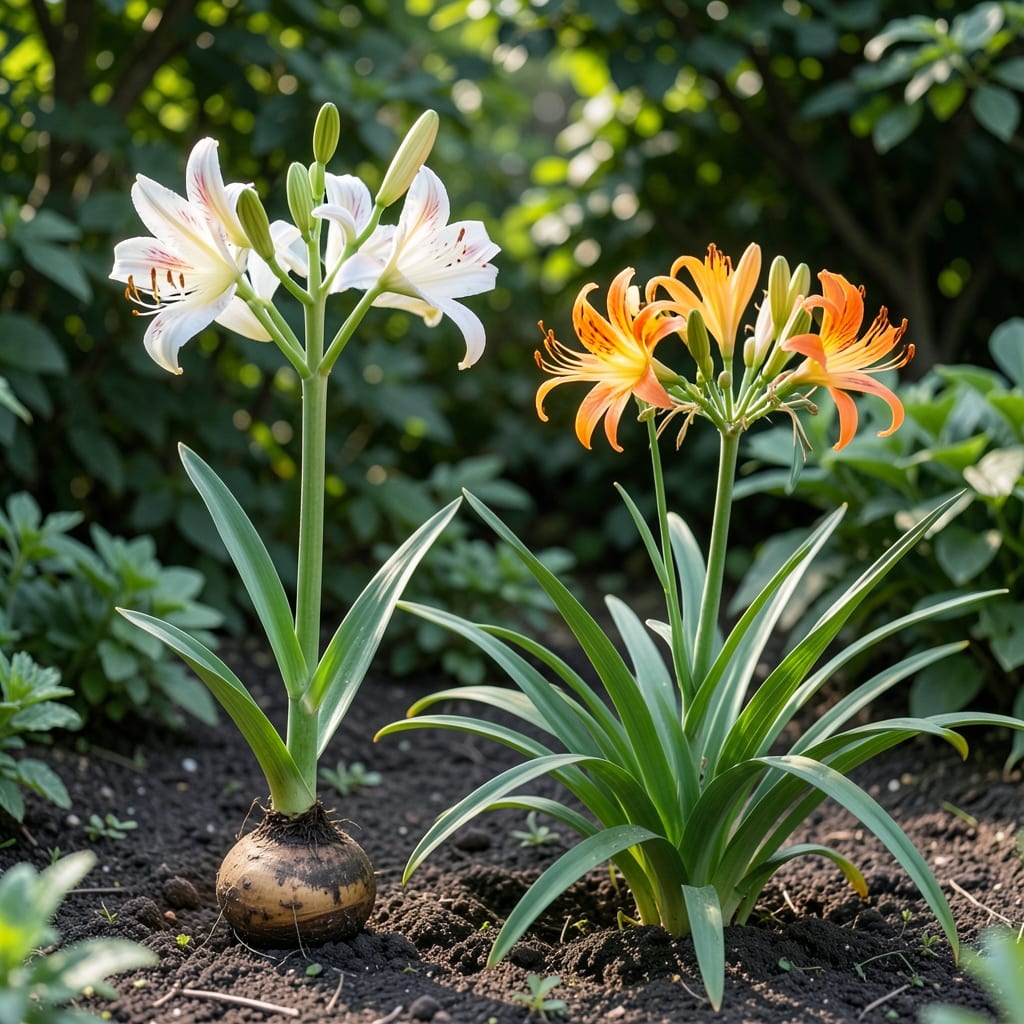
Daylilies are not true lilies. They belong to the Hemerocallis genus, while true lilies are part of the Lilium genus, making them distinct botanically despite similar appearances.
I often see the confusion come from their looks—both have striking blooms and long stems—but their origins tell a different story. Daylilies grow from fleshy roots, while true lilies sprout from bulbs. This affects how they grow, spread, and even how they handle garden conditions. 💫
What’s fascinating is that their care routines differ too, which I’ll explain in the growing guide below.
💡 In This Article
Daylilies and true lilies diverge at the genetic level. True lilies (Lilium) grow from scaly bulbs, storing energy underground for seasonal regrowth. Daylilies (Hemerocallis) lack bulbs entirely, relying instead on fleshy, fibrous roots that spread horizontally. This root system makes daylilies more drought-tolerant and aggressive spreaders in gardens. 🔥
Their flower structures reveal more distinctions. True lily blooms have 6 tepals (3 petals + 3 sepals) that curve backward, while daylilies produce 6 petal-like segments that fuse at the base. True lilies also develop seed pods after pollination, whereas daylilies form capsules containing flat, disc-shaped seeds. ✨
Growth habits differ dramatically too. True lilies grow 2-6 feet tall from upright stems, while daylilies typically reach 1-4 feet with arching, grass-like foliage. True lilies are perennial but may die back completely in winter, while daylilies maintain some foliage year-round in milder climates.
The stem structure also varies—true lilies have leafy stems, while daylilies produce leaves only at the base. 💫
Even their blooming patterns set them apart. True lilies often produce 5-20 flowers per stem that open sequentially, while daylilies generate multiple flower buds on each scape (flower stalk) that may open simultaneously. This explains why daylilies can create such dramatic color displays in gardens. 🌟
Taxonomically, they belong to entirely different families. True lilies are part of the Liliaceae family, while daylilies were recently reclassified into the Asphodelaceae family (formerly Hemerocallidaceae). This places daylilies closer to asphodels than to true lilies, despite their common name. ⚡
The name comes from their flower shape and daily blooming cycle, not their genetics. Daylilies open fresh blooms each morning that last just 1 day, while true lilies keep their flowers for several days. This daily habit inspired the “day” in their common name.
They complement each other well. Daylilies provide continuous color at ground level while true lilies add height. Just give true lilies 6+ hours of sun and well-draining soil, and space plants 12-18 inches apart to prevent competition.
True lilies often have more intense fragrance, especially varieties like Stargazer or Casa Blanca. Daylilies tend to be lightly scented or odorless, though some modern hybrids offer pleasant perfume. The scent varies significantly between cultivars.
Daylilies spread more vigorously through their fibrous root system, forming dense clumps that need dividing every 3-4 years. True lilies multiply more slowly from bulbs, making them easier to contain in garden borders.