
Beautiful Plants For Your Interior
Beautiful Plants For Your Interior
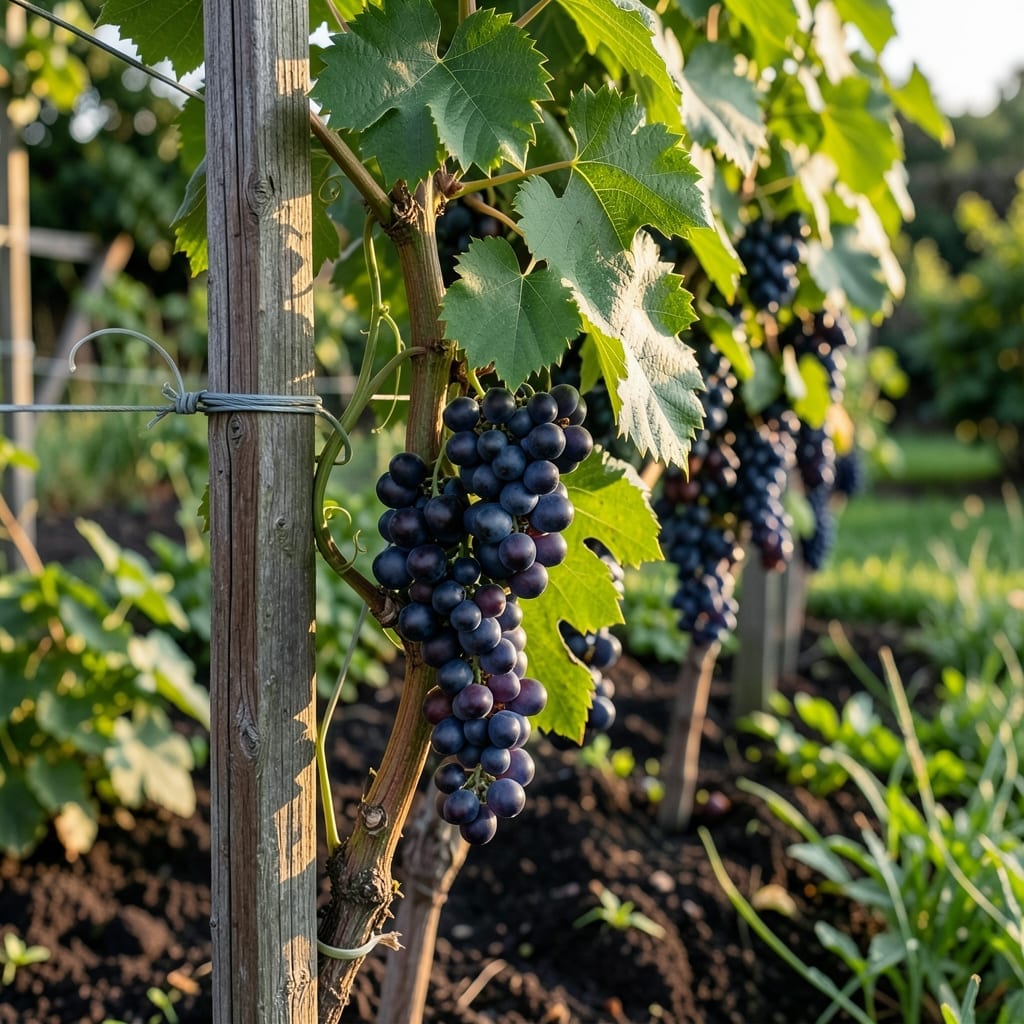
Concord grapes are self-pollinating, meaning they produce fruit without needing pollen from another vine. This makes them ideal for home gardeners with limited space.
This natural ability stems from perfect flowers that contain both male and female reproductive parts. I’ve found they thrive even in small gardens because bees aren’t required to transfer pollen between vines. The convenience means you can plant just one vine and still enjoy a bountiful harvest each season. ✨
What’s especially helpful is their adaptability to various soil types and climates. This makes them a reliable choice for beginners or those with compact growing spaces. 🌟
💡 In This Article
Concord grape flowers are perfect examples of self-fertility in plants. Each blossom contains both stamens (male parts) and pistils (female parts), allowing pollen to transfer internally without external help. This process, called cleistogamy, often occurs before the flower even opens, ensuring fertilization happens reliably. 🔥
The genetic makeup of Concord grapes plays a crucial role here. Unlike some grape varieties that require cross-pollination, Concord vines produce hermaphroditic flowers that are fully capable of self-fertilization. Studies show these grapes maintain high fruit set rates of 80-90% without any pollinator assistance, making them exceptionally reliable for gardeners.
What’s happening at the cellular level is even more fascinating. The pollen grains germinate on the stigma and grow tubes down through the style to reach the ovules. This entire process takes about 24-48 hours after pollination, with visible fruit development beginning within 1-2 weeks.
The efficiency of this system explains why Concord grapes are so consistent in production.
Environmental factors can influence this process slightly. While Concord grapes don’t need pollinators, mild air currents or occasional bee visits can sometimes improve fruit set by ensuring more thorough pollen distribution. However, even in still air conditions, these vines will produce abundant clusters of their signature deep purple grapes. ✨
The resulting fruit maintains all the classic Concord characteristics: that rich, foxy flavor and slip-skin texture. This self-sufficiency means you can plant just one vine and still expect 15-20 pounds of grapes per mature plant annually, with proper care. The mechanism is so reliable that commercial growers often plant single-variety Concord vineyards.
No, a single Concord vine produces fruit reliably on its own. This self-sufficiency makes them perfect for small gardens or container growing.
Check for young age (vines need 2-3 years to bear), poor pruning, or insufficient sunlight. Even self-pollinating varieties need proper care to thrive.
While not required, bee activity can enhance pollination. Planting near flowers may attract bees and potentially increase your 15-20 pound annual yield.
Space vines 6-8 feet apart for optimal growth. This spacing allows good air circulation while maximizing space efficiency in home gardens.
Extreme weather during flowering can occasionally affect fruit set. However, their self-pollinating nature makes them far more reliable than many other fruit varieties.