
Beautiful Plants For Your Interior
Beautiful Plants For Your Interior
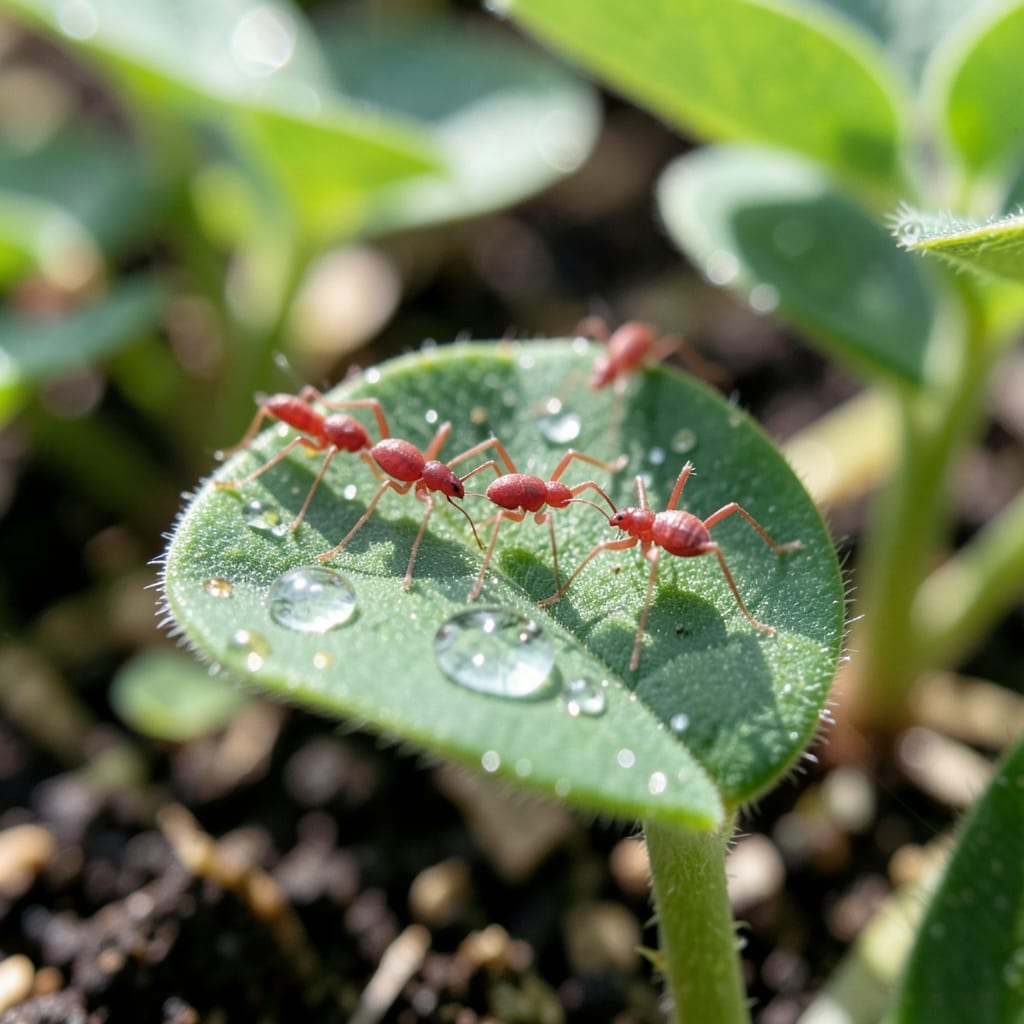
Clover mites are not directly harmful to plants as they feed on sap from grass and clover, not plant tissue. However, their large numbers can cause minor leaf discoloration in gardens.
I’ve seen these tiny red pests swarm sidewalks in spring, but they rarely bother my vegetable patch. They thrive on lawns and clover patches, not the plants I’m growing for food. 🔥
What does concern me is their sheer volume—when populations explode, they can leave behind silvery stippling on leaves from their feeding activity.
💡 In This Article
These microscopic arachnids have specialized mouthparts designed for piercing plant cells and extracting sap. Their primary targets are grasses and clover, where they feed on the sugary fluids within the stems and leaves.
This feeding method differs from chewing insects that consume actual plant tissue, which is why clover mites don’t cause structural damage to most garden plants. 🔥
What makes them unique is their preference for nitrogen-rich plants. Lawns fertilized with high-nitrogen products often see explosive clover mite populations. The mites can process this nutrient-dense sap more efficiently than other plant fluids, which explains their strong association with well-fertilized turfgrass.
Their feeding creates tiny punctures that may cause silvery stippling on leaves when present in massive numbers.
Research shows a single square foot of lawn can host thousands of these mites during peak season. Yet, despite their numbers, they rarely kill plants. The damage they do cause appears as faint speckling rather than the skeletonized leaves or wilting seen with more destructive pests.
This cosmetic damage typically affects only the outermost leaves first.
Interestingly, clover mites have a temperature-dependent life cycle. They become most active when temperatures reach 75-85°F in spring and fall. During summer heat above 90°F or winter cold below 40°F, they enter dormancy. This seasonal pattern explains why gardeners often notice them in early spring when they’re most visible.
Their movement also reveals their harmless nature to most plants. When disturbed, they don’t flee toward garden beds but instead retreat to their preferred grassy areas. This behavior demonstrates their strong preference for their natural hosts over cultivated plants. ✨
No, they rarely kill plants. They feed on sap but don’t consume enough to harm healthy vegetation. The worst damage is silvery stippling on leaves.
They thrive in 75-85°F temperatures and become dormant in extreme heat or cold. Spring’s mild weather triggers their activity.
They prefer grass and clover over veggies. Any damage to garden plants is usually cosmetic, not structural.
Remove clover patches and reduce nitrogen fertilization. Use a 2-inch diatomaceous earth barrier around garden beds.