
Beautiful Plants For Your Interior
Beautiful Plants For Your Interior
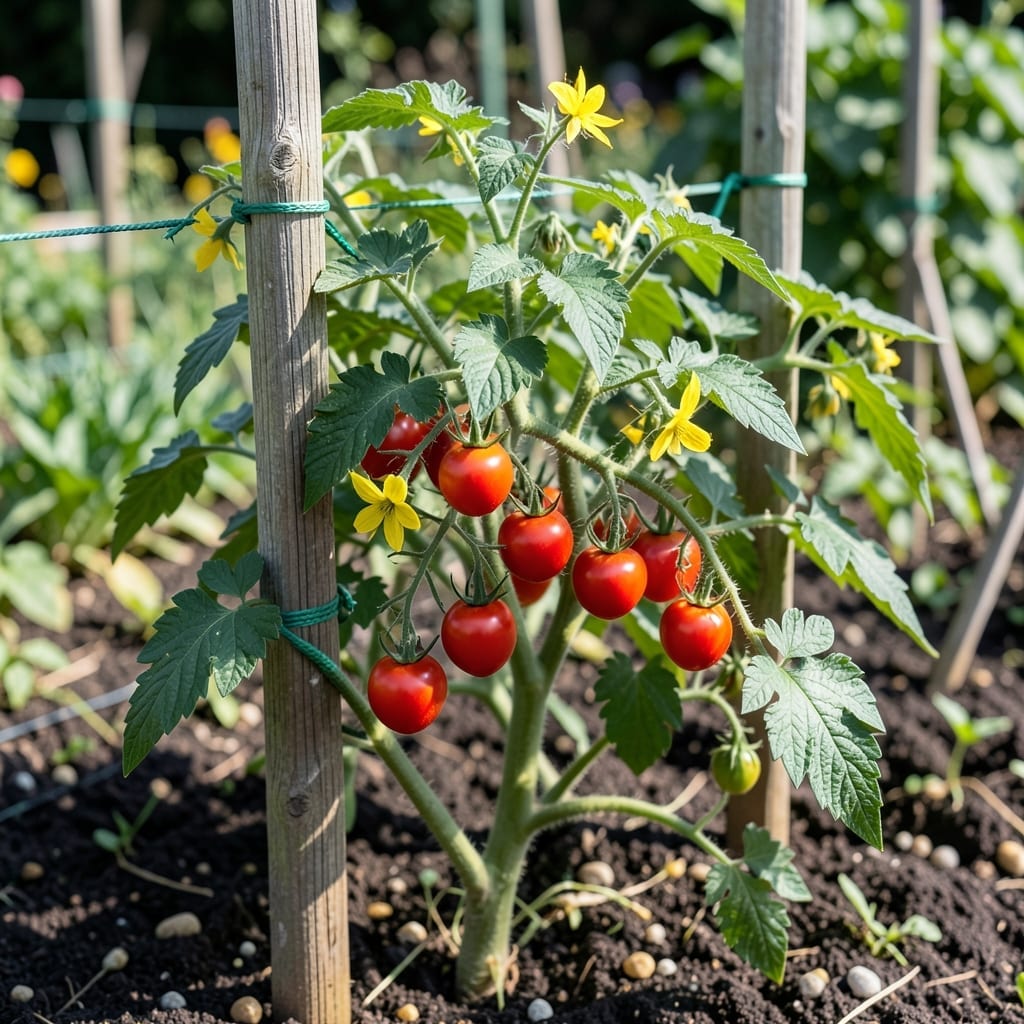
Most cherry tomato plants are indeterminate, growing continuously and producing fruit all season. Some compact varieties are determinate, growing to a fixed size and fruiting in one flush.
I’ve found that the growth pattern makes a huge difference in garden planning. Indeterminate types keep vining upward, which is great if you want a steady harvest but need tall supports. The determinate ones stay compact, making them perfect for containers or small spaces, though you’ll get one big harvest rather than a continuous supply. ✨
💡 In This Article
At the cellular level, the growth difference comes down to apical dominance. Indeterminate plants produce a continuous supply of auxin, a hormone that stimulates new shoot growth from the terminal bud. This means they’ll keep adding height and setting fruit until frost kills the plant.
The vines can reach 6-10 feet or more in a season, requiring tall stakes or trellises. 🔥
Determinate varieties, however, have a genetically programmed stop point. Their terminal bud eventually forms a flower cluster instead of new shoots, capping the plant’s height—usually at 3-5 feet. This switch triggers a concentrated burst of fruit production, with most tomatoes ripening within 1-2 weeks. The trade-off is a finite harvest window. ✨
You’ll notice structural differences too. Indeterminate plants develop long, sprawling vines with 6-8 inch spacing between fruit clusters. Determinate types grow more bush-like, with shorter internodes and denser foliage. This compact form makes them ideal for containers or small raised beds where space is limited. 💫
The yield timing varies dramatically. Indeterminate cherry tomatoes like ‘Sungold’ or ‘Sweet 100’ produce a steady stream of fruit from early summer until fall. Determinate types such as ‘Tiny Tim’ or ‘Patio Princess’ give one large harvest, perfect for canning or sauce-making.
This biological clockwork is why gardeners plan supports and planting schedules differently for each type. ⚡
What drives this difference is a single gene mutation. Research shows the SELF PRUNING (SP) gene in determinate tomatoes halts stem elongation by altering hormone production. Without this gene, indeterminate plants keep their youthful growth pattern indefinitely. This genetic switch explains why you’ll never find a determinate plant reverting to vining growth. 🌟
Check the plant tag or seed packet first. Look for terms like “bush” (determinate) or “vining” (indeterminate). Determinate plants stop growing at 3-5 feet, while indeterminate types keep climbing past 6 feet.
They grow continuously, producing long vines that can reach 6-10 feet. Without tall stakes or trellises, the weight of fruit and foliage will cause them to sprawl and break.
Yes, but use a large pot (at least 10 gallons). Provide a sturdy trellis and expect to water daily in hot weather. They’ll need more frequent feeding than determinate types.
Not necessarily less total fruit, but it all ripens within 1-2 weeks. Indeterminate varieties spread their harvest over the entire growing season.