
Beautiful Plants For Your Interior
Beautiful Plants For Your Interior
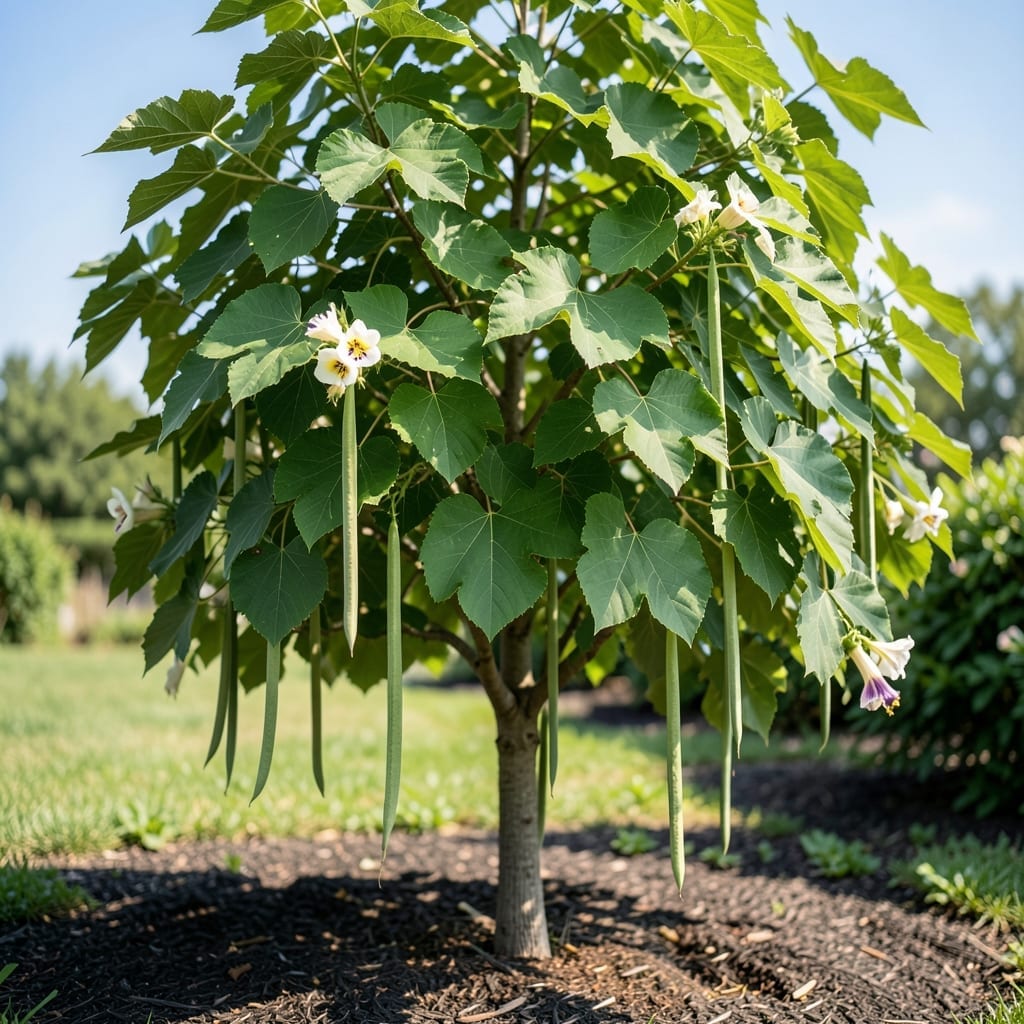
Catalpa trees are not considered poisonous to humans or most animals. However, their seed pods and leaves may cause mild stomach upset if ingested in large quantities.
I’ve found these trees are generally safe for gardens and landscapes, as their compounds don’t trigger severe reactions. Mild gastrointestinal discomfort is the most common issue, typically resolving quickly without intervention. This makes catalpas a popular choice for pet owners and gardeners alike. ✨
What’s interesting is that their natural chemistry deters many pests, which is why you’ll rarely see them bothered by insects. 💫
💡 In This Article
Catalpa trees contain iridoid glycosides, compounds that deter herbivores but pose minimal risk to humans. These bitter-tasting chemicals are concentrated in the leaves and seed pods, acting as a natural defense mechanism against insects and grazing animals. The bark and flowers contain far lower levels, making them the least concerning parts of the tree.
Research shows that a child would need to consume dozens of seed pods or a large quantity of leaves to experience noticeable effects. The most common reaction is mild gastrointestinal irritation, similar to eating an underripe persimmon.
This is due to the astringent properties of the iridoids, which can cause temporary nausea or diarrhea in sensitive individuals. 🔥
Documented cases of toxicity are extremely rare. In fact, catalpa leaves have been traditionally used in herbal remedies for respiratory issues, though modern medicine doesn’t endorse this practice. The tree’s low toxicity rating from the ASPCA and other organizations confirms its general safety for both humans and most domestic animals.
What makes catalpa particularly safe is its lack of cyanogenic glycosides, the compounds that make plants like cherry pits deadly. Instead, its defensive chemistry relies on bitterness and mild irritation rather than systemic poisoning. This evolutionary strategy allows the tree to thrive while remaining relatively harmless to larger animals. ✨
For comparison, catalpa’s toxicity level is similar to that of common garden plants like tomatoes, where the leaves contain solanine but the fruit is safe. The difference is that catalpa’s entire structure maintains this low level of concern, making it a popular choice for family-friendly landscapes. 💫
Your dog may experience mild vomiting or diarrhea, but serious poisoning is unlikely. The bitter taste usually deters them from eating large amounts. Monitor for 2-6 hours and contact your vet if symptoms persist.
Yes, catalpa leaves break down safely in compost piles. Their iridoid compounds decompose naturally without harming plants. Avoid composting seed pods in large quantities though.
The trees pose no danger from falling branches or toxic sap. Just teach kids not to eat the seed pods or leaves. The shade they provide is perfectly safe.
Yes, deer typically avoid catalpas due to their bitter taste. This makes them excellent for landscaping in deer-prone areas. The trees’ natural defenses work well for gardeners.
Watch for drooling, loss of appetite, or mild colic signs. These usually appear quickly and resolve within 24 hours. Provide fresh water and monitor closely.