
Beautiful Plants For Your Interior
Beautiful Plants For Your Interior
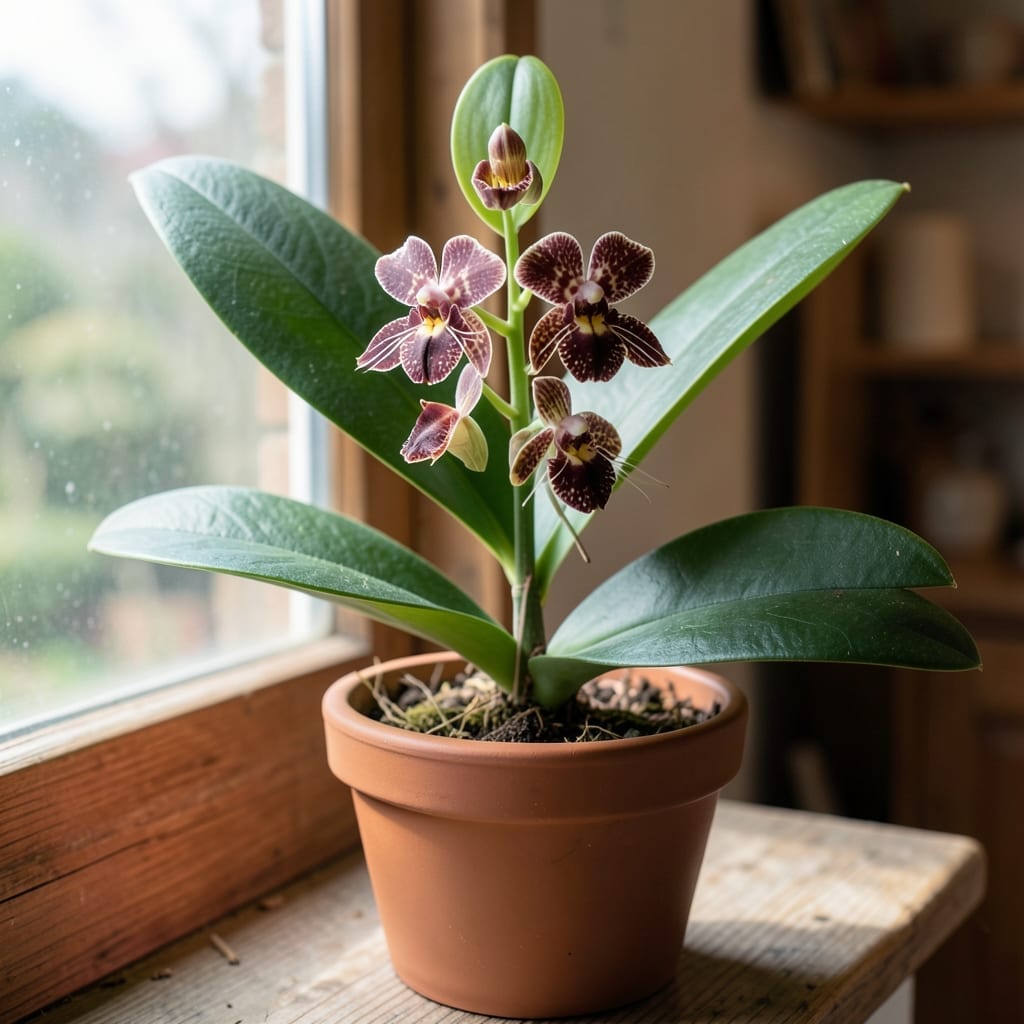
Yes, cat faced orchids are real. The Cataseatum mobile, often called the cat face orchid, is a rare and whimsical-looking orchid species native to Southeast Asia with petals resembling a feline face.
I was amazed to learn these aren’t just a gardener’s tall tale. The Cataseatum mobile thrives in humid tropical forests, where its unique evolution helps attract specific pollinators drawn to the feline-like patterns. 🌟
What makes them special is their rarity and the precise conditions they need to flourish, which explains why they’re so prized among orchid collectors.
💡 In This Article
The distinctive feline face emerges from specialized petal development. The lower petal, called a labellum, evolves with dark markings and textures that mimic a cat’s whiskers and nose. This happens through pigment concentration in specific cells during growth, creating the illusion of eyes and a mouth.
The process is similar to how some flowers develop bee-mimicking patterns. ✨
Evolution drives this fascinating adaptation. In their native Southeast Asian forests, these patterns attract specific pollinators. The orchid’s scent and visual cues work together to guide insects precisely to its reproductive parts. This targeted attraction increases successful pollination rates in dense forest canopies where competition for pollinators is fierce. 🔥
Color plays a crucial role in the illusion. The Cataseatum mobile typically features white or pale yellow petals with deep purple or brown markings. These high-contrast colors create the optical effect of a face when viewed from the front. The precise arrangement of these markings is genetically determined, with variations occurring between individual plants. 💫
The size contributes to the effect too. These orchids usually measure 2-3 inches across, with the labellum being the most prominent feature. This compact size makes the facial pattern more noticeable to both pollinators and human observers. The flowers often grow in clusters, creating a striking display when in full bloom. ⚡
Light conditions in their natural habitat enhance the visual effect. In the dappled sunlight of tropical forests, the contrast between the dark markings and lighter petals becomes more pronounced. This natural lighting helps the facial pattern stand out to passing pollinators, demonstrating how environment and evolution work together. 🌟
They grow naturally in humid tropical forests of Southeast Asia. Look for them in countries like Thailand, Malaysia, and Indonesia where they thrive in warm, shaded environments.
Under ideal conditions, they typically bloom once a year. The flowering period lasts about 4-6 weeks with proper care. Patience is key as they may skip a year if stressed.
Their unique appearance comes from specialized petal development. The lower petal forms dark markings that mimic whiskers and a nose, creating the feline illusion through natural pigment patterns.
Maintaining consistent 60-70% humidity is tricky. Many growers struggle with this, leading to bud blast or poor flowering. A humidity tray or greenhouse setup helps.