
Beautiful Plants For Your Interior
Beautiful Plants For Your Interior
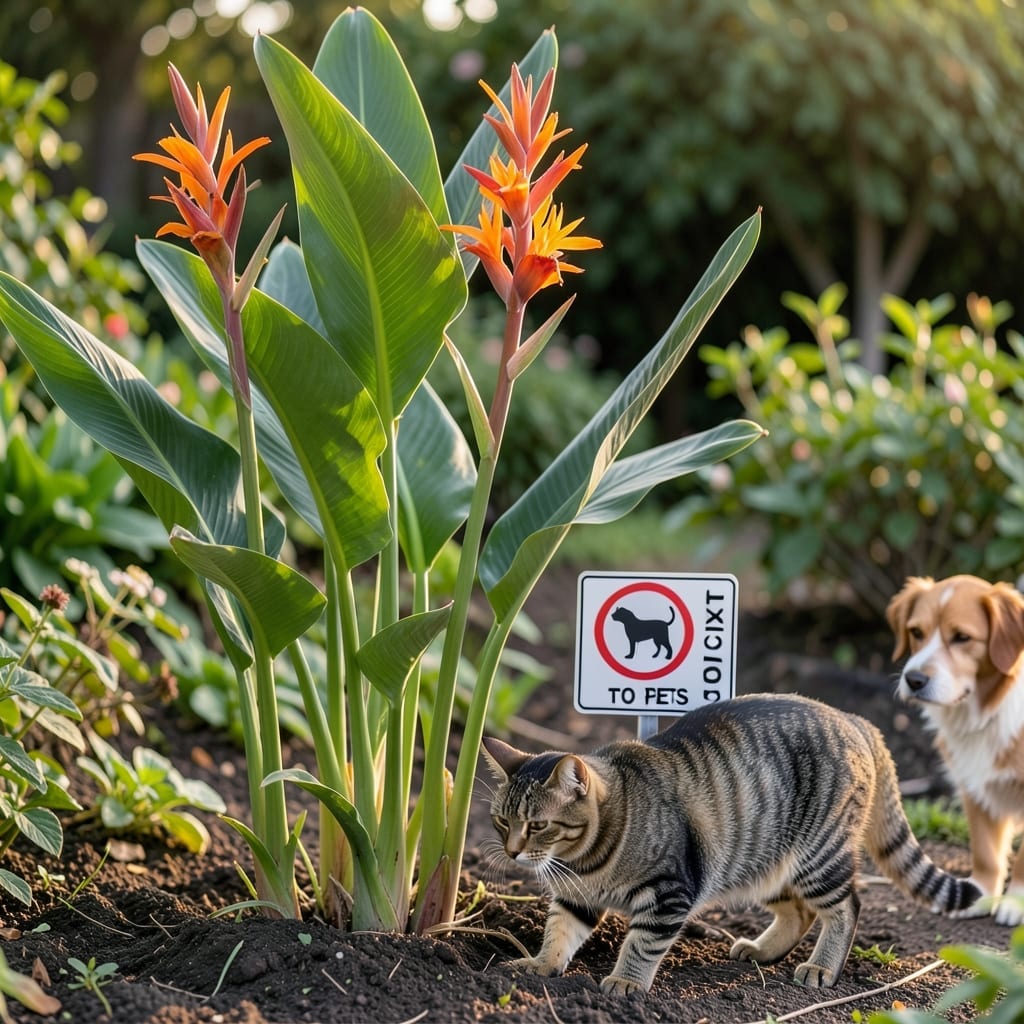
Canna lilies are generally considered non-toxic to most animals, including dogs, cats, and horses. However, mild stomach upset may occur if large amounts are ingested.
I’ve found that canna lilies stand out from true lilies, which are highly toxic to pets. Their chemical makeup lacks the dangerous compounds that make other lilies so harmful. Still, I always recommend monitoring pets around any plants, as excessive consumption of even non-toxic varieties can lead to digestive discomfort. 🌟
For gardeners, this makes canna lilies a safer choice for pet-friendly landscapes. Yet, it’s wise to introduce new plants gradually and watch for any unusual reactions in your animals.
💡 In This Article
Unlike true lilies (Lilium spp.), canna lilies lack dangerous nephrotoxic alkaloids that cause kidney failure in pets. Their chemical profile contains starchy rhizomes and minimal saponins, compounds that are generally inert in small doses.
The ASPCA confirms cannas are non-toxic to dogs, cats, and horses, making them a safer garden choice compared to highly poisonous plants like Easter lilies.
What sets cannas apart is their absence of catabolic enzymes that trigger organ damage. True lilies contain gallotannins and convallatoxins, which attack renal cells in cats within 12-24 hours of ingestion. Canna lilies, however, only risk mild gastrointestinal irritation due to fiber and saponin content, similar to eating large amounts of any non-toxic plant material.
🌟
The difference lies in evolutionary adaptation. Canna lilies evolved for ornamental appeal rather than chemical defense, relying on physical barriers like thick stems. True lilies developed toxic compounds to deter herbivores, explaining their danger to pets. This evolutionary path makes cannas a unique safe option for animal owners.
Even non-toxic plants can cause issues if consumed excessively. A 50-pound dog eating an entire canna leaf might experience vomiting or diarrhea due to the 1-2% saponin content. These symptoms typically resolve within 24 hours with supportive care, unlike true lily poisoning which often requires emergency veterinary intervention. ✨
Veterinary toxicology databases classify canna lilies as “non-toxic” but always recommend monitoring pets. The key distinction remains: cannas lack the kidney-damaging compounds that make true lilies deadly. This makes them a preferred choice for households with curious pets and active gardens. 💫
Your dog will likely be fine, as cannas are non-toxic. They may experience mild stomach upset like vomiting or diarrhea if they eat a large amount. These symptoms usually pass within 24 hours.
Canna lilies lack the dangerous alkaloids found in true lilies that cause kidney failure. Their starchy rhizomes and minimal saponins are generally inert in small doses. This makes them much safer for pets.
Plant them in raised beds or behind 2-foot barriers to limit access. Monitor your pets for the first few days after planting. Use bitter sprays if your pets show too much interest.
Watch for vomiting or diarrhea. While not typically dangerous, contact your vet if symptoms persist beyond 24 hours or seem severe. Always have your vet’s emergency number handy.