
Beautiful Plants For Your Interior
Beautiful Plants For Your Interior
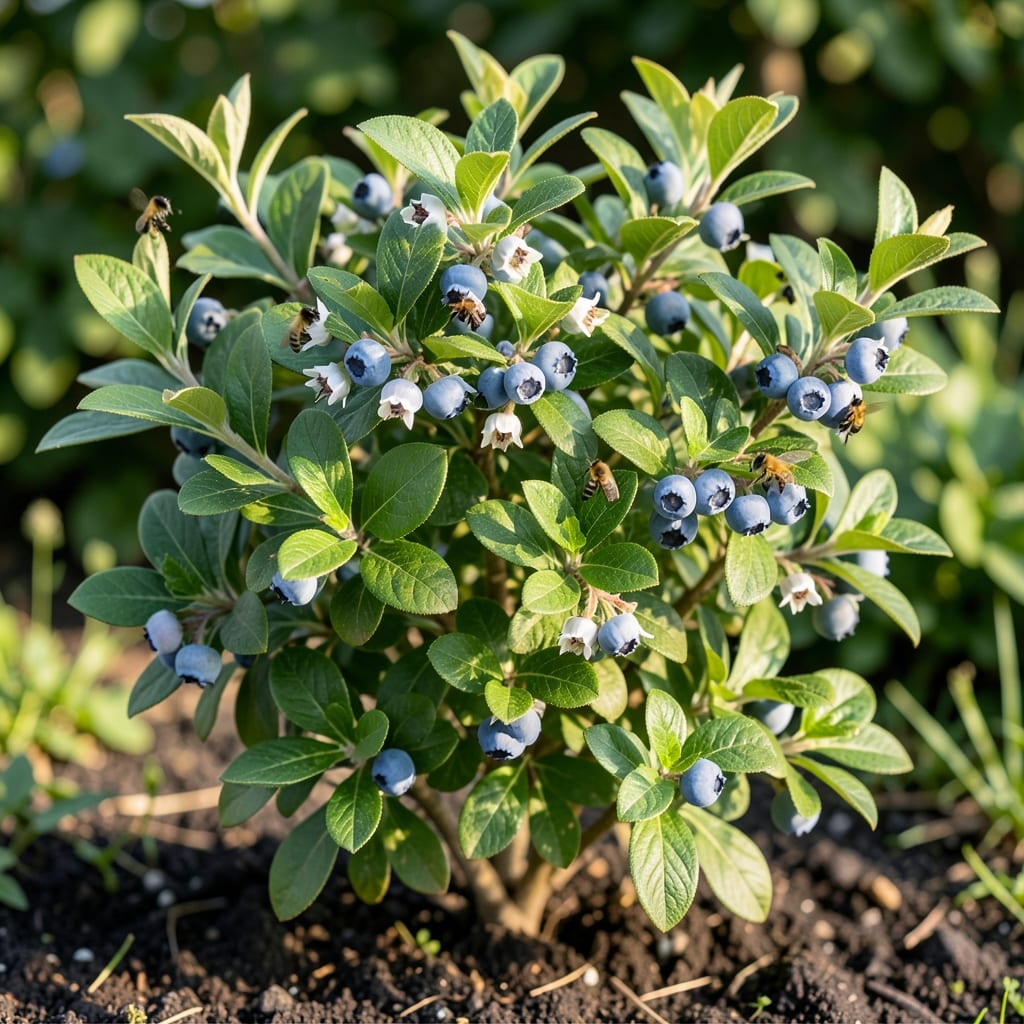
Most blueberry bushes are partially self-pollinating, but cross-pollination with another variety significantly boosts fruit yield and quality. Some cultivars like ‘Bluecrop’ or ‘Duke’ can produce well on their own.
I’ve learned that blueberries can transfer pollen within their own flowers, but nature designed them to thrive better with help. 🔥 Planting at least two different varieties creates a synergy where bees carry pollen between bushes, resulting in larger, juicier berries. Even the most self-sufficient types like ‘Patriot’ or ‘Northblue’ will surprise you with better harvests when paired with a compatible partner.
💡 In This Article
Blueberry flowers are hermaphroditic, containing both male (stamens) and female (pistils) reproductive parts. This allows self-pollination to occur when pollen from a flower’s own anthers lands on its stigma. However, the flower’s structure often prevents full self-pollination because the stigma matures before the anthers release pollen, a mechanism called protandry.
Bees and other pollinators are crucial for effective cross-pollination. When a bee visits a blueberry flower, it collects pollen on its body hairs and carries it to the next flower it visits. This transfer between different bushes increases genetic diversity, leading to better fruit set and larger berries.
Studies show cross-pollination can increase fruit size by 20-30% and yield by 40-50%. 🔥
The genetic makeup of blueberry varieties also plays a role. Some cultivars like ‘Rabbiteye’ have a higher degree of self-incompatibility, meaning they produce very little fruit without cross-pollination. In contrast, ‘Northern Highbush’ varieties often have better self-fertility but still benefit from cross-pollination.
Environmental factors influence pollination success too. Cool, wet weather during bloom can reduce bee activity by 50-70%, while temperatures above 60°F encourage more pollinator movement. Wind can also play a minor role in pollen transfer, though it’s far less effective than insect pollination for blueberries.
Even in self-fertile varieties, the quality of self-pollinated fruit is often inferior. Self-pollinated berries tend to be smaller, with fewer seeds and lower sugar content. The seeds themselves are smaller and less viable, which can affect the plant’s long-term reproductive success.
Not always, but it helps. While some varieties like ‘Top Hat’ or ‘Sunshine Blue’ can self-pollinate, planting two different types increases berry size and yield by 40-50%.
Self-pollinated berries are often smaller. Cross-pollination improves fruit quality, size, and sugar content. Even self-fertile types benefit from a pollinator partner nearby.
For best results, plant different varieties within 100 feet of each other. Bees typically travel this distance, ensuring effective pollen transfer between bushes.
Yes, dwarf varieties like ‘Top Hat’ do well solo in pots. Expect 1-2 pounds of fruit, though adding a second compatible plant will boost your harvest.