
Beautiful Plants For Your Interior
Beautiful Plants For Your Interior
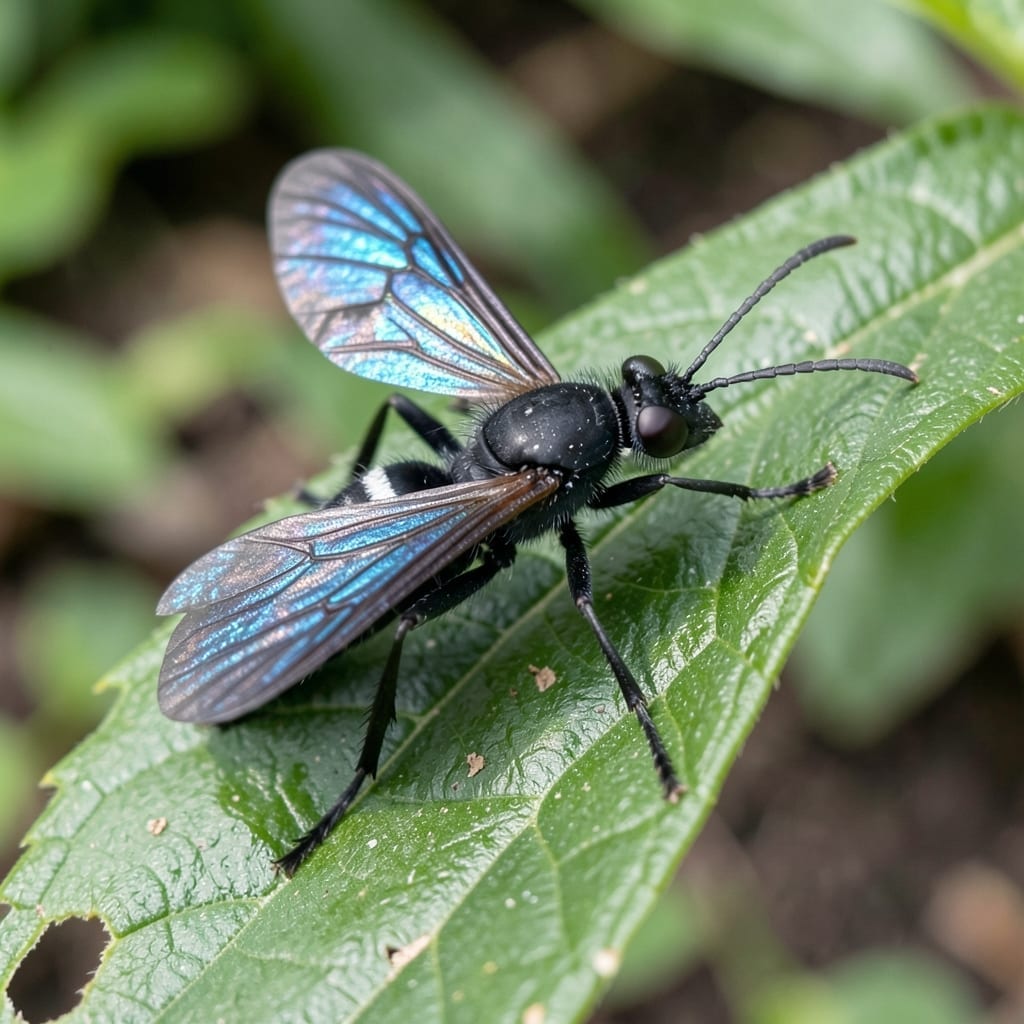
Blue winged wasps are generally not aggressive and rarely sting humans. They primarily hunt caterpillars and other garden pests, making them beneficial for pest control.
From my experience, these wasps focus entirely on their ecological role as natural predators rather than posing threats to people. 🔥 Their stingers are designed for paralyzing prey like caterpillars, not for defense against larger creatures. Gardeners often appreciate their presence because they reduce the need for chemical pesticides.
I’ve noticed they only become defensive when directly handled or threatened, which is rare in typical outdoor settings. ✨
💡 In This Article
These wasps exhibit highly specialized hunting behaviors that target garden pests. They use their stingers primarily to paralyze caterpillars, injecting venom that breaks down the prey’s nervous system within 30-60 seconds. This allows them to lay eggs inside the host, which then serve as food for developing larvae.
Their non-aggressive nature stems from evolutionary adaptation. Unlike social wasps that defend nests, blue winged wasps are solitary hunters with no colony to protect. Their energy focuses entirely on locating and subduing prey, which explains their indifference to humans unless directly provoked. 🔥
Garden observations show they prefer flying low to the ground, scanning for movement among plants. They’re particularly active during mid-morning to early afternoon, when caterpillars are most active. This hunting pattern means they rarely enter human spaces unless pursuing prey.
Their wing coloration serves as a warning to predators rather than a threat to humans. The vibrant blue-black wings signal their ability to deliver a painful sting to potential predators like birds, but this defense mechanism isn’t directed toward people. Their venom, while potent against insects, has minimal effect on human skin. ✨
Research indicates they can detect human movement but typically choose to flee rather than engage. In controlled studies, they only exhibited defensive behaviors when physically restrained, demonstrating their preference for avoidance over confrontation.
They primarily hunt caterpillars and other soft-bodied insects. Their larvae feed on paralyzed prey stored in underground nests, while adults consume nectar from flowers.
This diet makes them excellent natural pest controllers.
Their stings are rare but can be painful for 10-30 minutes. The venom is mild compared to other wasps, causing localized redness and swelling.
Most people compare it to a bee sting in intensity.
They’re typically active during mid-morning to early afternoon, especially in warm weather. This is when their caterpillar prey is most active.
They avoid extreme heat and prefer temperatures between 70-85°F.
Avoid removing them as they’re beneficial predators. If necessary, use a gentle relocation method with a jar and paper.
They help reduce garden pests naturally without chemicals.