
Beautiful Plants For Your Interior
Beautiful Plants For Your Interior
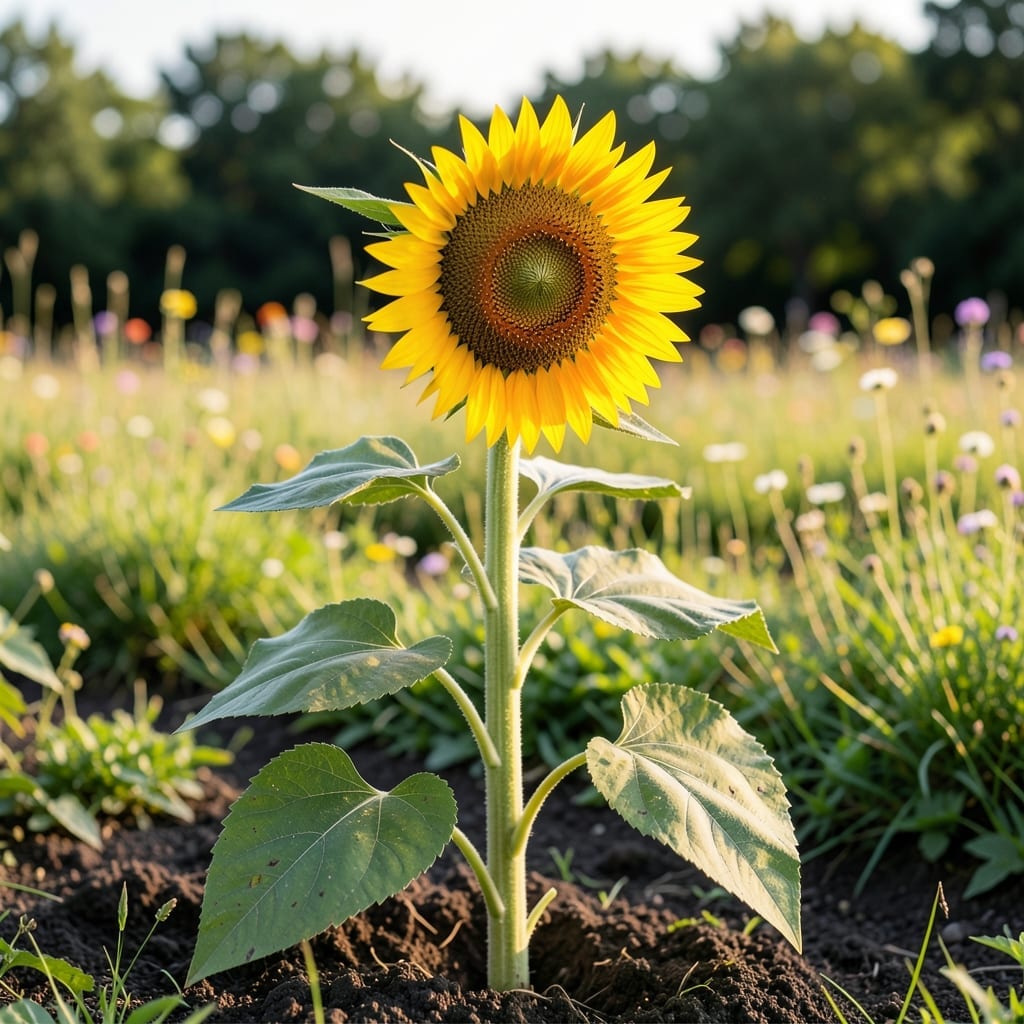
True blue sunflowers don’t exist in nature. While breeders have created deep purple or near-blue varieties, authentic blue pigmentation is biologically impossible in Helianthus annuus due to genetic limitations.
I’ve learned that sunflowers lack the specific anthocyanin pigments required to produce true blue hues, unlike some other flowers. What’s fascinating is how breeders have pushed the boundaries with varieties like ‘ProCut Blue’, which appear bluish-purple in certain lighting conditions. The science behind this limitation comes down to the plant’s genetic code and how it processes pigments. 🌟
💡 In This Article
Sunflowers produce colors through carotenoids (yellows, oranges) and anthocyanins (reds, purples), but completely lack the genetic pathways for delphinidin-based blues found in other flowers. This pigment gap means their petals can only shift between warm spectrums.
Breeders have manipulated anthocyanin concentrations to create deep purple varieties like ‘Moulin Rouge’ or ‘Chianti’, which may appear bluish under certain light. Yet these still register as purple on color spectroscopes, with wavelengths around 420-450 nm rather than true blue’s 450-495 nm. 🔥
The Helianthus annuus genome contains no genes for the specific enzymes that modify anthocyanins into blue hues, unlike delphiniums or cornflowers. Even with advanced CRISPR editing, introducing these pathways would require multiple complex genetic insertions that current technology can’t reliably achieve.
What appears as blue to our eyes is often an optical illusion. The layered petal structure of some hybrids creates a Tyndall effect, scattering shorter wavelengths to produce a faint blue shimmer. This is similar to how the sky appears blue, but it’s a light trick, not actual pigment.
Environmental factors can intensify this illusion. Cooler growing temperatures (50-60°F at night) and slightly acidic soil (pH 6.0-6.5) enhance anthocyanin production, making purple varieties appear more vivid. However, these conditions can’t overcome the fundamental genetic limitation. ✨
Comparatively, true blue flowers like lobelia or hydrangeas possess entirely different pigment systems. Their blue comes from pH-sensitive anthocyanins that can shift color based on soil acidity, a capability sunflowers simply don’t have in their genetic toolkit.
Deep purple varieties like ‘ProCut Blue’ or ‘Moulin Rouge’ can look bluish under certain light. This happens due to the Tyndall effect, where layered petals scatter shorter light wavelengths. It’s an optical trick, not true pigment.
Helianthus annuus lacks the genetic pathways for delphinidin-based blues. Even with advanced CRISPR editing, introducing these would require multiple complex modifications that current technology can’t achieve reliably.
Cooler night temperatures (50-60°F) and slightly acidic soil (pH 6.0-6.5) enhance anthocyanin production. This intensifies purple tones, making them appear more blue-like under certain lighting conditions.
Try ‘ProCut Blue’, ‘Blue Horizon’, or ‘Chianti’. These produce deep purple blooms that may appear bluish in specific light. Seeds are available from suppliers like Burpee or Johnny’s Selected Seeds.