
Beautiful Plants For Your Interior
Beautiful Plants For Your Interior
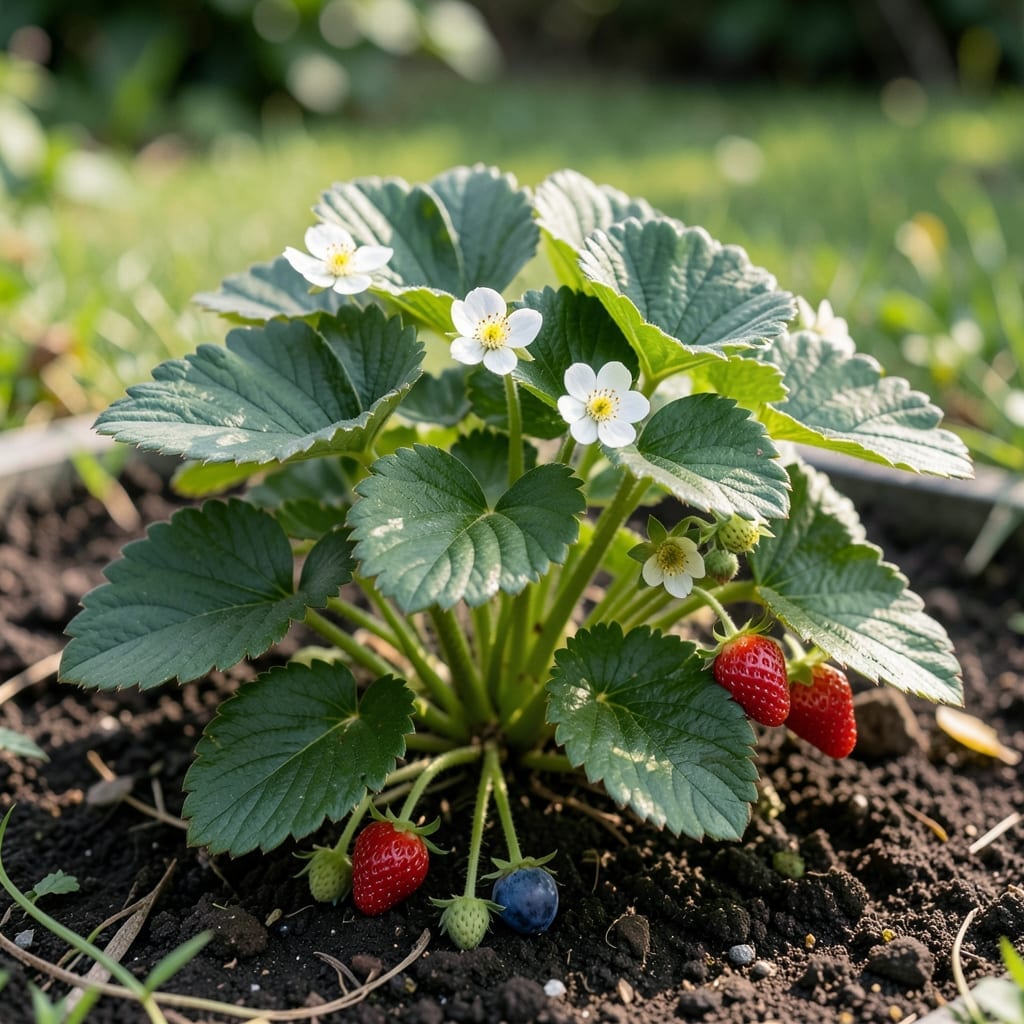
No, naturally blue strawberries do not exist. The viral images often stem from photo editing or unusual lighting. Some genetically modified variants or dyed versions may appear blue, but standard strawberries are red.
I’ve noticed these images often circulate because the vibrant blue hue grabs attention and sparks curiosity. The reality is that strawberries get their classic red color from anthocyanin pigments, which don’t naturally produce blue tones. While scientists can tweak genes or use dyes to alter appearance, such cases are rare and not what you’d find in grocery stores. 💫
💡 In This Article
Strawberries develop their signature red hue through anthocyanins, a group of water-soluble pigments that activate as the fruit ripens. These compounds respond to environmental factors like sunlight and temperature, with more intense colors developing under optimal conditions.
The pH level of the fruit also plays a role—anthocyanins appear red in acidic environments (pH 3-4) but can shift toward purple or blue in more alkaline conditions.
Genetic mutations can occasionally produce pale yellow or white strawberries, but true blue requires either artificial dye or genetic modification. Researchers have experimented with inserting genes from other plants to alter pigment production, yet these remain laboratory curiosities rather than commercial products.
The closest natural blue fruits, like concord grapes, achieve their color through different anthocyanin structures not present in strawberries.
Lighting can create optical illusions that make strawberries appear blue in photos. Specialized filters or UV lighting can enhance certain wavelengths while suppressing others, tricking the eye.
However, under normal white light, even genetically modified strawberries would likely display purple or violet tones rather than true blue, as the pigment chemistry doesn’t support that exact hue.
Commercial growers focus on the red spectrum because those varieties contain higher sugar content and better flavor profiles. The anthocyanins that make strawberries red also provide health benefits as powerful antioxidants. While a blue strawberry might look striking, it would lack the sweetness and nutritional value that make traditional varieties so popular.
Nature’s color palette for strawberries is limited by evolutionary biology. The fruit evolved its red color to attract seed-dispersing animals, with the color serving as a ripeness indicator. Blue simply doesn’t offer the same evolutionary advantage in the wild, which explains why no natural blue strawberries have been discovered in centuries of cultivation.
For those curious about color variations, white strawberries like the pineberry offer a fascinating alternative. These pale fruits develop from a different genetic pathway that suppresses anthocyanin production entirely, resulting in a cream-colored exterior with red seeds. Such varieties prove that while strawberries can surprise us, blue remains beyond nature’s current capabilities. ✨
Anthocyanin pigments give strawberries their classic red hue, activating as the fruit ripens. These compounds develop under optimal sunlight and temperature conditions.
Yes, specialized filters or UV lighting can create optical illusions by enhancing certain wavelengths. However, under normal light, even modified strawberries show purple or violet tones.
White strawberries like pineberries exist naturally, with cream-colored exteriors and red seeds. These develop from a genetic pathway that suppresses anthocyanin production entirely.
Use reverse image search tools to check authenticity. Look for unnatural color gradients, inconsistent lighting, or perfect symmetry—signs of digital manipulation.