
Beautiful Plants For Your Interior
Beautiful Plants For Your Interior
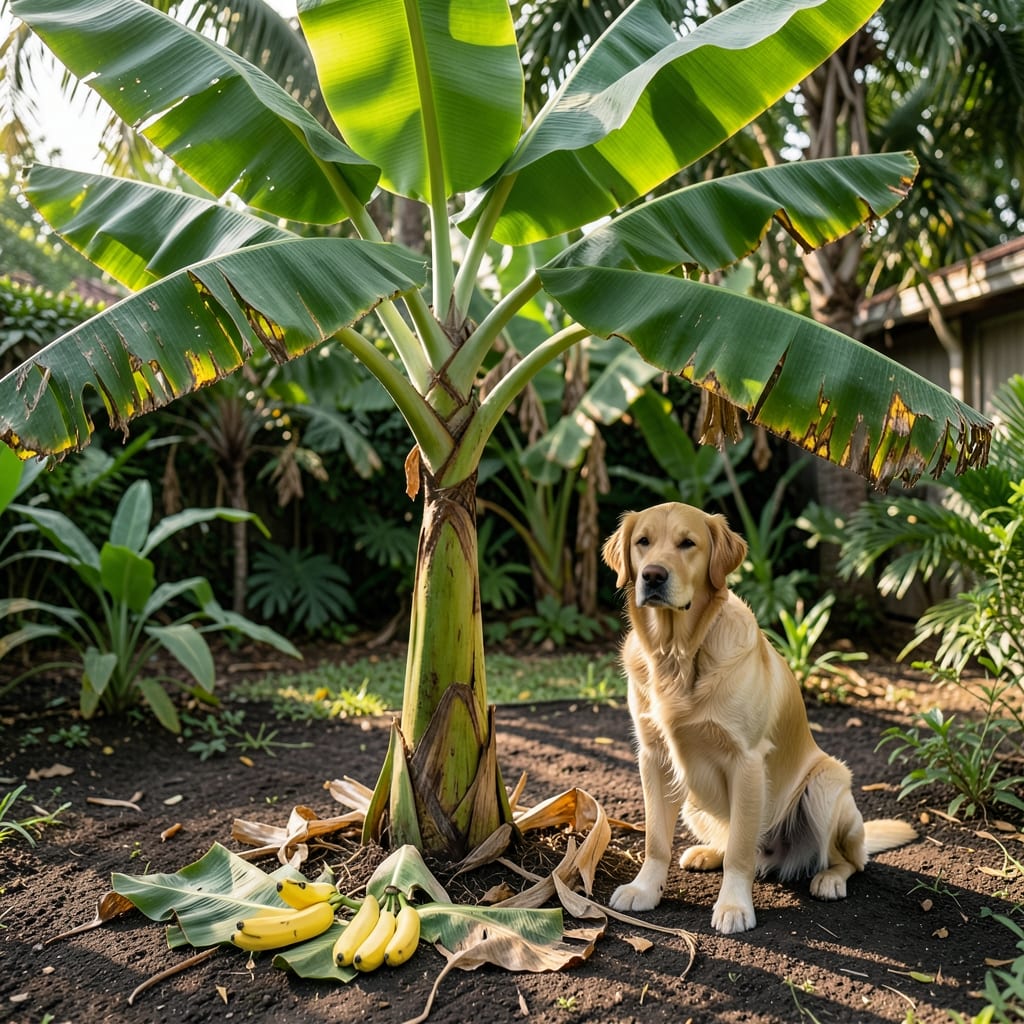
Banana trees are non-toxic to dogs, but large amounts of leaves or stems may cause mild stomach upset. The fruit is safe in moderation, though seeds and peels should be avoided.
I’ve found that most dogs can safely explore a garden with banana trees without risk of poisoning. The mild irritation from excessive plant matter comes from natural fibers that are hard to digest. For the fruit, I always remove peels and seeds before sharing, as these can pose choking hazards or digestive blockages. 🔥
Monitoring your dog’s behavior around plants is key to preventing any issues.
💡 In This Article
Banana trees contain no known toxic compounds like glycosides or alkaloids that would harm dogs. The mild stomach upset from leaves or stems comes from their high fiber content, which is difficult for canines to break down. A dog would need to consume a significant amount—roughly 1-2 cups of plant material—to experience vomiting or diarrhea.
🔥
The fruit itself is safe because it’s low in harmful substances and high in digestible carbohydrates. However, banana peels contain 12-15% fiber by weight, which can clump in the digestive tract. The seeds, while not poisonous, present a choking risk and may cause intestinal blockages if swallowed whole.
Unlike grapes or raisins, banana plant parts don’t trigger kidney failure or severe toxic reactions.
What most pet owners don’t realize is that the irritation comes from mechanical abrasion, not chemicals. The coarse fibers in stems and leaves can scrape the throat and stomach lining. This is why dogs that chew on banana tree debris often cough or gag before any digestive symptoms appear.
The discomfort is temporary and resolves within 24-48 hours without treatment. ✨
For comparison, banana trees are as safe as apple trees, but with one key difference: apple seeds contain trace amounts of cyanide, while banana seeds are merely a physical hazard. The ASPCA classifies banana plants as non-toxic, placing them in the same category as grass or bamboo.
This means your dog can safely sniff, lick, or even nibble small amounts without risk. 💫
Monitoring is still important because individual dogs react differently. Smaller breeds may show symptoms after consuming less plant matter than larger dogs. If your pet ingests a large quantity, watch for lethargy or repeated vomiting, which could indicate a partial blockage. In such cases, a vet visit within 6-12 hours is recommended.
Your dog may experience mild stomach upset, like vomiting or diarrhea, due to the high fiber content. These symptoms typically resolve within 24-48 hours without treatment.
No, banana peels contain 12-15% fiber and can clump in the digestive tract, causing blockages. Always remove peels before sharing banana fruit with your pet.
Use a 2-4 foot barrier like chicken wire or train your dog with the “leave it” command. Regularly remove fallen leaves and fruit to eliminate temptation.
Monitor for lethargy or repeated vomiting, which could indicate a blockage. If these occur, visit a vet within 6-12 hours for evaluation.