
Beautiful Plants For Your Interior
Beautiful Plants For Your Interior
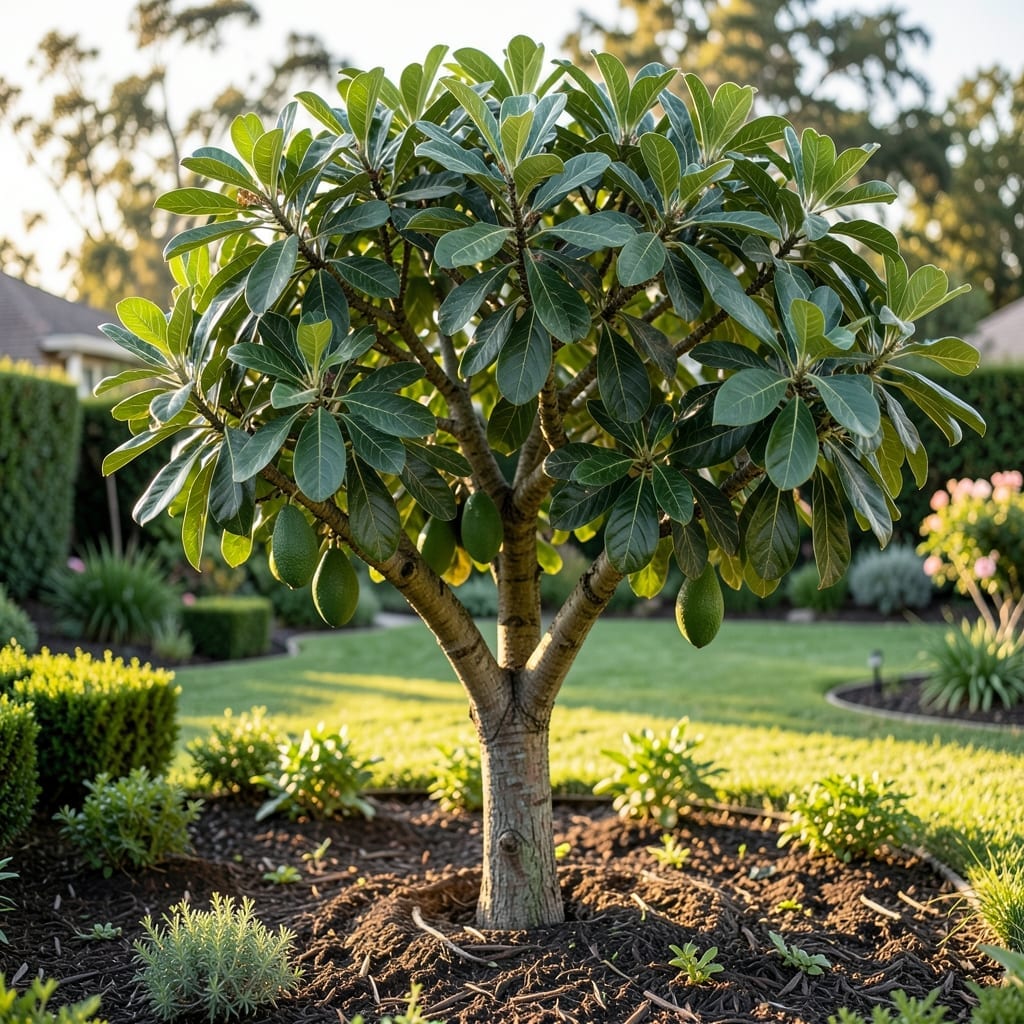
Most avocado trees are not self-pollinating, as they have either type A or type B flowers that open at different times, requiring cross-pollination between compatible trees for optimal fruit set.
I’ve learned that avocado trees have a unique biological quirk where their male and female flower parts open at different times of day. Type A and Type B trees complement each other perfectly, ensuring pollination happens when both are receptive. This natural system boosts fruit production significantly compared to single-tree setups. 🔥
For best results, planting both types within proximity creates a thriving ecosystem where bees and other pollinators can do their work efficiently.
💡 In This Article
Avocado trees exhibit a fascinating reproductive strategy called dichogamy. Type A flowers open as female in the morning, then close and reopen as male in the afternoon. In contrast, Type B flowers do the opposite: male in the morning, female in the afternoon. This timing prevents self-pollination within the same tree. 🔥
Each flower type has a precise schedule. Type A varieties like Hass open female around 10 AM and male around 2 PM. Type B trees such as Fuerte reverse this, with male flowers at 10 AM and female at 2 PM. This offset ensures cross-pollination between compatible trees. ✨
The biological mechanism behind this is evolutionary. By staggering reproductive phases, avocado trees maximize genetic diversity. Pollinators like bees transfer pollen from a Type A male phase to a Type B female phase, or vice versa. This system enhances fruit set rates dramatically compared to self-pollination attempts. 💫
In practice, this means a single tree produces very little fruit. Orchards plant Type A and Type B trees in a 1:1 ratio within 50-100 feet of each other. The proximity allows efficient pollen transfer, with yields increasing by 200-300% in properly paired groves. ⚡
Interestingly, some modern cultivars like Wurtz show partial self-compatibility. Yet even these perform better with a compatible pollinator nearby. The flowers’ timing isn’t absolute—environmental factors like temperature can shift schedules by 1-2 hours, but the dichogamous pattern remains consistent. 🌟
Plant them 50-100 feet apart for optimal pollination. Bees travel this distance easily, ensuring effective pollen transfer between compatible flower types.
A lone tree may produce a small amount of fruit, but yields will be significantly lower. Cross-pollination between compatible types boosts production by 200-300%.
Hass and Gwen are excellent Type A choices, while Fuerte and Zutano work well as Type B partners. Pairing these ensures strong pollination.
For potted trees, keep compatible types within 20-30 feet of each other. This closer range compensates for limited pollinator movement in confined spaces.