
Beautiful Plants For Your Interior
Beautiful Plants For Your Interior
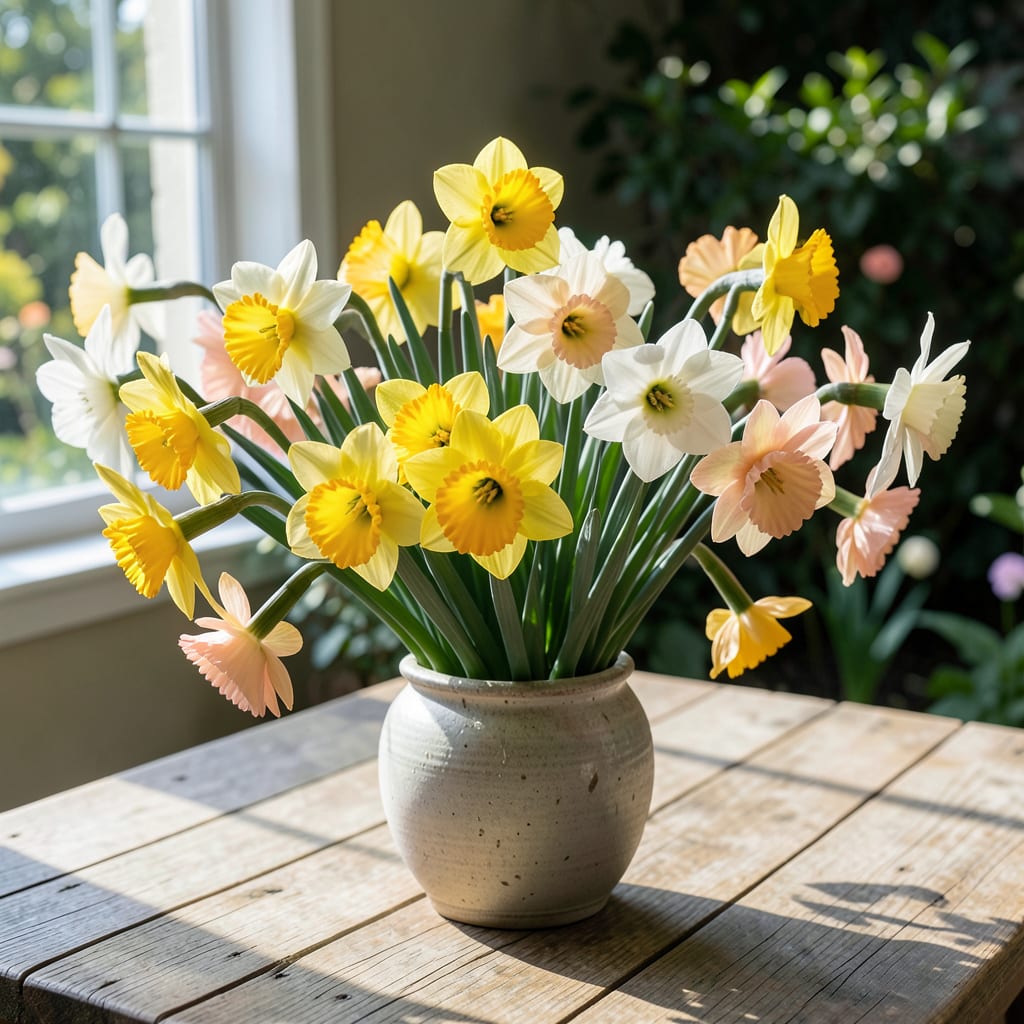
I used to think daffodils only came in that classic bright yellow, but then I discovered the shockingly broad color palette these flowers actually offer.
There are pure white varieties, soft pinks, bold oranges, and even bi-colors that combine multiple hues. Each type brings something unique to your garden, and they all share the same easy-care nature that makes daffodils a spring favorite.
📚 In This Guide
Here’s the method I use to identify and appreciate the full spectrum of daffodil colors in any garden.
Start by examining the most common daffodils, which are indeed bright yellow. Look for cultivars like ‘Tête-à-Tête’ or ‘Ice Follies’ that produce the iconic golden trumpets we associate with spring. These typically bloom in early to mid-season and thrive in full sun to partial shade.
Note the cup (corona) and petals (perianth) structure—both are yellow in these traditional varieties. The flowers usually measure 2-4 inches across. This is your baseline for comparison with other colors.
Search for varieties like ‘Mount Hood’ or ‘Thalia’ that produce pure white blooms. These often have a subtle yellow or pale green corona, creating a striking contrast. The petals may appear slightly translucent in bright sunlight, a characteristic unique to white daffodils.
Some bi-color options, such as ‘Repole’ or ‘Quail’, combine white petals with yellow or orange cups. These typically appear in mid to late season and prefer the same growing conditions as their yellow counterparts. Watch for the way the colors change as the flowers mature.
Look for newer hybrids like ‘Pink Pride’ or ‘Salome’ that display soft pink tones. The color often appears as a blush rather than a solid hue, usually concentrated in the corona. These varieties often bloom in mid-season and may require slightly more protection from harsh afternoon sun.
For orange shades, seek out ‘Tahiti’ or ‘Orange Princess’, which feature vibrant cups that can range from salmon to deep orange. The petals are usually a lighter yellow or cream, creating a dramatic two-tone effect. These often bloom in mid to late spring.
Some daffodils break the traditional color scheme entirely. ‘Pheasant’s Eye’ offers a red-rimmed yellow cup, while ‘Altun Ha’ combines white petals with an orange-pink corona. These unique varieties often have smaller blooms but make up for it in visual impact.
Split corona daffodils, like ‘Orangery’, display cups that appear divided into different color segments. The effect is particularly striking in close-up viewing. These typically appear in late season and may benefit from afternoon shade in warmer climates.
These practical insights will help you spot and appreciate daffodil diversity like a seasoned gardener.
Observation Strategy: In Step 1, don’t just glance at the flowers—examine both the corona and perianth separately. I find that crouching to eye level reveals subtle color variations you’d miss from standing height, especially with the 2-4 inch blooms mentioned.
Lighting Consideration: For Step 2’s white varieties, check them in morning light when the translucent quality is most visible. The pale green corona can be nearly invisible in harsh afternoon sun, which is why I always carry a small mirror to reflect light onto the blooms.
Seasonal Timing: Step 3’s pink cultivars often bloom just as the yellow ones are fading. I mark my calendar to check for ‘Pink Pride’ about a week after my ‘Ice Follies’ peak, as the mid-season timing can vary by a few days depending on spring temperatures.
Close Inspection: The split corona varieties in Step 4 require a hand lens to truly appreciate. I keep one in my garden apron specifically for examining ‘Orangery’—the color segmentation is barely visible to the naked eye but stunning under magnification.
Yes! While yellow is the most common, daffodils also bloom in white, orange, pink, and even bi-colors like yellow-and-white. Varieties like ‘Ice Follies’ (white) or ‘Tête-à-Tête’ (yellow-orange) offer vibrant alternatives.
Most daffodils, regardless of color, bloom in early to mid-spring (March–April). Timing depends on climate and variety—some, like ‘February Gold,’ may bloom earlier, while others, like ‘Poet’s Daffodil,’ appear later.
Nope! All daffodils share similar care needs: well-drained soil, full sun to partial shade, and moderate watering. Non-yellow varieties aren’t fussier—they just add unique flair to your garden!
Color variation comes from selective breeding and natural mutations. Over time, growers developed hybrids to expand the palette beyond classic yellow, offering more choices for gardeners.
