
Beautiful Plants For Your Interior
Beautiful Plants For Your Interior
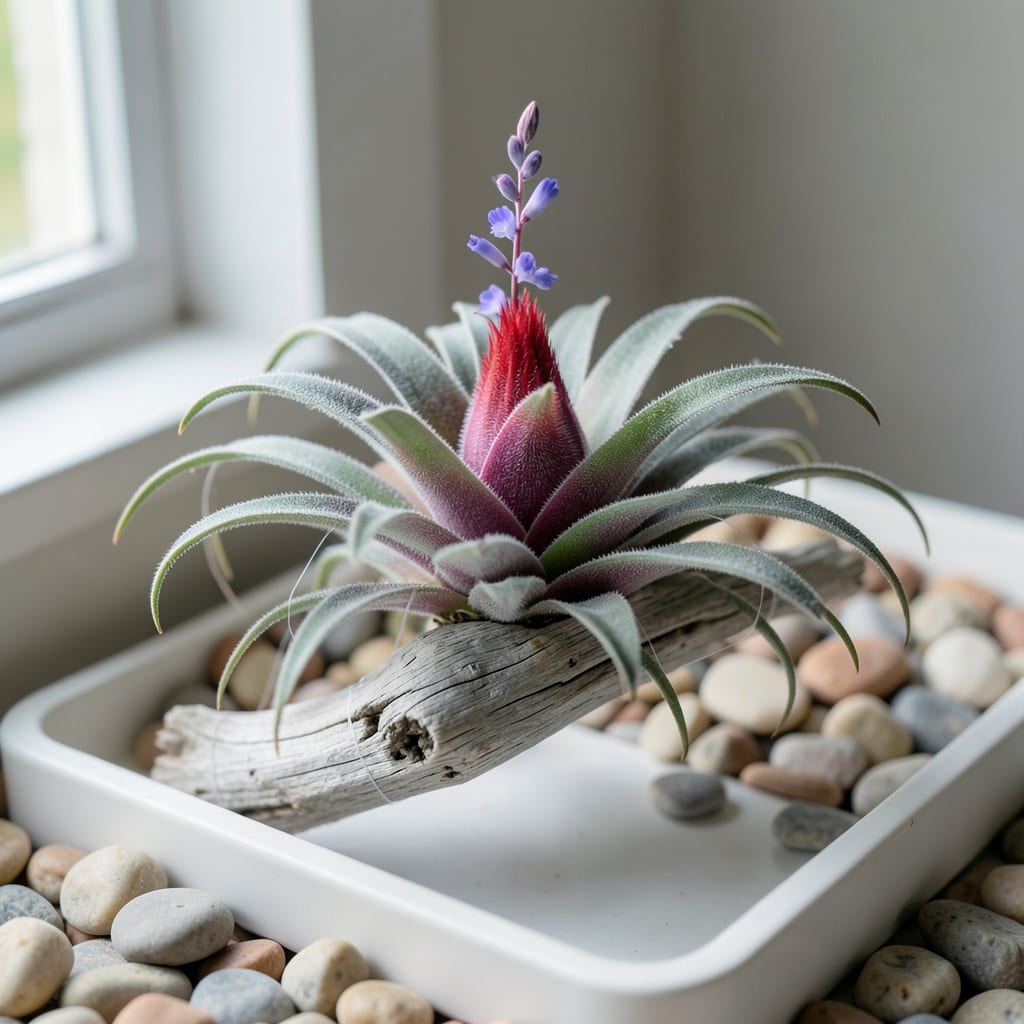
Air plants (Tillandsia) aren’t true succulents, though they share some drought-tolerant traits. Unlike succulents that store water in leaves, air plants absorb moisture through specialized scales called trichomes.
This distinction comes down to their unique survival strategies. 🌿 While both thrive in dry conditions, air plants have evolved to capture moisture directly from the air through their trichomes—tiny, hair-like structures that act like microscopic sponges. Succulents, on the other hand, rely on thick, fleshy leaves to store water for long periods. What’s fascinating is how these adaptations reflect their native environments: air plants often grow on trees in humid rainforests, while succulents dominate arid deserts.
For plant enthusiasts, this difference affects care routines dramatically. Air plants need regular misting or soaking, while succulents prefer infrequent but deep watering. Understanding these botanical distinctions helps prevent common mistakes like overwatering succulents or letting air plants dry out completely. ✨
💡 In This Article
The key distinction lies in their water management systems. Air plants belong to the Bromeliaceae family and rely on trichomes—microscopic, hair-like structures covering their leaves that absorb moisture and nutrients directly from the air. These trichomes give air plants their characteristic silvery or fuzzy appearance.
Succulents, by contrast, store water in their thick, fleshy leaves and stems, allowing them to survive extended dry periods without external moisture sources. 🔥
Evolution shaped these adaptations differently. Air plants developed trichomes to thrive in epiphytic environments, where they grow on trees or rocks in tropical rainforests with high humidity but limited soil access. Their roots serve primarily for anchoring rather than water absorption.
Succulents, however, evolved in arid deserts where water is scarce, developing thick cuticles and reduced leaf surfaces to minimize water loss through transpiration. This fundamental difference explains why air plants can’t tolerate dry air for long, while succulents wilt in high humidity.
Taxonomically, they’re worlds apart. Air plants are part of the Tillandsia genus within Bromeliaceae, the same family as pineapples. Succulents span multiple families including Crassulaceae (jade plants), Aizoaceae (living stones), and Cactaceae (cacti). This classification reflects their distinct reproductive strategies, growth patterns, and cellular structures.
While both exhibit drought tolerance, their survival mechanisms evolved independently to solve different environmental challenges. ✨
What’s particularly fascinating is how trichomes function at a microscopic level. Each trichome consists of a central disc connected to the plant’s vascular system, surrounded by overlapping scales that create a larger surface area for absorption. When humidity rises, these scales expand to capture more moisture.
Succulents, meanwhile, use a different strategy: their cells contain large vacuoles that store water, causing the leaves to swell and become turgid. This cellular difference is why succulents feel plump when healthy, while air plants maintain a more consistent texture.
The native habitats further highlight these differences. Air plants often grow in canopy environments where they receive dappled sunlight and consistent airflow, which helps their trichomes function optimally. Succulents thrive in full sun exposures where their compact growth forms and water-storing tissues prevent desiccation.
This explains why air plants struggle in direct sunlight (their trichomes can’t compensate for rapid moisture loss), while succulents become etiolated in low-light conditions. 🌿
One surprising similarity is their CAM photosynthesis pathway, which both plant types use to conserve water. This process allows them to open their stomata at night when humidity is higher and temperatures are cooler, reducing water loss during photosynthesis.
However, even this shared trait operates differently: air plants use it to supplement their trichome-based water collection, while succulents rely on it to preserve their stored water reserves during daytime heat. This convergence of evolutionary solutions to drought stress creates an interesting parallel between these otherwise distinct plant groups.
Air plants are epiphytes that absorb all nutrients through their leaves—no soil required! Succulents, however, need fast-draining soil mixes (like 60% cactus soil + 40% perlite) to prevent root rot. This fundamental difference means air plants thrive mounted on wood or in open containers, while succulents need proper potting.
Never! Air plants need weekly misting or 20-minute soaks, while succulents prefer deep watering every 2-3 weeks. Air plants love 50-60% humidity and indirect light, but succulents require dry air and 4-6 hours of direct sun daily. Mixing up their care routines is the fastest way to kill either plant.
That fuzz consists of trichomes—microscopic scales that absorb moisture and nutrients from the air. Unlike succulents that store water in plump leaves, air plants rely on these specialized structures. The denser the trichomes, the more drought-tolerant the species. Silver-leaved varieties typically have the most trichomes.
Succulents are generally more forgiving for new plant owners. Air plants require precise humidity and watering schedules, while succulents tolerate neglect better. However, both can thrive with proper care! Start with hardy succulents like jade plants or zebra haworthias before attempting finicky air plant species.
It’s risky! Air plants need higher humidity and indirect light, while succulents prefer dry conditions and bright sun. If grouping them, place air plants in the shadier, more humid spots (like near a bathroom window) and succulents in the sunniest areas of the same room.
