
Beautiful Plants For Your Interior
Beautiful Plants For Your Interior
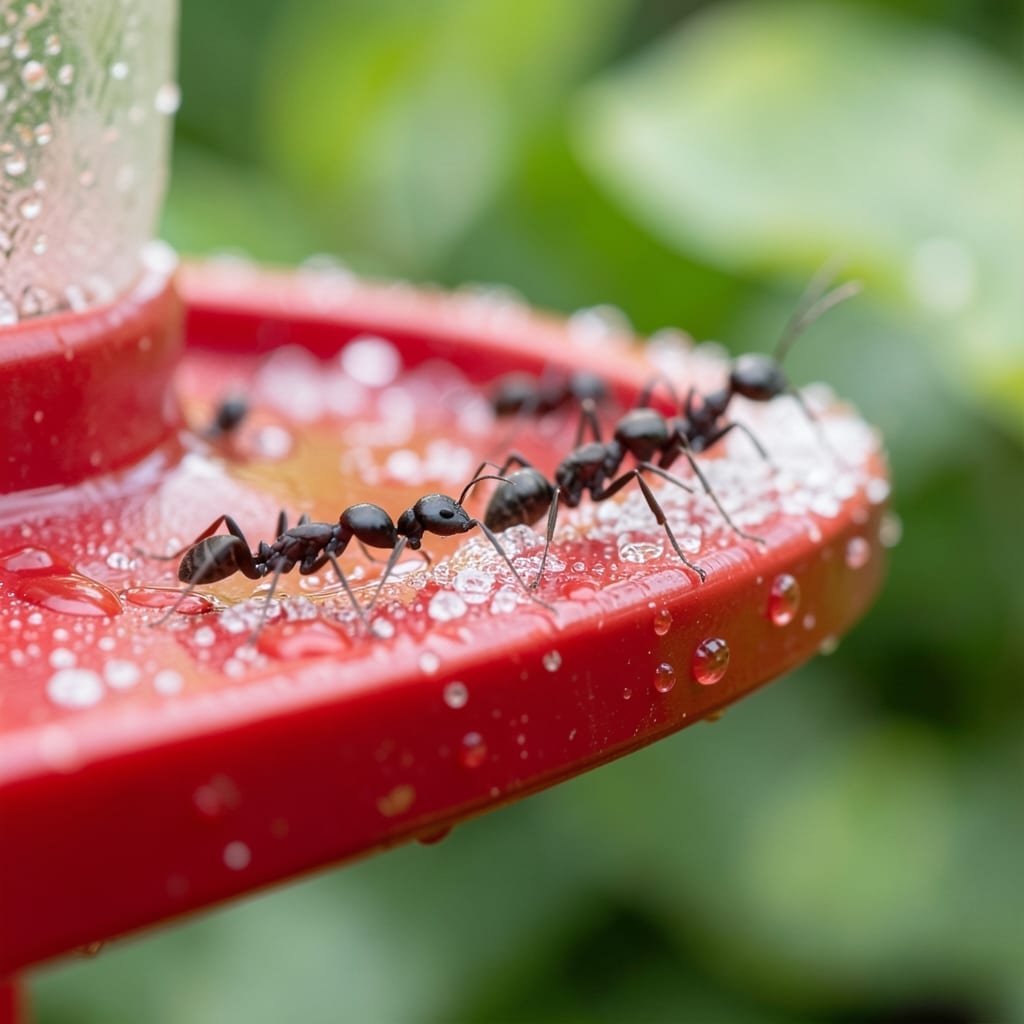
Ants marching into your feeder ruin the show. I’ve watched them swarm nectar ports, driving hummers away and wasting sugar water.
Here’s the thing—ants follow scent trails, and that sweet syrup is irresistible. The fix isn’t poison; it’s outsmarting them with barriers they can’t cross.
You’ll keep the feeder clean and the birds coming back. No chemicals, just clever tricks that work in 24 hours.
Works for hanging feeders, window mounts, or pole setups. Let’s break their trail for good.
Hummingbird feeders often become ant magnets due to a few key factors. Understanding these causes can help you prevent and address the issue effectively.
Ants are naturally drawn to sugary substances, and hummingbird nectar—a mix of water and sugar—is a prime target. The scent of sugar (especially refined white sugar or honey) can attract ants from yards away. Even small spills or residue on the feeder’s exterior can act as a beacon.
Feeders with poorly sealed ports, cracks, or gaps provide ants direct entry. Many hangers or hooks also create bridges for ants to crawl down from trees or nearby structures. If the feeder lacks an ant moat (a water-filled barrier), ants can march right in.
If your feeder is near ant nests, sidewalks, or dense vegetation, the likelihood of infestation increases. Ants follow pheromone trails, so once one scout finds the feeder, others will quickly follow. Urban and suburban areas with high ant populations are especially vulnerable.
Sticky nectar residue or fermenting sugar (common in warm weather) intensifies the scent, making it even more irresistible. Feeders that aren’t cleaned regularly can also harbor mold or bacteria, which some ant species find appealing.
Ants are drawn to the sweet nectar in hummingbird feeders, but a few simple fixes can restore the peace. Below are targeted solutions for the most common causes, plus tips to prevent future invasions.
Wipe down the feeder and surrounding area with a vinegar-water solution (1:1 ratio) to remove sugar residue. If spills are frequent, move the feeder to a spot where ants are less active, like farther from trees or sidewalks. Hang feeders with ant moats (water-filled barriers) to block crawling pests.
Apply a thin layer of petroleum jelly or diatomaceous earth to the feeder’s hanging wire or pole. Ants won’t cross these sticky or abrasive surfaces. For a chemical-free option, wrap the hanger with tape (sticky-side out) to trap ants before they reach the nectar.
Switch to a bee- and ant-proof feeder with built-in guards or tiny ports that only hummingbirds can access. If your current feeder lacks these features, add a nectar guard tip to the feeding ports. Avoid feeders with wide, open reservoirs, as they’re ant magnets.
With these tweaks, your feeder will stay ant-free, and the hummingbirds will keep coming back! 🌸
No, petroleum jelly is safe for hummingbirds as long as it’s applied only to the hanger or pole, not the feeder itself. Ants won’t cross it, but birds won’t come into contact with it.
Clean your feeder every 2-3 days in warm weather to prevent sugar buildup. In cooler months, once a week is usually enough to keep ants away.
Yes, ant moats create a water barrier that ants can’t cross. Fill the moat completely and check it regularly to ensure it stays full.
A 1:1 vinegar-water solution works well to remove sugar residue and disrupt ant trails. Just avoid getting it inside the feeder.