
Beautiful Plants For Your Interior
Beautiful Plants For Your Interior
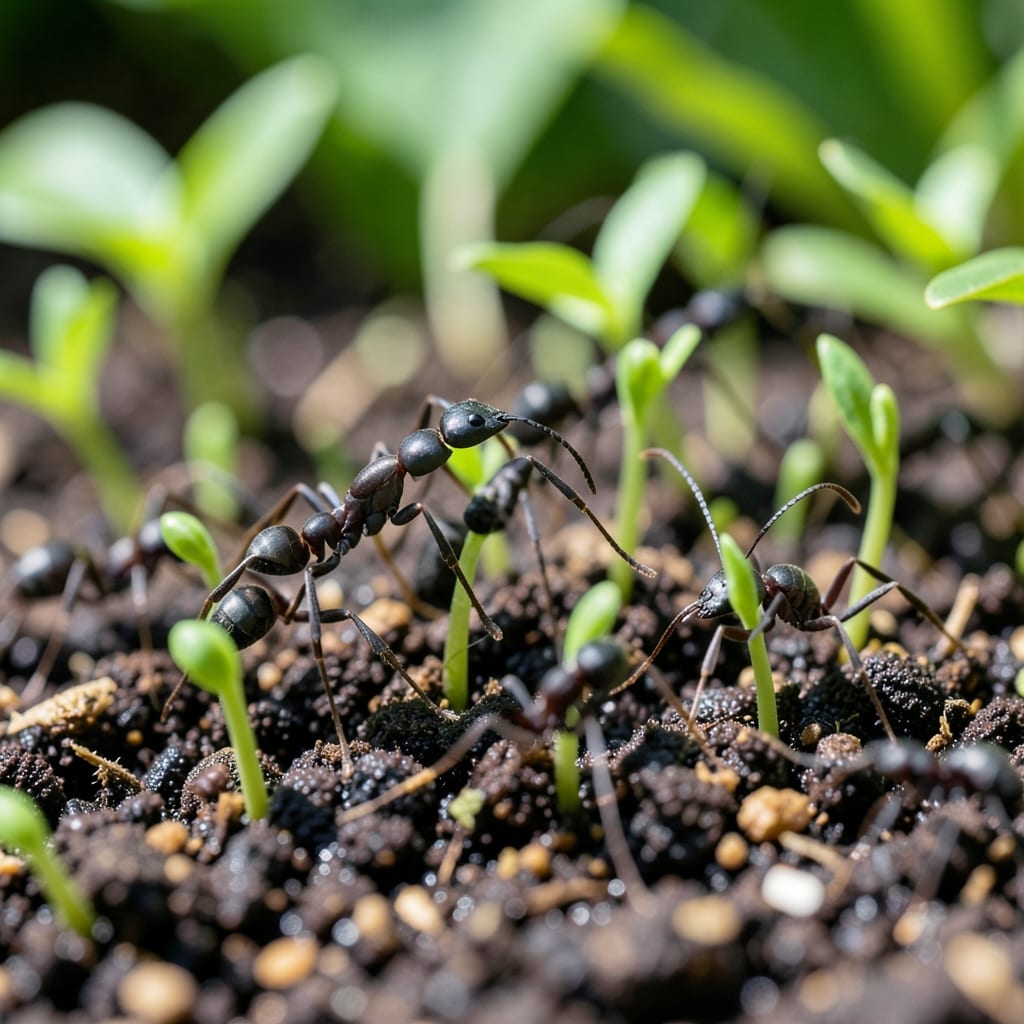
Ants accelerate germination by dispersing seeds to nutrient-rich soil and removing inhibitory seed coatings during transport, giving seeds a head start in ideal growing conditions.
This natural process, called myrmecochory, relies on ants being drawn to seed appendages rich in oils and proteins. 🌟 As they carry seeds away, ants strip off these nutrient-packed coatings, which often contain germination inhibitors. I’ve noticed this creates perfect conditions—seeds land in moist, fertile soil with fewer barriers to sprouting.
💡 In This Article
This process begins when ants discover seeds with elaiosomes—oil-rich attachments that serve as a food reward. The ants carry these seeds back to their nests, often 2-10 meters away, inadvertently transporting them to microhabitats with ideal moisture and nutrient levels.
During this journey, the ants consume the elaiosome, which often contains germination-inhibiting compounds, effectively removing a natural barrier to sprouting. 🔥
Once at the nest, ants typically discard the cleaned seed in underground chambers or near the surface in nutrient-enriched soil. Studies show this can increase germination rates by 30-50% compared to undispersed seeds. The disturbed soil around ant nests also has higher organic matter and better aeration, creating a perfect seedbed.
The removal of the elaiosome alone can reduce germination time by 3-5 days in many species. ✨
What’s fascinating is how specific this relationship is. About 11,000 plant species worldwide have evolved elaiosomes specifically to attract ants. These plants often produce seeds with harder coats that benefit most from the ant’s processing. The ants’ nest environment maintains consistent humidity and temperature, further boosting germination success rates. 💫
The distance seeds travel matters too. Research shows seeds moved just 1-2 meters from the parent plant have 40% higher survival rates due to reduced competition and predation. Ants also tend to drop seeds in microsites with 15-20% higher soil moisture than surrounding areas, giving them a critical advantage during the vulnerable sprouting phase. ⚡
This mutualistic relationship demonstrates how ants act as tiny gardeners. Their activity not only disperses seeds but actively prepares them for growth by removing inhibitors and placing them in optimal conditions. The elaiosome itself contains compounds that can suppress root growth in the parent plant’s immediate vicinity, making the ant’s removal of it particularly beneficial.
🌟
They remove the elaiosome, an oil-rich attachment that often contains germination inhibitors. This cleaning process, combined with placing seeds in nutrient-rich soil, gives them a 30-50% better chance to sprout.
Most seeds are transported 2-10 meters from the parent plant. This distance reduces competition and increases survival rates by 40% for the new seedlings.
About 11,000 species worldwide, including bloodroot, trillium, and wild ginger, have evolved elaiosomes to attract ants. These plants often have harder seed coats that benefit from ant processing.
Yes, the removal of the elaiosome can reduce germination time by 3-5 days. The disturbed soil around ant nests also provides ideal moisture and aeration for sprouting.