
Beautiful Plants For Your Interior
Beautiful Plants For Your Interior
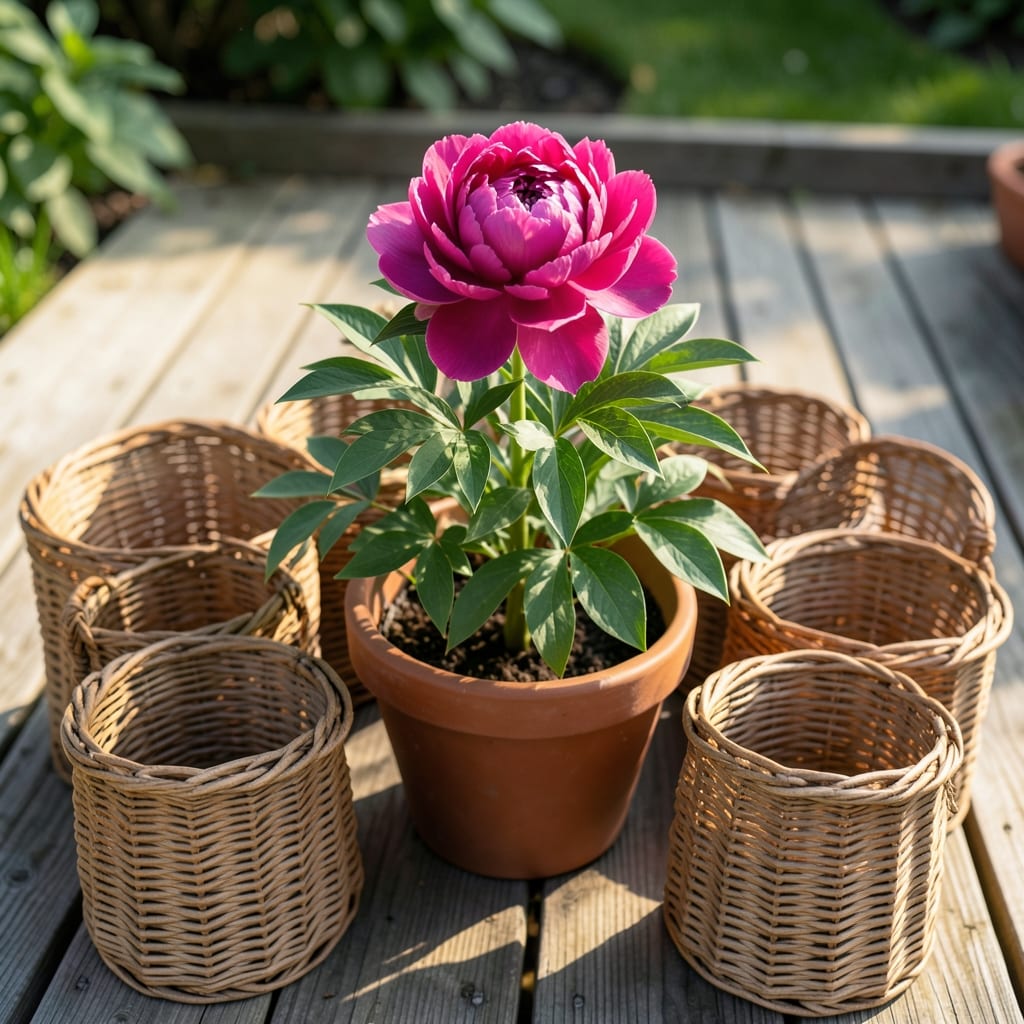
Division forms the core of this distribution challenge. Start by counting all flowers, then divide by 7 baskets to determine the base number per container. For example, 49 flowers would give exactly 7 per basket, creating perfect symmetry. This method leverages basic arithmetic to ensure fairness across all containers. ✨
When the total isn’t divisible by 7, the remainder becomes your creative opportunity. With 50 flowers, you’d place 7 in each basket and have 1 left over. That extra bloom can go into any basket or be distributed as partial stems to maintain visual balance.
The key is treating the remainder as a design element rather than a problem. 💫
For larger numbers like 100 flowers, the calculation gives 14 per basket with a remainder of 2. These extras can be split between two baskets or used to create a slightly fuller centerpiece. The mathematical approach ensures no flowers are wasted while keeping the arrangement harmonious. 🔥
This system works because it applies the division algorithm: total = divisor × quotient + remainder. Here, 7 is always your divisor, the quotient is your base count, and the remainder is your creative flexibility. The method scales perfectly whether you have 10 flowers or 1000. ⚡
Practical tip: Always count twice before distributing. I’ve found that grouping flowers into piles of 7 first makes the physical division process smoother and reduces the chance of miscounting. This preliminary step takes less than 2 minutes but saves significant time during arrangement. 🌟
Divide the total by 7 to get the base count per basket. The remainder becomes your creative element. Place extras in one basket for emphasis or split them to add subtle variations.
Use the extras to create focal points. A single extra bloom can become a centerpiece, while splitting extras between baskets adds natural-looking variety. This turns math into design.
Grouping by color creates cohesive clusters. Place similar blooms together for visual harmony, then distribute these groups evenly across your 7 baskets. This method ensures both mathematical and aesthetic balance.
Create piles of 7 flowers first. This preliminary grouping takes 2 minutes and prevents miscounting during distribution. It’s a professional trick that saves time and stress.