
Beautiful Plants For Your Interior
Beautiful Plants For Your Interior
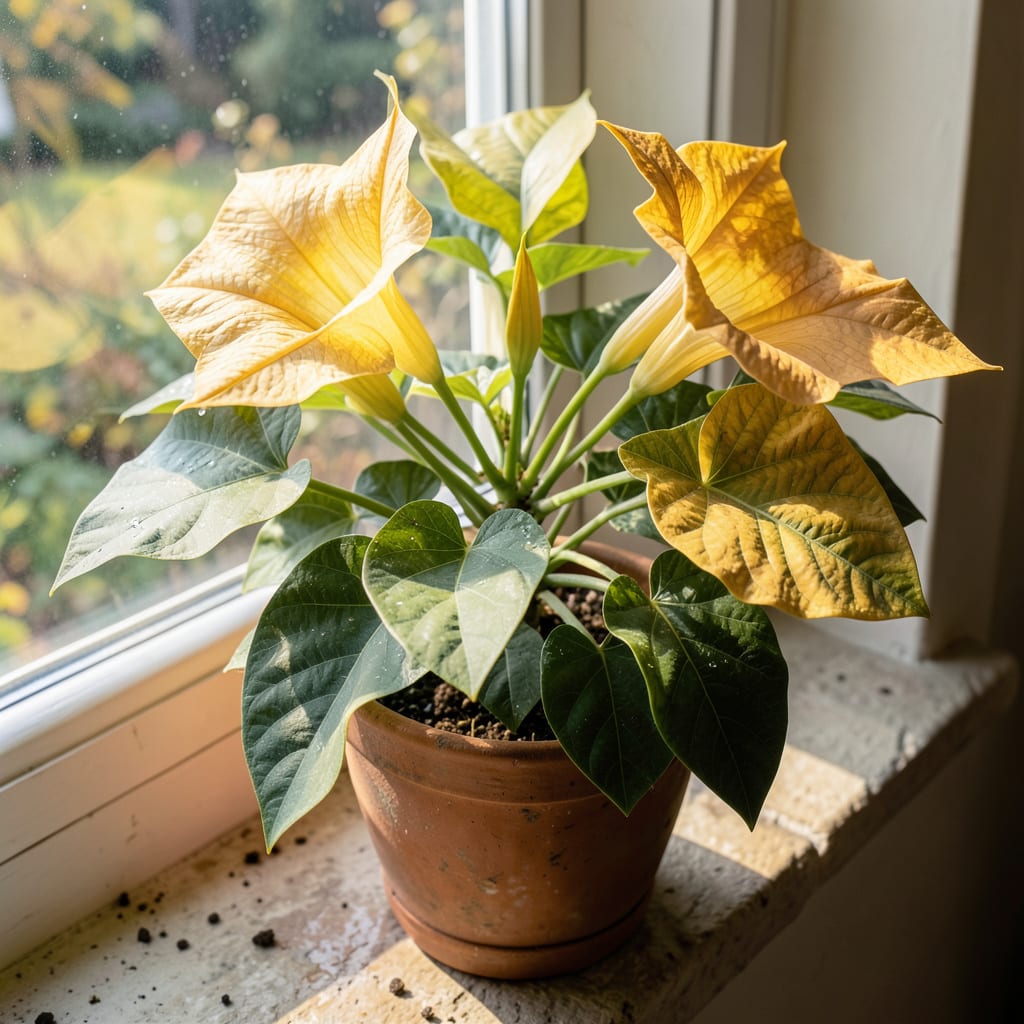
Yellow leaves on angel trumpets always signal something’s off. I’ve saved dozens of these plants by catching the early warning signs—usually before the damage spreads.
The usual suspects are too much water, hungry roots, or uninvited pests. Each leaves a different clue: soggy soil, pale veins, or sticky residue. A quick soil check and leaf inspection usually reveal the culprit within minutes.
Fixing it often means adjusting your watering schedule or adding the right nutrients. Most plants bounce back in 2-3 weeks once you address the root cause.
Prevention is simpler than cure—consistent care and regular checks keep these tropical beauties thriving all season long.
Angel trumpet leaves turn yellow due to a mix of environmental stress, care mistakes, and biological factors. Here’s a breakdown of the most common causes:
Excess moisture suffocates the roots, leading to oxygen deprivation and root rot. When roots can’t absorb nutrients, leaves lose chlorophyll, turning yellow. Brugmansia (angel trumpet) prefers moist but well-drained soil—soggy conditions trigger this decline.
Nitrogen, magnesium, or iron shortages often manifest as yellowing. Nitrogen deficiency starts with older leaves turning uniformly yellow, while magnesium deficiency causes interveinal chlorosis (yellowing between veins). Iron deficiency, common in alkaline soils, affects younger leaves first.
Too much direct sunlight can scorch leaves, while insufficient light weakens chlorophyll production. Angel trumpets thrive in partial shade—full sun (especially in hot climates) or deep shade disrupts photosynthesis, leading to yellowing.
Spider mites, aphids, and whiteflies sap plant fluids, reducing vigor. Their feeding damage disrupts nutrient transport, causing yellow spots or mottling. Check leaf undersides for webbing, sticky residue, or tiny insects.
Below 50°F (10°C) or above 90°F (32°C), angel trumpets struggle. Cold drafts or heat stress impair nutrient uptake, triggering leaf discoloration. Sudden temperature swings are especially harmful.
Actionable tip: Adjust watering, test soil pH (aim for 6.0–7.0), and inspect plants regularly to pinpoint the issue.
Tackle yellowing leaves on your angel trumpet with these targeted fixes for the most common causes.
Fix: Apply a balanced, water-soluble fertilizer (10-10-10 or 20-20-20) every 2–3 weeks during the growing season. For nitrogen deficiency (pale yellow leaves), use a higher-nitrogen formula. For magnesium deficiency (yellow between veins), add Epsom salt (1 tbsp per gallon of water) as a foliar spray or soil drench.
Prevention: Test soil annually and amend with compost. Avoid over-fertilizing, which can burn roots.
Fix: Let the top 1–2 inches of soil dry out before watering again. If root rot is suspected, trim black/mushy roots and repot in fresh, well-draining soil. Use a pot with drainage holes.
Prevention: Water deeply but less frequently. Stick to a schedule (e.g., once a week) and adjust for rain or humidity. 💡 Pro tip: Use a moisture meter to avoid guesswork.
Fix: Move potted plants to a spot with bright, indirect light (4–6 hours of morning sun). For garden plants, provide afternoon shade in hot climates. Prune nearby trees or use shade cloth if needed.
Prevention: Acclimate plants gradually to new light conditions to avoid shock.
Fix: Spray leaves with neem oil or insecticidal soap to combat aphids, spider mites, or whiteflies. Wipe leaves with a damp cloth to remove pests manually.
Prevention: Inspect plants weekly, especially under leaves. Encourage beneficial insects like ladybugs.
Fix: Move plants indoors or to a sheltered area if temperatures drop below 50°F (10°C). Use frost cloth for outdoor plants in mild cold snaps.
Prevention: Harden off plants before transplanting and avoid placing them near cold drafts or heaters.
Water when the top 1-2 inches of soil feels dry. In hot weather, this may mean watering 2-3 times weekly. Always use pots with drainage holes to prevent soggy roots.
A balanced 10-10-10 or 20-20-20 water-soluble fertilizer works well. For magnesium deficiency, add 1 tablespoon of Epsom salt per gallon of water as a foliar spray.
Severely yellow leaves won’t recover, but new growth will be healthy once you fix the issue. Remove damaged leaves to redirect energy to healthy growth.
Inspect leaf undersides weekly for webbing, sticky residue, or tiny insects. Spider mites and aphids are common culprits that cause yellowing.
