
Beautiful Plants For Your Interior
Beautiful Plants For Your Interior
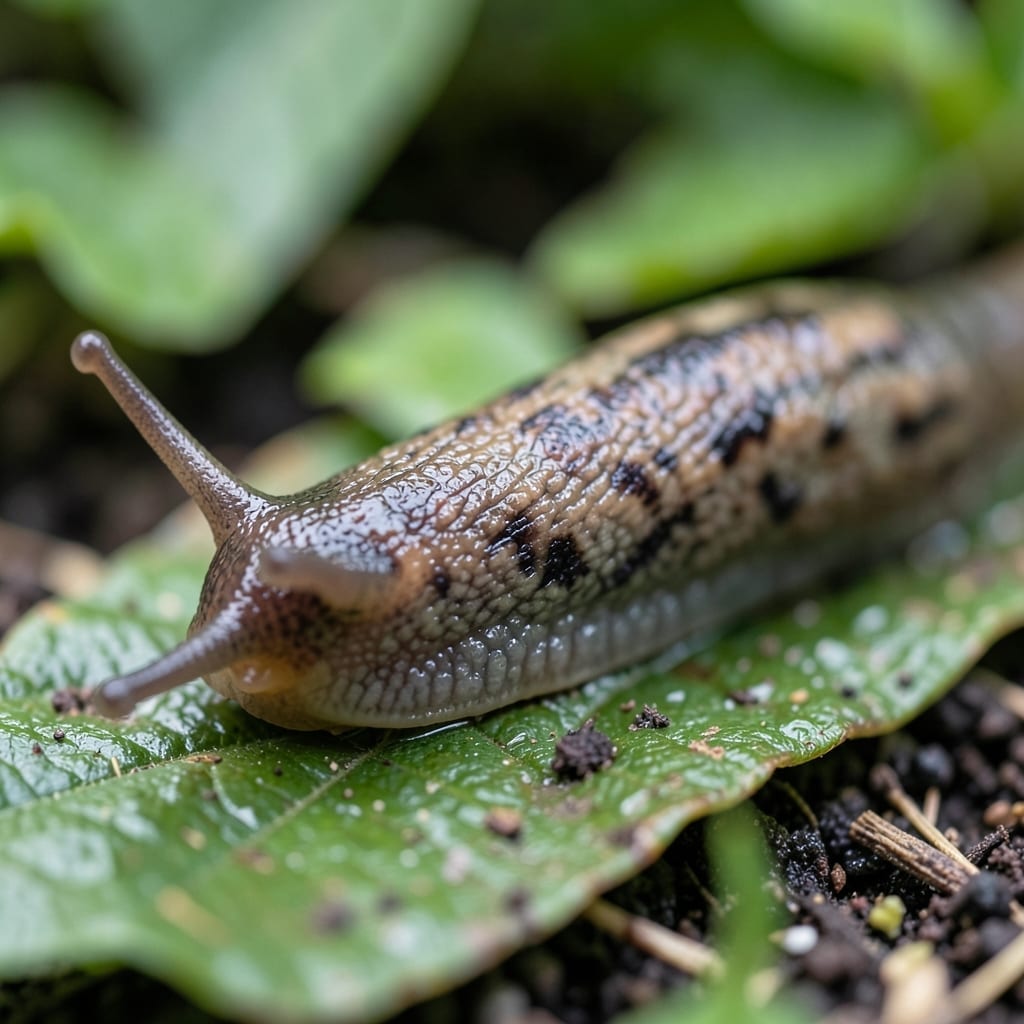
A slug has a soft, elongated body with a head featuring tentacles for sensing, a foot for movement, and a mantle covering internal organs. It lacks a shell but secretes protective mucus.
What fascinates me is how this design helps slugs thrive in moist environments. Their tentacles detect food and danger, while the muscular foot allows them to glide effortlessly. The mantle doubles as a respiratory organ, letting them breathe through their skin. It’s a perfect adaptation for their slow, ground-based lifestyle. 🔥
💡 In This Article
The upper pair of tentacles acts as light sensors, while the lower pair handles smell and taste. These sensory organs contain thousands of chemoreceptors that detect moisture, food, and predators from up to 2 feet away. The tentacles can regenerate if damaged, a survival advantage in harsh environments. 🔥
Beneath the body, the muscular foot secretes a dual-layered mucus trail. The outer layer provides lubrication for movement at speeds of 0.1-0.5 mph, while the inner layer contains fibers that create a slippery surface. This system allows slugs to climb vertical surfaces and traverse razor-sharp edges without injury. ✨
The mantle, located behind the head, serves as a respiratory powerhouse. This tissue-rich area contains the pneumostome—a breathing pore that opens and closes to regulate moisture loss. Slugs can absorb oxygen directly through their skin, which must stay moist to facilitate gas exchange. 💫
Inside the mantle lies the shell remnant, a vestigial structure that’s reduced to a small, internal plate. This evolutionary leftover contains calcium carbonate reserves, which the slug can use to neutralize acids in its digestive system when processing decaying plant material. ⚡
What ties it all together is the slug’s open circulatory system. A three-chambered heart pumps hemolymph through vessels and sinuses, delivering oxygen and nutrients. This simple but effective design supports their low-energy lifestyle while maintaining all vital functions. 🌟
The upper pair detects light, while the lower pair handles smell and taste. Each contain thousands of chemoreceptors to find food and avoid danger from up to 2 feet away.
Their muscular foot secretes a mucus trail that acts like a slippery conveyor belt. This allows them to glide at speeds of 0.1-0.5 mph while protecting their soft bodies.
Yes! They can regenerate damaged tentacles completely. This ability helps them survive in harsh environments where parts might get nibbled by predators.
Oxygen enters through their skin and the pneumostome, a breathing pore in the mantle. Their skin must stay moist for this gas exchange to work effectively.