
Beautiful Plants For Your Interior
Beautiful Plants For Your Interior
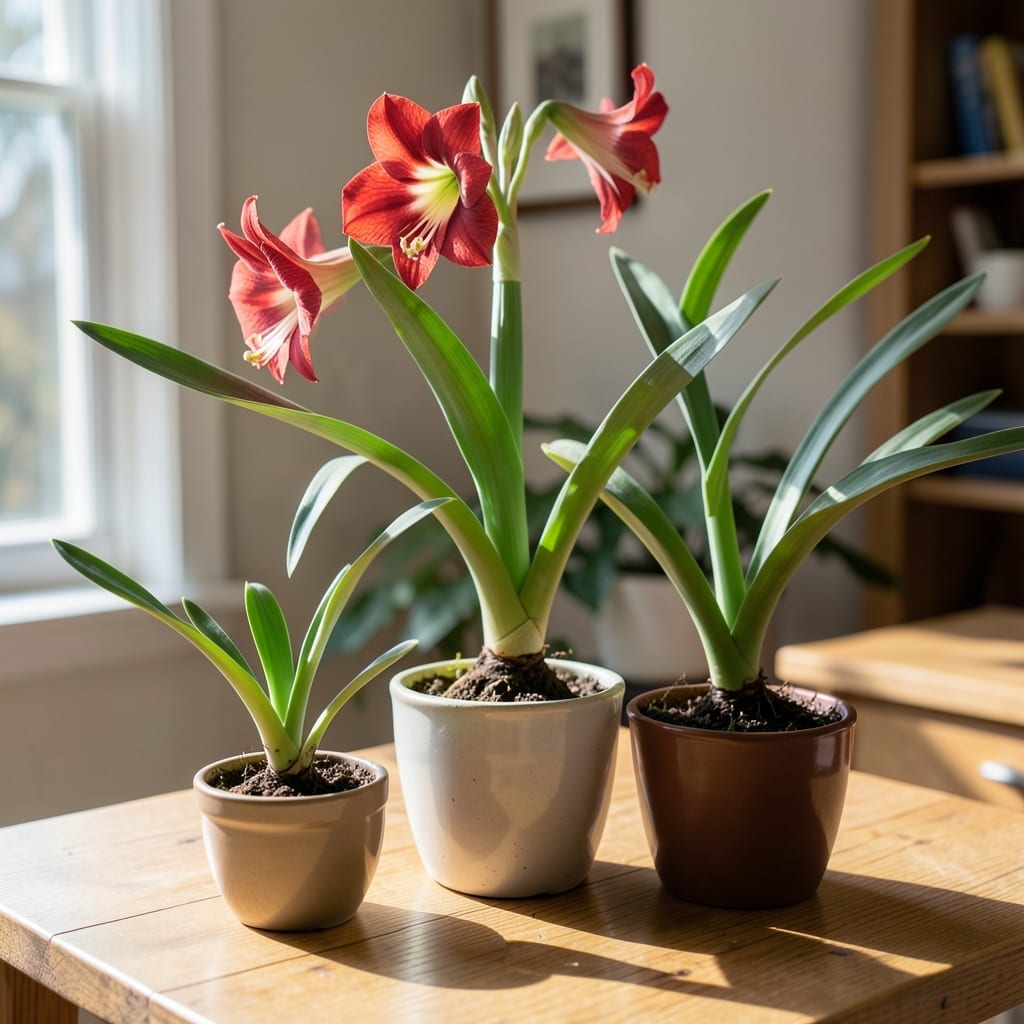
There’s nothing quite like watching your 🌷 Amaryllis bulb transform into stunning blooms—but it all starts with the right foundation. A pot that’s too big or too small can make the difference between thriving and struggling.
I’ve seen firsthand how the wrong container leads to root rot or stunted growth. The good news? It’s an easy fix once you know the basics.
Choosing the ideal dimensions ensures proper drainage and room for roots to spread. With the right setup, your Amaryllis will reward you with vibrant flowers year after year.
Discover the exact pot size that sets your plant up for success—and avoid the common mistakes that hold gardeners back.


I always tell fellow gardeners that the amaryllis pot size directly impacts bloom quality. A 6-8 inch diameter pot with good drainage is ideal for most bulbs. This gives roots space to grow without risking waterlogging.
For standard amaryllis bulbs, I recommend a pot that’s only 1-2 inches wider than the bulb itself. Too much extra space can lead to root rot from excess moisture retention.
| Requirement | Specification |
| Ideal Diameter | 6-8 inches |
| Depth Needed | 8-10 inches |
| Drainage Holes | Essential |
| Material | Terracotta or plastic |
| Bulb Placement | 1/3 above soil |
The depth of the pot should accommodate the bulb with 2-3 inches of soil beneath it. I’ve found that terracotta pots work particularly well as they’re porous and help prevent overwatering.
Remember that larger bulbs may need slightly bigger containers. I use an 8-inch pot for bulbs that are 2.5-3 inches in diameter. The extra space supports their vigorous growth.
Drainage is non-negotiable in my experience. I always ensure my amaryllis pots have multiple drainage holes to prevent water from pooling at the roots. This simple step has saved many of my plants.
For dwarf amaryllis varieties, I downsize to 4-6 inch pots. These smaller bulbs don’t need as much space, and a larger pot would actually hinder their development.
I’ve noticed that plastic pots retain moisture longer than terracotta. If you prefer plastic, be extra mindful of your watering schedule to avoid soggy soil conditions.
The right amaryllis pot size also affects bloom timing. In my garden, properly potted amaryllis tend to flower 2-3 weeks earlier than those in ill-fitting containers.
Finally, I always remind myself that repotting time is the perfect opportunity to assess if my amaryllis needs a size upgrade. If roots are circling the bottom, it’s time for a slightly larger home. 🌷
I see many gardeners struggle with amaryllis container sizes because they assume bigger is always better. However, oversized pots lead to excess soil moisture, which can rot the bulb before it even blooms.
On the other hand, too-small containers restrict root development and cause the plant to become root-bound, stunting growth and reducing flower quality.
⚠️ Avoid These Pitfalls:
Oversized pots = root rot risk
Tiny pots = stunted blooms
No drainage = waterlogged soil
Material matters too. Terracotta pots breathe better than plastic, helping prevent soil saturation, but they dry out faster. I recommend terracotta for amaryllis bulbs to balance moisture and airflow.
Another common error is ignoring bulb size. A small bulb in a large pot wastes space and resources. Match the pot diameter to your bulb—usually 1-2 inches wider than the bulb itself.
Don’t forget about drainage holes. Even the perfect amaryllis pot size fails without them. I always check for multiple drainage holes to ensure excess water escapes easily.
Finally, repotting too often can stress the plant. I wait until the bulb outgrows its current home or the soil degrades, typically every 2-3 years 🌷