
Beautiful Plants For Your Interior
Beautiful Plants For Your Interior
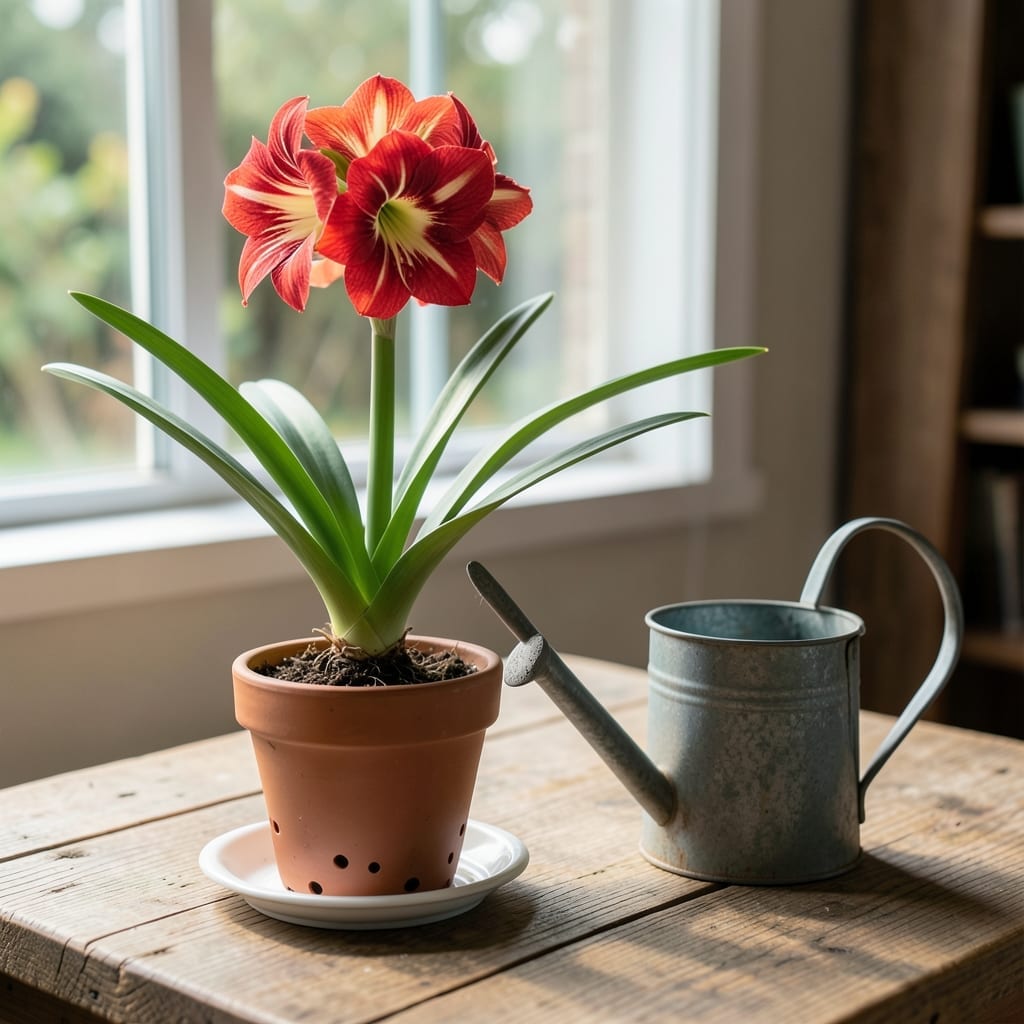
Overwatering or underwatering your 🌷 Amaryllis can mean the difference between vibrant blooms and a wilting plant. Discover the perfect balance to keep yours thriving year-round.
Too much water leads to rot, while too little stunts growth. It’s a delicate dance, but one you can master with the right approach.
I’ll show you exactly how to adjust your watering for each growth stage. Let’s ensure your Amaryllis gets just what it needs, no more and no less.
Getting the watering right for your amaryllis is key to vibrant blooms. These bulbs thrive with consistent moisture but hate soggy soil.
I’ve found that seasonal changes dramatically affect their needs. In active growth, they drink more, while dormancy demands a hands-off approach.
| Stage | Watering Frequency | Key Notes |
|---|---|---|
| Dormant | Monthly | Keep soil barely moist |
| Early Growth | Weekly | Water when top inch is dry |
| Blooming | Every 5-7 days | Maintain even moisture |
| Post-Bloom | Every 10-14 days | Reduce as leaves yellow |
During dormancy, your amaryllis bulb needs very little water. I stop watering almost completely, only adding 1-2 tablespoons monthly to prevent the soil from drying out entirely.
When new growth appears, it’s time to increase watering. I check the soil with my finger—if the top inch feels dry, I give it a thorough drink until water runs from the drainage holes.
I always water my amaryllis in the morning to allow excess moisture to evaporate during the day. This prevents root rot and fungal issues, which are common with evening watering.
The blooming phase is when your plant is most thirsty. I maintain consistent moisture but avoid waterlogging. The goal is moist, not soggy soil.
After the flowers fade, I gradually reduce watering as the leaves begin to yellow. This signals the plant is preparing for dormancy again, and too much water can cause the bulb to rot.
For potted amaryllis, I recommend using a well-draining mix with perlite or sand. This ensures excess water can escape, which is crucial for preventing bulb rot.
If you’re growing amaryllis outdoors in warm climates, water deeply but less frequently. In-ground plants can often go 10-14 days between waterings, depending on rainfall.
Even experienced gardeners can accidentally harm their amaryllis with improper watering. I’ve seen it happen too often: root rot from overwatering or stunted growth from neglect.
The most common issue is overwatering, especially during dormancy. Many assume more water equals better growth, but amaryllis bulbs need dry spells to thrive.
⚠️ Warning: Overwatering causes bulb rot and fungal diseases. Always check soil moisture before watering again.
Another mistake is watering at night. I always recommend morning watering to allow excess moisture to evaporate, preventing fungal growth in cool, damp evenings.
Using pots without drainage holes is equally damaging. Without proper drainage, water pools at the bottom, drowning the roots and inviting disease.
Underwatering during active growth leads to weak stems and smaller blooms. I check the soil every 2-3 days during this phase to ensure consistent moisture.
Finally, ignoring soil quality can cause watering issues. I use a well-draining mix with perlite or sand to ensure water flows through easily, keeping roots healthy and happy 🌷