
Beautiful Plants For Your Interior
Beautiful Plants For Your Interior
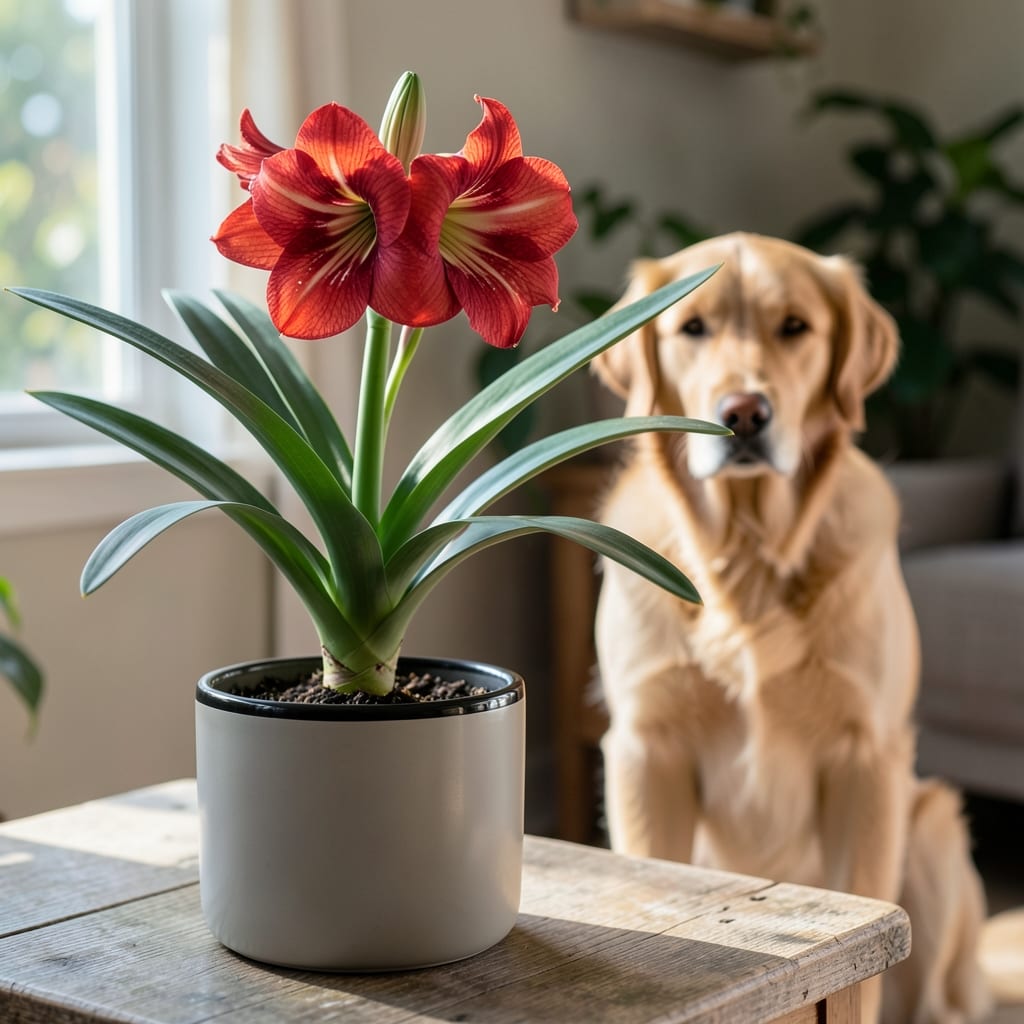
Amaryllis is not safe for dogs. The bulb contains toxic alkaloids like lycorine that can cause vomiting, diarrhea, and tremors if ingested. Keep it out of reach.
As a dog owner, I always recommend removing this plant from your home entirely. The lycorine compounds can trigger severe gastrointestinal distress within 6-12 hours of ingestion, and even small amounts may lead to neurological symptoms. 💫
What concerns me most is how quickly dogs can access bulbs during repotting or when they fall to the ground. Prevention is simpler than treatment in these cases.
💡 In This Article
The bulb contains concentrated phenanthridine alkaloids, primarily lycorine, which disrupts a dog’s cellular function. These compounds interfere with protein synthesis and can cause oxidative stress in canine liver and kidney cells. Even 0.1% of a dog’s body weight in bulb material can trigger toxicity.
Symptoms typically appear within 6-12 hours and escalate from vomiting to neurological issues. The alkaloids irritate the gastrointestinal tract first, then cross into the bloodstream. In severe cases, dogs may experience tremors, low blood pressure, or seizures as the toxins affect the nervous system. 🔥
What makes amaryllis particularly dangerous is the bulb’s high toxin concentration. While leaves contain some alkaloids, the bulb has up to 10 times more lycorine by weight. A 50-pound dog eating just half a bulb could face life-threatening complications without immediate veterinary care.
Veterinarians often treat exposure with activated charcoal to absorb remaining toxins and IV fluids to support kidney function. The prognosis improves significantly with early intervention, which is why recognizing the first signs of drooling or nausea is critical for dog owners. ⚡
Prevention remains the best strategy. Store bulbs in sealed containers during dormancy and supervise outdoor time when amaryllis plants are in bloom. Even dried plant material retains toxicity for months, making year-round vigilance essential for pet safety.
The bulb contains the highest concentration of lycorine and other toxic alkaloids. While leaves and stems have some toxins, the bulb is up to 10 times more dangerous by weight. Even small amounts can be harmful.
Signs typically show within 6-12 hours after ingestion. Early symptoms include drooling, vomiting, and diarrhea, which may escalate to tremors or seizures if untreated.
Contact your vet or the ASPCA Animal Poison Control immediately. Do not wait for symptoms to appear. Bring a sample of the plant for identification if possible.
Yes! African violets and orchids offer vibrant, pet-safe flowers. For outdoor gardens, sunflowers or marigolds are excellent non-toxic options.