
Beautiful Plants For Your Interior
Beautiful Plants For Your Interior
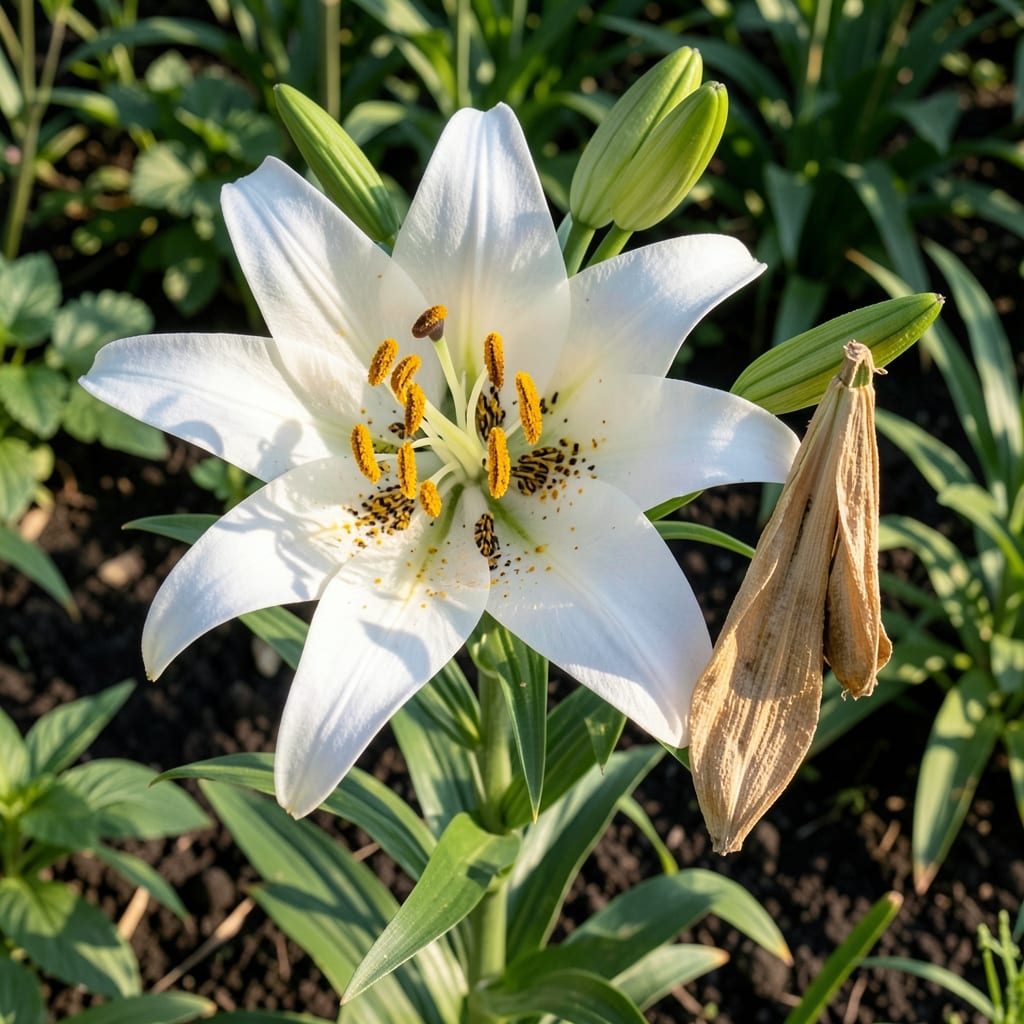
After pollination, seeds develop inside the flower’s ovary, which matures into fruit. Each fertilized ovule within the ovary grows into a seed, protected by the surrounding fruit tissue.
I’ve always found it fascinating how nature’s design ensures protection at every stage. The ovary’s transformation into fruit isn’t just about housing seeds—it’s a strategic survival mechanism. As the ovules develop, they draw nutrients from the plant while the fruit swells to shield them from environmental threats. 💫
This process explains why you’ll often find seeds nestled deep inside fruits like apples or tomatoes, rather than on the surface. The flower’s structure is perfectly adapted to give seeds the best chance to mature and eventually spread.
💡 In This Article
When pollen lands on a flower’s stigma, it germinates and grows a pollen tube down through the style to reach the ovary. This microscopic highway delivers sperm cells to the ovules, where fertilization occurs within 12-48 hours in most species. 🌟
The fertilized ovule immediately begins dividing cells, triggered by hormonal signals like auxin. This hormone surge instructs the ovary wall to thicken and differentiate into fruit tissue, while the ovule’s outer layers harden into a seed coat. Think of it like a construction site where blueprints (DNA) meet building materials (nutrients).
What’s remarkable is how the ovary’s transformation syncs with seed development. In tomatoes, for example, the ovary’s growth rate accelerates 3-5 days after pollination as seeds begin forming their embryonic structures. The plant prioritizes resource allocation to the developing seeds first, then to the surrounding fruit.
Temperature and moisture play critical roles here. Studies show optimal seed formation occurs at 70-75°F for most flowering plants. Too cold, and pollen tube growth slows. Too hot, and ovules may abort. This is why gardeners often see poor seed set in extreme weather. ✨
The ovule’s position within the ovary determines the seed’s future placement in the fruit. In peppers, ovules attach to a central column, creating seeds clustered around the core. In strawberries, ovules cover the surface, making each tiny “seed” on the exterior technically an individual fruit.
This precise coordination between pollen, ovule, and ovary ensures each seed gets the protection and nourishment it needs. The ovary’s transformation into fruit isn’t just packaging—it’s a nutrient-rich nursery designed for the next generation. 🔥
Look for the ovary at the flower’s base to start swelling within 2-3 days. Petals often drop soon after. You may also notice a color deepening as the fruit begins to form around the seeds.
The ovary typically withers and falls off without developing. This is why many garden flowers drop unfertilized blooms. Without fertilization, there’s no signal to trigger seed and fruit formation.
No, the ovary must develop into fruit to protect the seeds. Even in cases like strawberries where “seeds” appear on the surface, each is actually a tiny fruit with a seed inside.
It depends on the number of ovules in the ovary. A tomato may contain hundreds, while an avocado usually has just one. The plant’s genetic blueprint determines this during flower formation.