
Beautiful Plants For Your Interior
Beautiful Plants For Your Interior
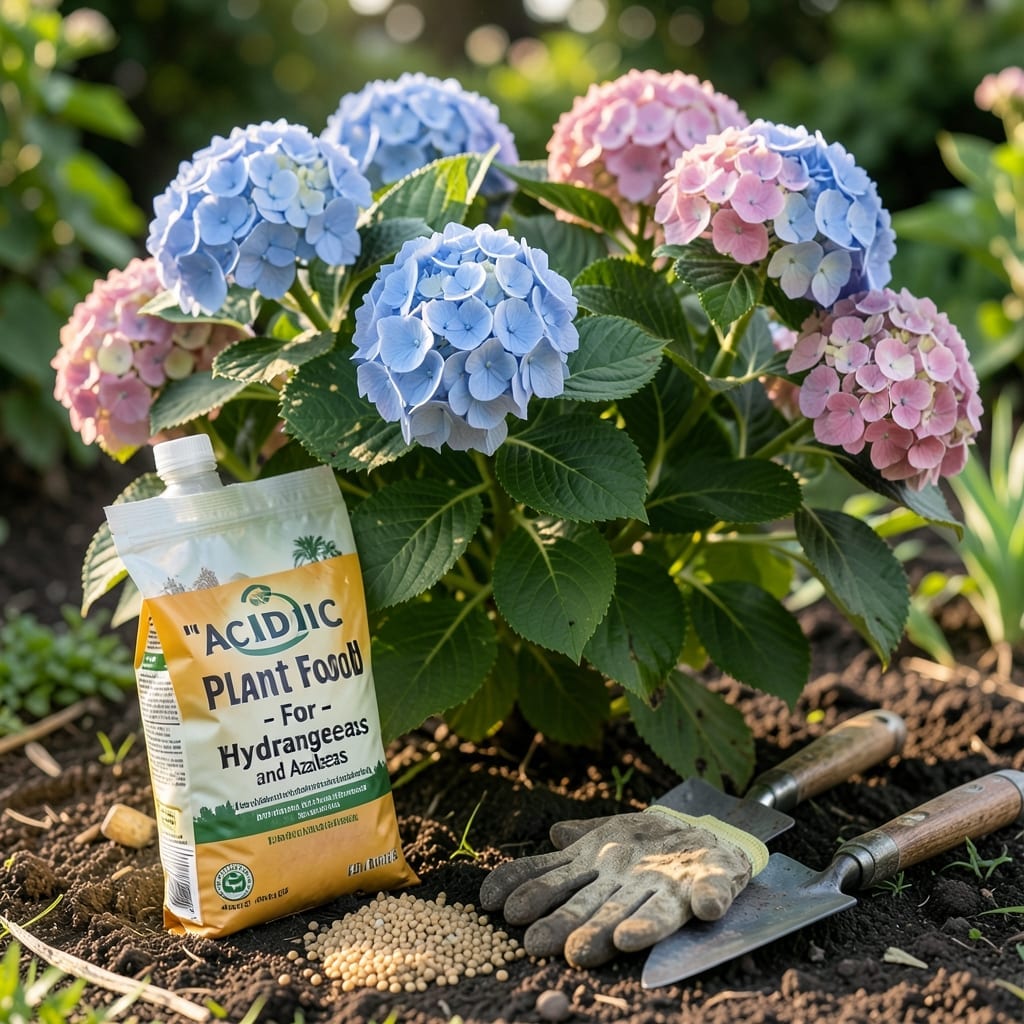
Want to transform your hydrangeas from lackluster pink to vibrant blue? The secret lies in the soil. Using the right acidic fertilizer can work wonders, but choosing incorrectly might leave your 🌸 blooms disappointing.
I discovered that most important factor for color change is soil pH. The right fertilizer makes all the difference in achieving those stunning blue hues you’ve been dreaming about.
Through years of testing different approaches, I’ve learned what truly works. Whether you’re a beginner or seasoned gardener, these insights will help you achieve the perfect blue hydrangeas.
Discover how to select and apply the best acidic fertilizer for your Hydrangea. Let me show you exactly how to make it happen in your garden.
If you want those stunning blue hydrangea blooms, the right acidic fertilizer is key. Bigleaf hydrangeas change color based on soil pH, and sulfur-based fertilizers help lower pH to create that vibrant blue.🌸
I’ve tested several options, and the best ones balance pH adjustment with nutrient delivery. Look for formulas with ammonium sulfate or elemental sulfur for the most dramatic results. Organic choices like cottonseed meal work too but act slower.🌿
| Fertilizer Type | pH Impact | Application Frequency | Best For |
|---|---|---|---|
| Aluminum Sulfate | Rapid pH drop | Every 4-6 weeks | Quick blue color |
| Cottonseed Meal | Gradual pH drop | Every 8-10 weeks | Organic gardens |
| Sulfur-Coated Urea | Moderate pH drop | Every 6-8 weeks | Slow-release feed |
| Elemental Sulfur | Long-term pH drop | Every 12 weeks | Soil amendment |
For immediate results, I recommend aluminum sulfate. It’s highly soluble and starts working within days. However, it can burn roots if overused, so follow the package instructions carefully.🌻
If you prefer organic gardening, cottonseed meal is my go-to. It’s gentle, adds organic matter, and slowly acidifies the soil. Just remember it takes 2-3 months to see the full effect.
Sulfur-coated urea is a great middle ground. It provides nitrogen while gradually lowering pH. Perfect for gardeners who want consistent feeding without frequent applications.
For a long-term solution, mix elemental sulfur into the soil. It’s slow-acting but creates a stable acidic environment. I like to apply it in early spring before growth starts.
Always test your soil pH before and after applying. Aim for a pH of 5.2-5.5 for the bluest blooms. A simple soil test kit from your local garden center works perfectly.
Remember, panicle hydrangeas won’t change color with acidic fertilizer—they stay white or pale green. This method only works for bigleaf hydrangeas like Hydrangea macrophylla.☀️
Finally, combine your fertilizer with consistent watering. Hydrangeas are thirsty plants, and dry soil can prevent the fertilizer from working effectively. Keep the soil moist but well-drained for best results.
Transforming your hydrangea blooms from pink to blue starts with proper application. I always recommend testing your soil pH first—aim for 5.2-5.5 for vibrant blue flowers. This ensures your efforts won’t go to waste.
Timing matters most with acidic fertilizer. Apply in early spring before new growth appears, then again in early fall. This schedule aligns with your hydrangea’s natural growth cycles.
For granular fertilizers, sprinkle 1 tablespoon per plant around the drip line, not the stem. This prevents root burn while ensuring even distribution.
If using liquid acidic fertilizer, dilute to half strength and apply every 2 weeks during active growth. I’ve seen remarkable color shifts in as little as 4-6 weeks with this method.
Finally, keep a garden journal to track your hydrangea’s progress. Note the fertilizer type, application dates, and any color changes you observe. This helps refine your approach over time 🌸