
Beautiful Plants For Your Interior
Beautiful Plants For Your Interior
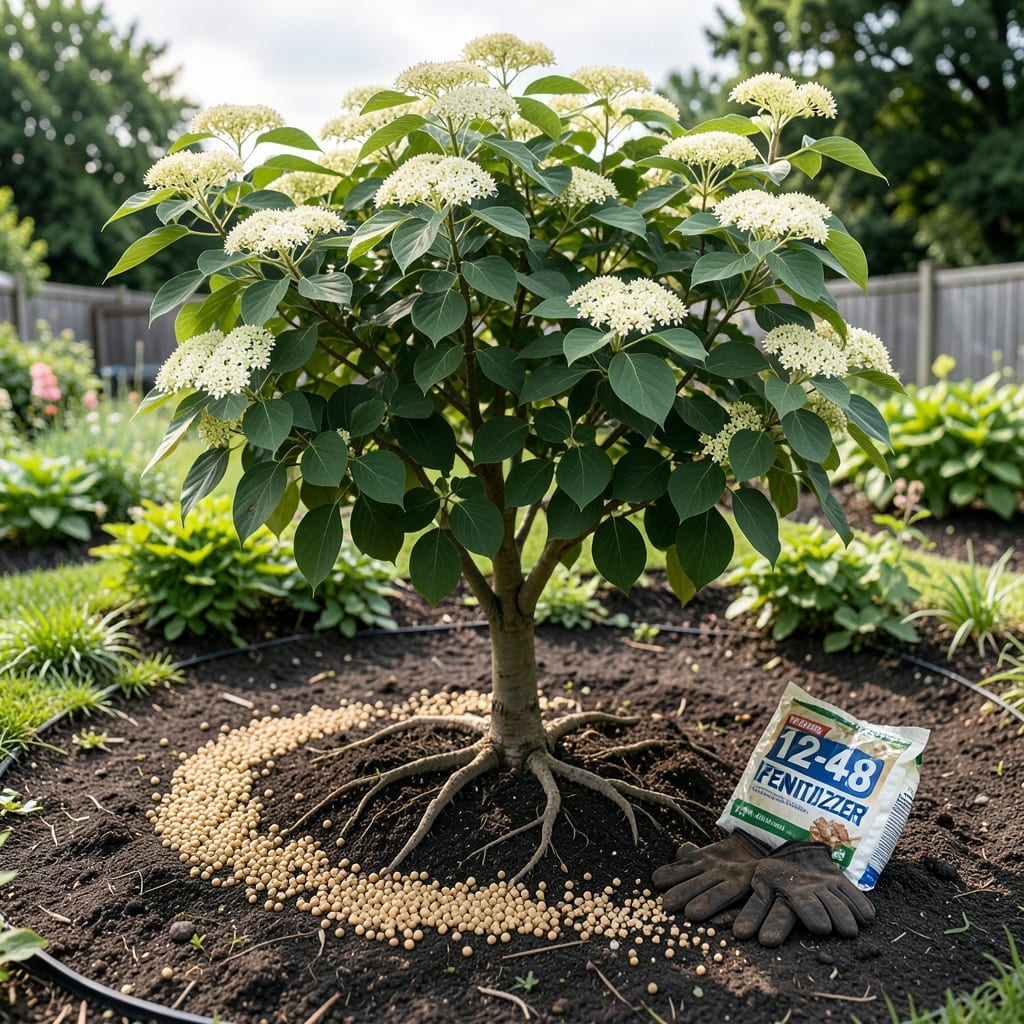
There’s something magical about watching a 🌳 Dogwood Tree burst into vibrant blooms each spring. But getting that stunning display requires more than just luck – it needs the right nutrition at the right times.
I’ve discovered that a balanced approach to feeding your Dogwood can make all the difference. The key lies in understanding what your tree needs during each season of growth.
Find out how to give your Dogwood the perfect nutritional boost for healthier foliage and more abundant flowers. The results might just surprise you.
The 12-4-8 fertilizer is a game-changer for dogwood trees because it mirrors their natural nutritional needs. The high nitrogen content (12%) promotes lush, green foliage, which is essential for these trees that are prized for their vibrant leaves and blossoms.
Meanwhile, the 4% phosphorus supports strong root development, helping your dogwood establish itself firmly in the soil. This is particularly important for young trees still getting their footing.
| Nutrient | Percentage | Primary Benefit |
|---|---|---|
| Nitrogen | 12% | Lush foliage growth |
| Phosphorus | 4% | Root development |
| Potassium | 8% | Disease resistance |
The 8% potassium is the secret weapon in this blend. It boosts the tree’s disease resistance and helps it withstand environmental stresses like drought or extreme temperatures. For dogwoods, which can be susceptible to anthracnose and other fungal diseases, this added protection is invaluable.
I’ve seen firsthand how dogwoods respond to this balanced formula. The trees develop stronger branches and produce more abundant, vibrant blooms. It’s like giving your tree a multivitamin tailored to its specific needs.
What makes 12-4-8 fertilizer particularly well-suited for dogwoods is its ability to address multiple growth aspects simultaneously. While some fertilizers focus only on flower production or leaf growth, this ratio supports the whole tree.
The slow-release nature of many 12-4-8 fertilizers means your dogwood gets a steady supply of nutrients over time, rather than a sudden surge that could potentially harm the tree. This gradual feeding mimics natural nutrient availability in the soil.
For best results, I recommend applying this fertilizer in early spring, just as the tree is coming out of dormancy. This timing allows the nutrients to be available when the tree needs them most for its growth spurt.
Remember that dogwoods prefer acidic soil with a pH between 5.5 and 6.5. Before applying any fertilizer, it’s wise to test your soil. If the pH is too high, you might need to amend it with sulfur or other acidifying agents.
In my experience, combining this fertilizer with proper watering practices yields the best results. Dogwoods like consistent moisture but dislike soggy roots, so aim for deep, infrequent watering rather than light, daily sprinkles.
This approach helps the fertilizer reach the root zone where it can do the most good.
Timing your 12-4-8 fertilizer applications is crucial for dogwood tree health. I always start feeding in early spring, just before new growth appears. This gives the tree nutrients when it needs them most for bud development.
After the spectacular spring bloom, I apply a second round in early summer to support continued growth. The slow-release formula helps maintain consistent nutrition without overwhelming the tree.
In late summer, I switch to a light feeding approach. Dogwoods begin preparing for dormancy, and too much fertilizer can stimulate tender growth that might not harden off before winter.
For fall care, a light application in early autumn helps the tree store nutrients for next year’s growth. I stop fertilizing by mid-fall to avoid stimulating new growth too late in the season.
During winter months, I completely skip fertilizing. The tree is dormant and won’t benefit from additional nutrients. Resuming in early spring gives the best results for vibrant blooms and healthy growth.