
Beautiful Plants For Your Interior
Beautiful Plants For Your Interior
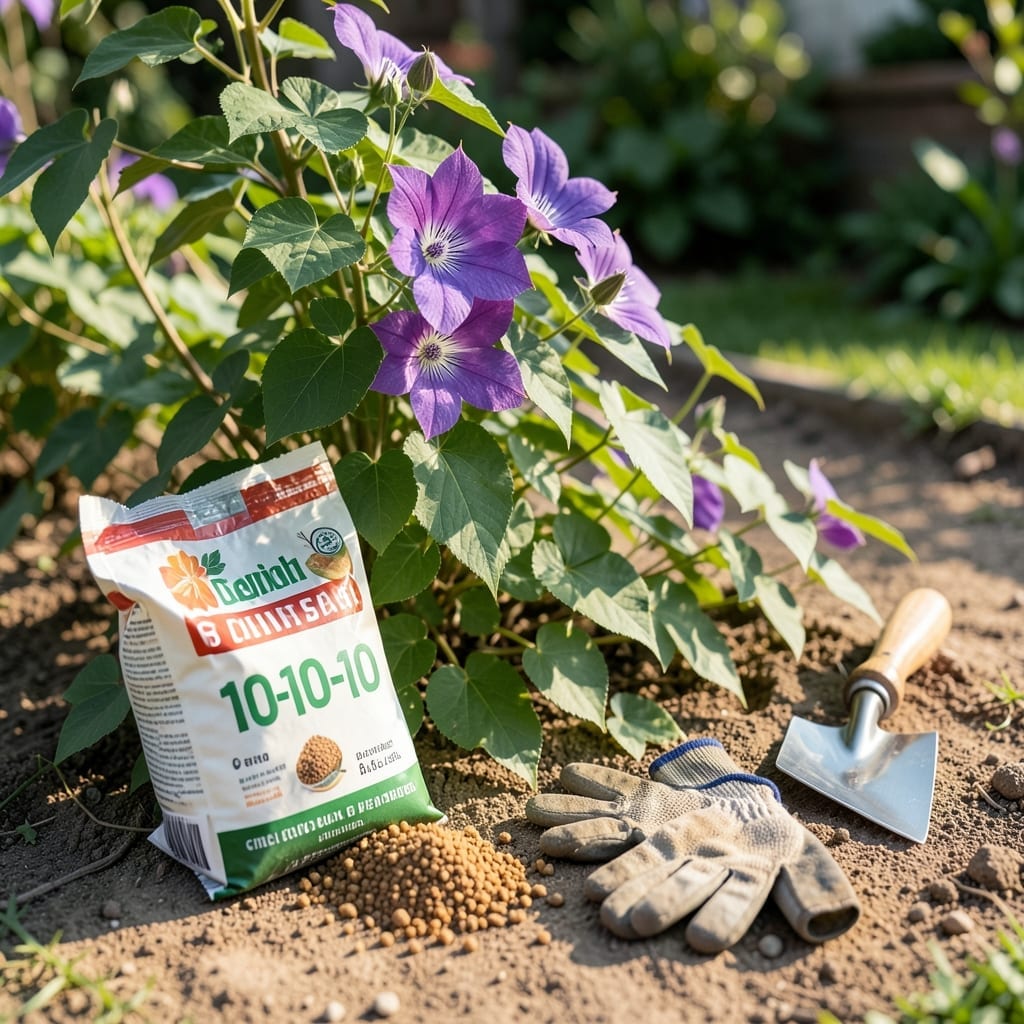
Struggling to get your Clematis 🌸 to bloom? A balanced 10-10-10 fertilizer might be the missing piece for lush vines and vibrant flowers.
Clematis thrives on consistent, even nutrition, making this all-purpose fertilizer an ideal choice. Whether you’re a new gardener or have years of experience, understanding how to properly feed your plants can make all the difference.
Discover how this simple approach can transform your garden. Let me show you exactly how to use it for the best results with your Clematis.
The 10-10-10 fertilizer is a balanced formula that delivers equal parts nitrogen, phosphorus, and potassium. This trio supports overall plant health for your Clematis. 🌿
Nitrogen fuels leafy growth, while phosphorus boosts root development and flower production. Potassium strengthens disease resistance, ensuring your vines stay vibrant. 🌱
| Nutrient | Purpose | Impact on Clematis |
|---|---|---|
| Nitrogen (N) | Promotes foliage growth | Lush, green vines |
| Phosphorus (P) | Supports root & bloom | Stronger roots, more flowers |
| Potassium (K) | Enhances disease resistance | Healthier, hardier plants |
For Clematis, this balanced NPK ratio ensures no nutrient is overlooked. It’s ideal for new growth in spring and helps sustain blooms through summer. ☀️
The even distribution prevents excess nitrogen, which can lead to leafy growth at the expense of flowers. This is key for Clematis, which blooms best with moderate nitrogen. 🌻
I recommend testing your soil pH first. Clematis prefers slightly alkaline soil (pH 6.5-7.0). If your soil is too acidic, the phosphorus in 10-10-10 may be less effective. 🌡️
This fertilizer works well for established plants and new plantings. For young Clematis, use half the recommended dose to avoid burning tender roots. 🪴
If your Clematis struggles with weak stems or few blooms, a 10-10-10 fertilizer can help. It provides the consistent nutrition these heavy feeders need. ✂️
Apply it every 4-6 weeks during the growing season. This schedule keeps your Clematis nourished without over-fertilizing. 💧
Remember, water deeply after applying to help nutrients reach the roots. This step ensures your Clematis can absorb the full benefits of the 10-10-10 fertilizer. 🌷
Timing is everything when feeding your Clematis with 10-10-10 fertilizer. I always start in early spring when new growth appears, giving plants the nutrient boost they need for the season ahead. 🌿
Apply 1 tablespoon per plant every 4-6 weeks during active growth. For established vines, you can use the full dose, but for new plantings, halve it to prevent root burn. 🌱
For best results, apply in the early morning when soil is damp. This helps prevent fertilizer burn and ensures nutrients penetrate the root zone effectively. ☀️
I prefer granular fertilizer for slow-release benefits, but liquid 10-10-10 works well for a quick boost. If using liquid, dilute to half strength for Clematis. 💧
Avoid fertilizing in extreme heat or when plants are stressed. This can do more harm than good. Also, stop feeding 6 weeks before frost to allow plants to harden off. 🌡️
After the first bloom cycle, a light application can encourage second blooms. Just remember, less is more with Clematis – they respond better to consistent, moderate feeding than heavy doses. 🌷