
Beautiful Plants For Your Interior
Beautiful Plants For Your Interior
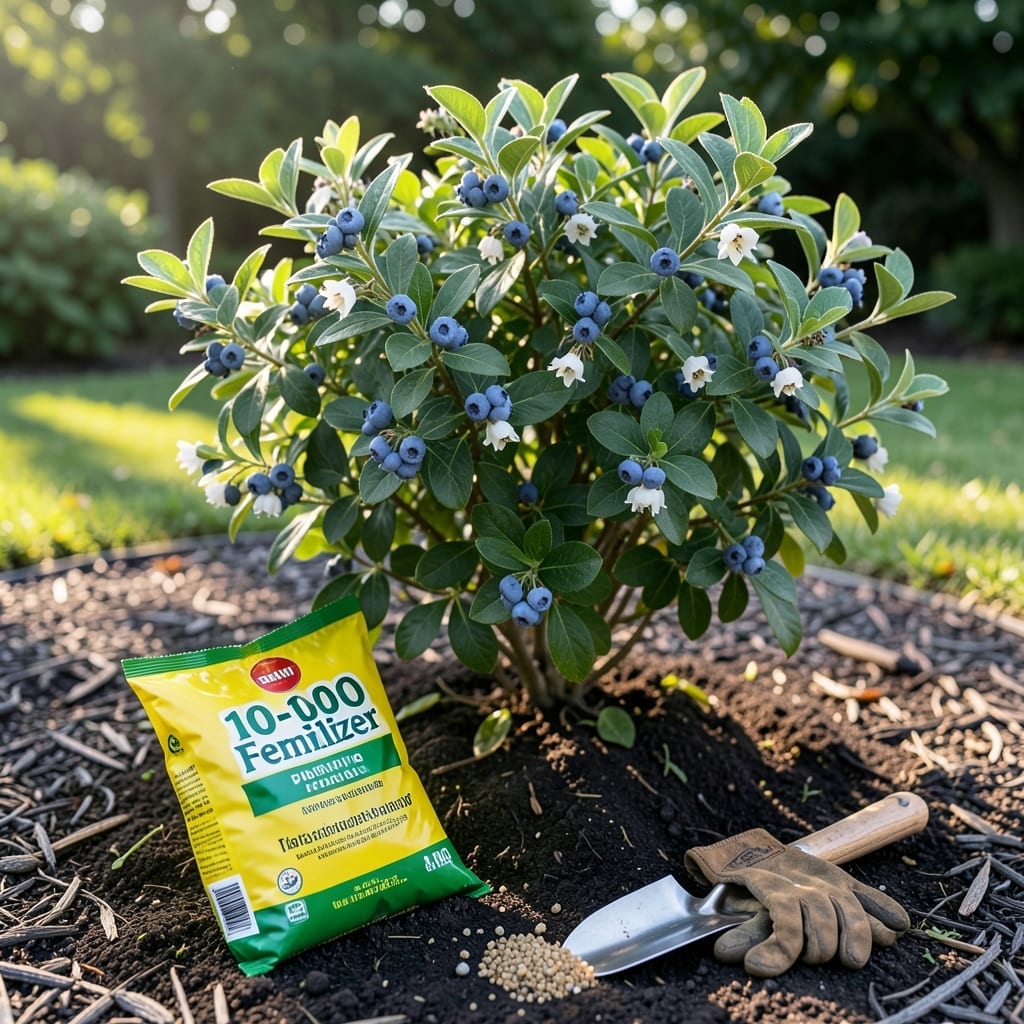
If you’ve ever grown 🫐 Blueberries, you know they demand acidic soil to thrive. The wrong fertilizer can disrupt this delicate balance, leaving your bushes struggling instead of producing those juicy, sweet berries we all love.
That’s why choosing the right nutrients is the key to healthy plants and bountiful harvests. Not all fertilizers are created equal when it comes to these finicky shrubs.
Discover whether 10-10-10 is the right choice for your garden and learn how to use it effectively without harming your plants.
I often get asked about using 10-10-10 fertilizer for blueberry bushes, and the answer isn’t straightforward. While it provides balanced nutrients, blueberries have unique needs that this fertilizer doesn’t always meet.
Blueberries require acidic soil with a pH of 4.5-5.5. Standard 10-10-10 can raise soil pH over time, which actually harms your plants by locking out essential nutrients like iron.
| cell” style=”padding: 12px; border-bottom: 1px solid #6fd544; text-align: left; font-weight: bold; background-color: #f9f9f9;”>Specification | |
| row” style=”border-bottom: 1px solid #6fd544;”> | cell” style=”padding: 12px; border-bottom: 1px solid #6fd544; text-align: left;”>May raise pH over time |
| row” style=”border-bottom: 1px solid #6fd544;”> | cell” style=”padding: 12px; border-bottom: 1px solid #6fd544; text-align: left;”>Acid-forming nitrogen |
The NPK ratio of 10-10-10 seems perfect, but the nutrient sources matter more. Many contain nitrate nitrogen, which can further alkalize your soil, making it even less suitable for blueberries.
I’ve seen gardeners apply 10-10-10 and watch their blueberry leaves turn yellow from chlorosis, a classic sign of iron deficiency caused by high pH. This happens because the plant can’t absorb iron when soil isn’t acidic enough.
Another concern is the salt content in synthetic fertilizers. Blueberries are sensitive to salt buildup, which can damage their shallow root systems and reduce water uptake.
That said, 10-10-10 isn’t completely off the table. If your soil is already naturally acidic and you amend it properly, you might get away with using it occasionally. But I always recommend testing your soil first.
Remember, blueberries are acid-loving plants like azaleas and rhododendrons. They’ve evolved to thrive in poor, acidic soils where other plants struggle. This is why specialized fertilizers exist for these plants.
In my experience, the best approach is to use fertilizers designed for acid-loving plants. These typically contain ammonium sulfate or other acid-forming nitrogen sources that help maintain the proper pH.
If you’re determined to use 10-10-10, I strongly suggest pairing it with elemental sulfur or other soil acidifiers to counteract the pH rise. But even then, it’s not my first recommendation for blueberries 🌿
If you’re growing blueberry bushes, I always recommend choosing acid-forming fertilizers instead of standard 10-10-10. These alternatives maintain the low pH your plants need while providing essential nutrients.
Specialized blueberry fertilizers are formulated with ammonium sulfate or urea, which help keep soil acidic. They’re my top choice for ensuring healthy growth and maximum berry production.
| cell” style=”padding: 12px; border-bottom: 1px solid #6fd544; text-align: left; font-weight: bold; background-color: #f9f9f9;”>NPK Ratio | row” style=”border-bottom: 1px solid #6fd544;”> | cell” style=”padding: 12px; border-bottom: 1px solid #6fd544; text-align: left;”>21-0-0 | row” style=”border-bottom: 1px solid #6fd544;”> | cell” style=”padding: 12px; border-bottom: 1px solid #6fd544; text-align: left;”>6-2-1 | row” style=”border-bottom: 1px solid #6fd544;”> | cell” style=”padding: 12px; border-bottom: 1px solid #6fd544; text-align: left;”>4-3-6 | Balanced for acid-lovers |
For organic gardeners, cottonseed meal is a fantastic option. It’s slow-release and naturally acidic, plus it adds organic matter to your soil as it breaks down.
I personally love using sulfur-coated urea because it provides consistent nitrogen while gradually acidifying the soil. Just
Another great choice is fish emulsion, which offers a quick nutrient boost without raising soil pH. It’s particularly useful for newly planted bushes that need an extra kick.
No matter which alternative you choose, always test your soil pH first and monitor it regularly. Blueberries are sensitive, and maintaining that acidic environment is crucial for their success 🌿