
Beautiful Plants For Your Interior
Beautiful Plants For Your Interior
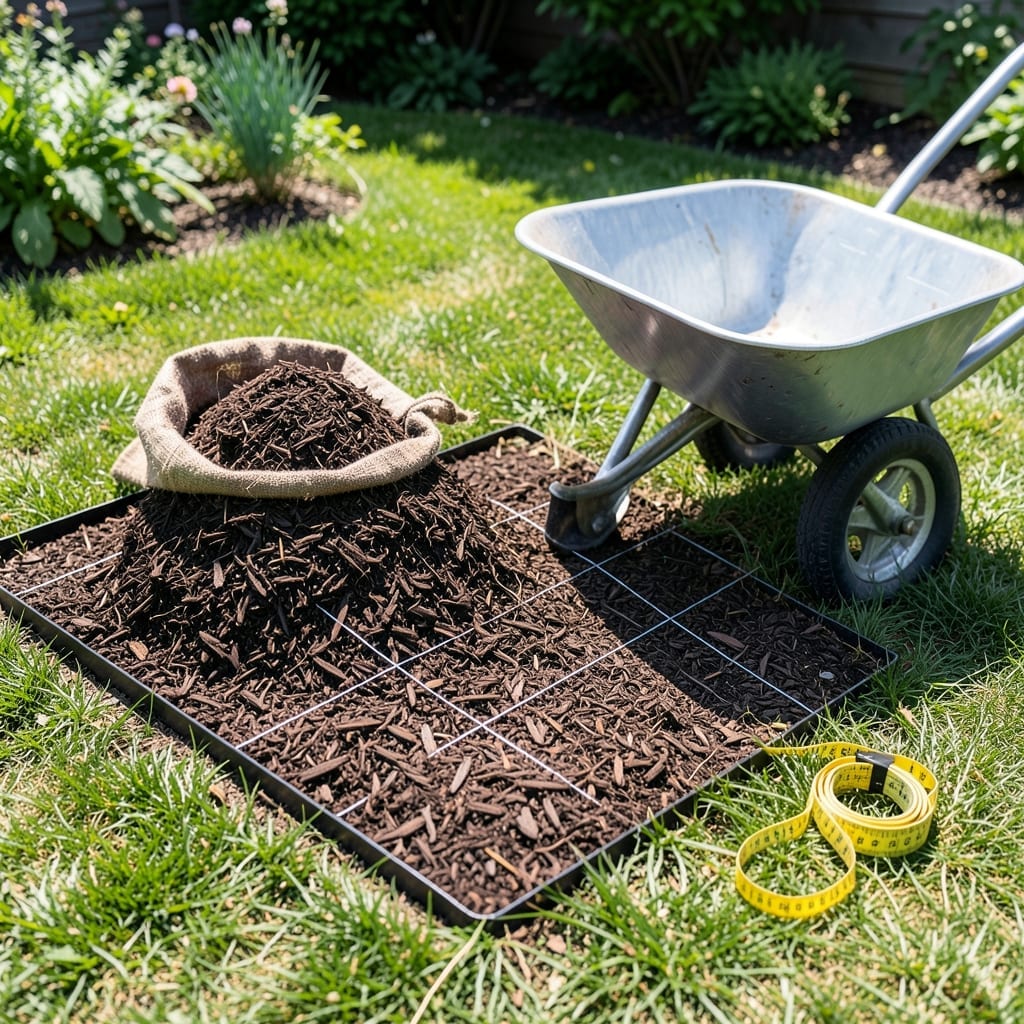
Figuring out how much 🌿 Mulch you need can feel like solving a puzzle with missing pieces. One cubic yard sounds straightforward, but how far does it actually stretch in your garden?
Getting this right means no wasted trips to the store or half-covered flower beds. I’ll break down the simple math behind coverage so you can order with confidence.
Discover how depth and area work together to transform your landscaping. Let’s make your next mulching project a breeze.
Calculating 1 yard mulch coverage starts with understanding volume versus area. A cubic yard is 27 cubic feet, but its ground coverage depends entirely on depth.
For standard applications, I use a 3-inch depth as my baseline. At this thickness, one cubic yard typically covers about 108 square feet of garden space.
| Depth | Coverage (sq ft) | Best For |
|---|---|---|
| 1 inch | 324 sq ft | Light weed control |
| 2 inches | 162 sq ft | Moisture retention |
| 3 inches | 108 sq ft | Standard gardens |
| 4 inches | 81 sq ft | Heavy weed suppression |
To calculate for your space, measure the length and width in feet, then multiply. For irregular shapes, break it into rectangles and sum the areas.
The formula is simple: Coverage (sq ft) = 324 ÷ depth (inches). This comes from converting 27 cubic feet to square feet at your chosen depth.
For a 10×10 foot garden at 3 inches deep, you’d need about 0.93 cubic yards. Always round up to ensure full coverage.
Remember that sloped areas may require more mulch. I recommend adding 10-15% extra to your calculation for hills or uneven terrain.
Different mulch types settle differently. Wood chips compact more than straw, so consider topping up after a few weeks.
Pro tip: Use a mulch calculator online for complex shapes. But for most home gardens, the 3-inch depth rule works perfectly.
I always keep a tape measure handy when mulching to check both area and depth as I work.
The right mulch depth makes all the difference in your garden. Too thin, and weeds push through. Too thick, and you risk suffocating plant roots.
I recommend 2-4 inches for most applications. This range balances weed suppression with proper air and water flow to the soil.
For vegetable gardens, stick to 2-3 inches. This allows water to penetrate while keeping soil temperatures stable for root growth.
In flower beds, I often go for 3-4 inches. The extra depth helps suppress weeds longer and gives a polished, professional look.
Remember that organic mulches like wood chips break down over time. I add a fresh 1-inch layer annually to maintain the proper depth.
For new plantings, start with 2 inches of mulch. This prevents smothering young plants while still providing benefits.
Always keep mulch 2-3 inches away from plant stems to prevent rot and pest issues.