
Beautiful Plants For Your Interior
Beautiful Plants For Your Interior
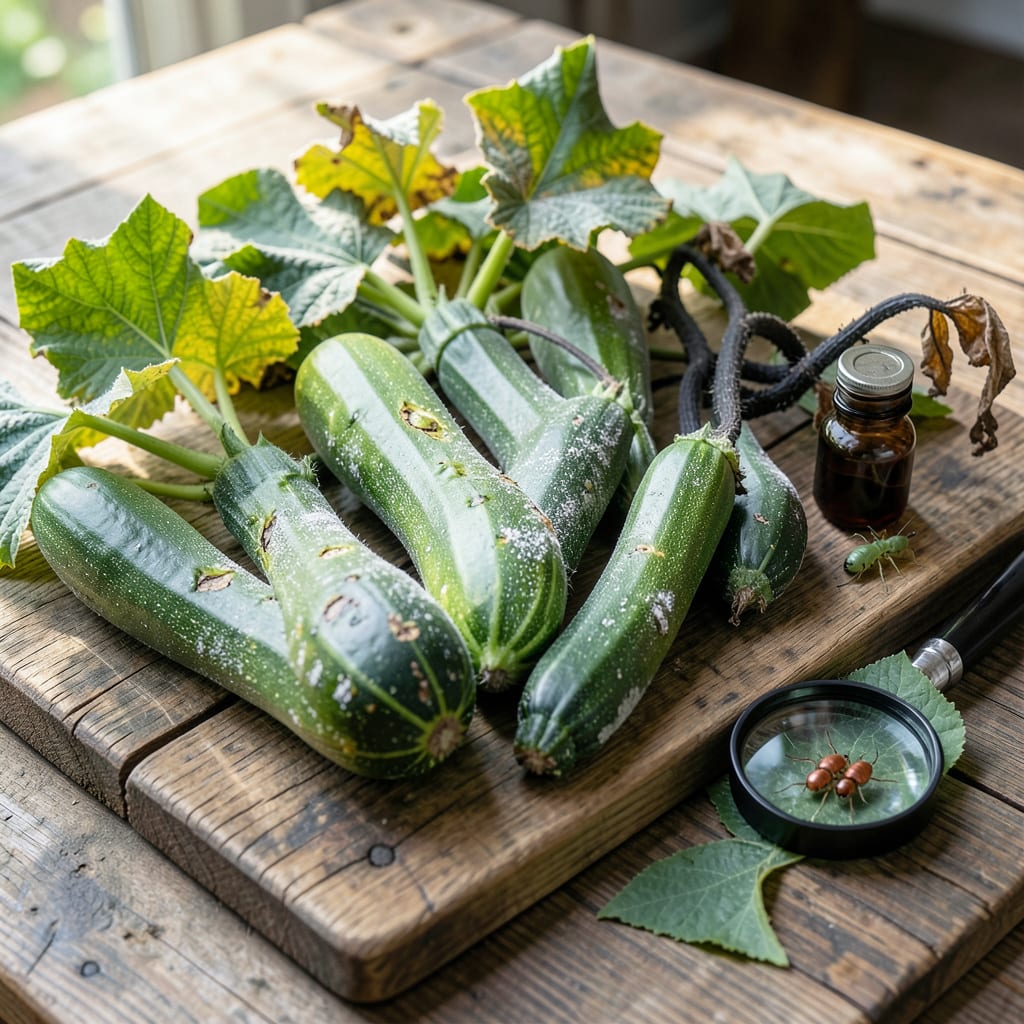
Powdery mildew on my zucchini leaves last July taught me the hard way. 🌿 These plants attract every pest and disease in the book, but organic solutions actually work better than harsh chemicals.
Squash bugs and vine borers hit fast, while powdery mildew spreads overnight. The key is early detection—check undersides of leaves daily. Prevention beats cure every time with these plants.
You’ll get vibrant green foliage and productive plants without toxic sprays. Neem oil, row covers, and companion planting form the first line of defense.
Works for backyard gardens, raised beds, or container zucchini. Here’s the playbook for keeping them healthy all season.
Understanding why zucchini plants fall victim to diseases and pests starts with recognizing the underlying conditions that invite trouble. Here’s a breakdown of the primary causes:
Zucchini plants thrive in warm, well-drained soil with consistent moisture. Overwatering or poor drainage creates a breeding ground for fungal diseases like Phytophthora blight and powdery mildew. Conversely, drought stress weakens plants, making them more susceptible to pests like aphids and squash bugs. Temperature extremes—either unseasonably cool nights or scorching heatwaves—can also compromise plant immunity.
Many zucchini diseases, such as bacterial wilt and cucumber mosaic virus, spread through contaminated tools, insects, or infected plant debris. Cucumber beetles, for example, not only feed on foliage but also transmit Erwinia tracheiphila, the bacterium responsible for wilt. Poor crop rotation allows soil-borne pathogens like Fusarium and Verticillium to persist year after year.
Healthy zucchini plants emit natural defenses, but weak or nutrient-deficient plants send out distress signals that attract pests. Over-fertilization with nitrogen produces lush, soft growth that aphids and whiteflies love. Meanwhile, lack of biodiversity in the garden eliminates natural predators (like ladybugs or parasitic wasps), giving pests free rein. Weeds can also harbor alternate hosts for pests and diseases, bridging the gap to your zucchini patch.
Keeping your zucchini plants healthy starts with quick action. Here’s how to tackle the most common problems with practical, organic solutions.
Remove infected leaves immediately and space plants 3–4 feet apart to boost airflow. Spray a mix of 1 tsp baking soda + 1 quart water + a drop of dish soap weekly. Prevention tip 💡: Water at the base in the morning to keep foliage dry.
Check under leaves for brown eggs or nymphs and remove them by hand (drop in soapy water). Place cardboard traps near plants—they love hiding there overnight. Prevention tip 🎯: Rotate crops yearly and clear garden debris in fall.
Add crushed eggshells or a calcium-rich foliar spray to the soil. Keep soil moisture consistent (not soggy) to help plants absorb nutrients. Prevention tip ✨: Test soil pH (aim for 6.0–6.8) before planting.
Cover young plants with floating row fabric until they flower. Introduce beneficial nematodes or spray kaolin clay as a barrier. Prevention tip 🌡️: Plant radishes or nasturtiums nearby as trap crops.
Pull and destroy infected plants to stop spread. Avoid cucumber beetles (they carry the bacteria) with reflective mulch. Prevention tip 🔥: Rotate crops and choose wilt-resistant zucchini varieties next season.
Space plants 3-4 feet apart and water at the base in the morning. A weekly spray of 1 tsp baking soda + 1 quart water works wonders.
Handpick eggs and nymphs daily, dropping them in soapy water. Use cardboard traps overnight and clear garden debris in fall to disrupt their lifecycle.
This is often caused by calcium deficiency. Add crushed eggshells to soil and maintain consistent moisture. Test soil pH (aim for 6.0-6.8).
Yes! Plant radishes or nasturtiums nearby as trap crops. These attract pests away from your zucchini while adding biodiversity.
