
Beautiful Plants For Your Interior
Beautiful Plants For Your Interior
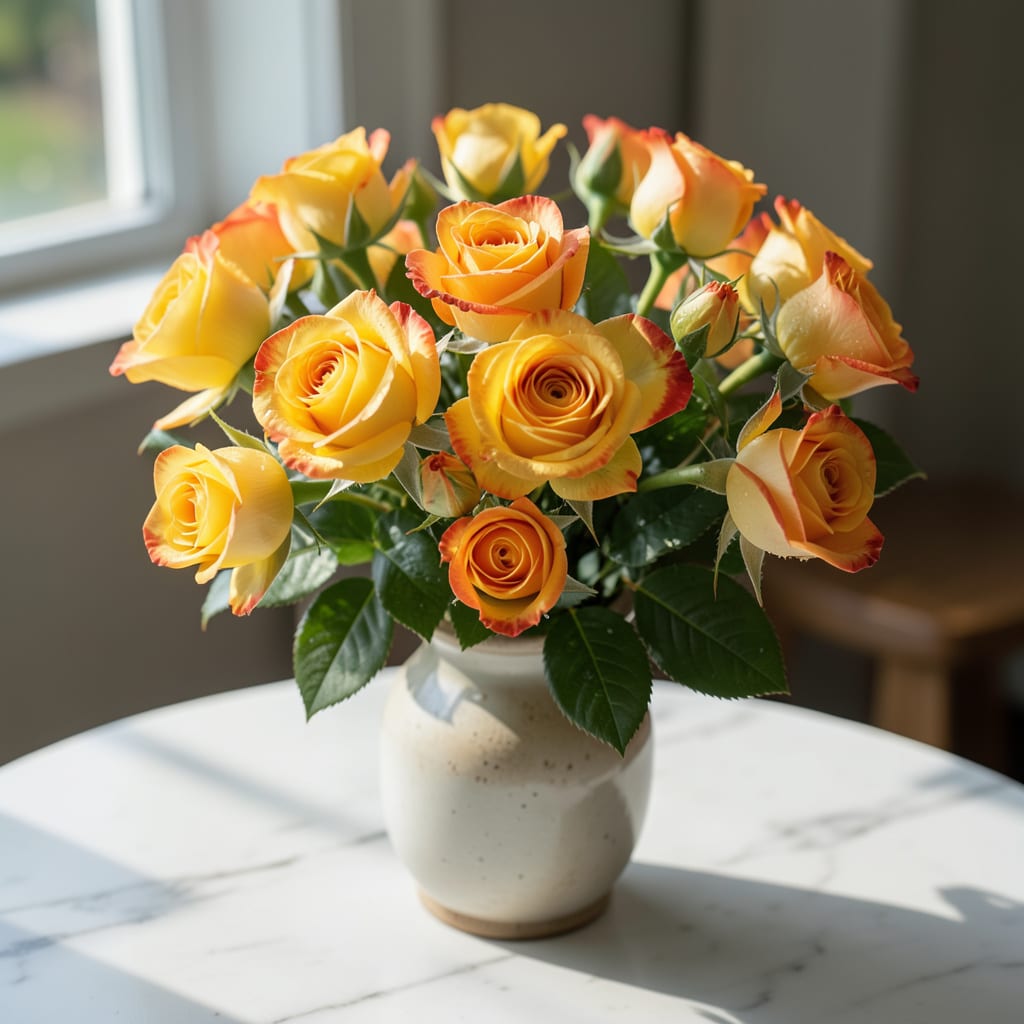
Striking bicolor blooms stop visitors in their tracks. 🌟 I planted my first yellow with orange tip roses three springs ago, and they’ve become the centerpiece of my garden with their warm, sunset-like colors.
These roses thrive with 6+ hours of sun and well-draining soil. Prune in early spring for the best shape and most blooms, and you’ll enjoy their vibrant display from late spring through fall.
📚 In This Guide
Here’s my foolproof method for cultivating those stunning yellow blooms with fiery orange edges.
Start by selecting a bicolor rose cultivar known for its yellow petals with orange tips. Popular choices include ‘Double Delight’ or ‘Tropicana’—both produce those striking two-tone blooms you’re after. I always check the tag for disease resistance, which saves so much trouble later.
Look for own-root roses rather than grafted ones. They’re hardier and recover better if the top gets damaged. The plant should have 3-5 healthy canes with no signs of black spots or powdery mildew. This is your foundation for those gorgeous blooms.
Find a spot with full sun (at least 6-8 hours daily) and well-draining soil. Roses hate wet feet, so avoid low spots where water pools. I dig a hole 18 inches wide and 12 inches deep—big enough to accommodate the roots without crowding.
Mix the removed soil with compost or aged manure to improve fertility. Create a small mound in the center of the hole to support the plant’s crown. This ensures proper drainage and prevents the graft union (if present) from being buried too deep.
Place the rose in the hole, spreading the roots over the mound. The bud union (that swollen part near the base) should sit 1-2 inches above soil level in warm climates or 1-2 inches below in cold areas. This protects it from freeze damage.
Backfill with your amended soil, pressing gently to remove air pockets. Water thoroughly with 1-2 gallons to settle the soil. I always add a 2-3 inch layer of mulch around the base (keeping it away from the stem) to retain moisture and suppress weeds.
Water deeply 2-3 times weekly during the first growing season, then reduce to 1 inch per week once established. Always water at the base—wet leaves encourage fungal diseases. I check the soil by sticking my finger in 2 inches deep; if it’s dry, it’s time to water.
Fertilize every 4-6 weeks during the growing season with a balanced rose food. Deadhead spent blooms regularly to encourage more of those beautiful bicolor flowers. Prune in late winter to remove dead wood and shape the plant.
Watch for common pests like aphids or Japanese beetles. A strong blast of water often removes aphids, while hand-picking works for beetles. For fungal issues, ensure good air circulation and remove affected leaves immediately.
Your roses will reward you with those stunning yellow blooms tipped in orange from late spring through fall. The first flush of flowers is always the most exciting—you’ll know you’ve done everything right when those vibrant bicolor petals start to open.
Small adjustments in planting and care make a huge difference for vibrant blooms.
The Sun Factor: Those 6-8 hours of daily sun in Step 2 aren’t just a suggestion. Less light means fewer blooms and weaker colors. I learned this the hard way when my first attempt in partial shade produced pale, sparse flowers. Full morning sun is ideal, as it dries dew quickly and reduces fungal risks.
Here’s What I Learned: In Step 3, the bud union placement is critical. In warm climates, keep it 1-2 inches above soil to prevent heat damage to the graft. In cold areas, bury it 1-2 inches below for winter protection. I’ve seen roses die from improper depth—don’t skip this detail.
Watering Wisdom: The 2-3 times weekly schedule in Step 4 works only if you water deeply each time. Shallow watering encourages weak roots. Stick your finger 2 inches deep into the soil as instructed—if it’s dry, it’s time to water. Overwatering is just as bad as underwatering, so let the soil guide you.
Ongoing Care Tip: That 4-6 week fertilizing schedule in Step 4 keeps blooms coming all season. Use a balanced rose food and stop fertilizing 6-8 weeks before your first expected frost to avoid tender new growth that winter can kill.
The orange tips are a natural mutation or result of selective breeding, creating a stunning bicolor effect. Some varieties, like ‘Julia Child’ or ‘Tahitian Sunset,’ are bred specifically for this trait, blending warm hues for a vibrant display.
Most bicolor roses bloom from late spring to fall, with peak flowers in summer. Deadheading spent blooms encourages continuous blooming. Check your specific variety, as some may have slightly different timelines.
Yes! Choose dwarf or compact varieties like ‘Playboy’ and use a large pot (at least 18″ deep) with well-draining soil. Ensure full sun (6+ hours daily) and regular watering for thriving container-grown bicolor roses.
Brown tips often signal environmental stress, like overwatering, drought, or fungal disease (e.g., black spot). Ensure proper airflow, water at the base, and remove affected leaves. Test soil pH—roses prefer slightly acidic (6.0–6.5).
Try ‘Double Delight’ (creamy white with red edges) or ‘Sexy Rexy’ (coral-pink bicolor). For non-roses, consider marigolds or zinnias in similar warm tones for a pollinator-friendly garden.
