
Beautiful Plants For Your Interior
Beautiful Plants For Your Interior
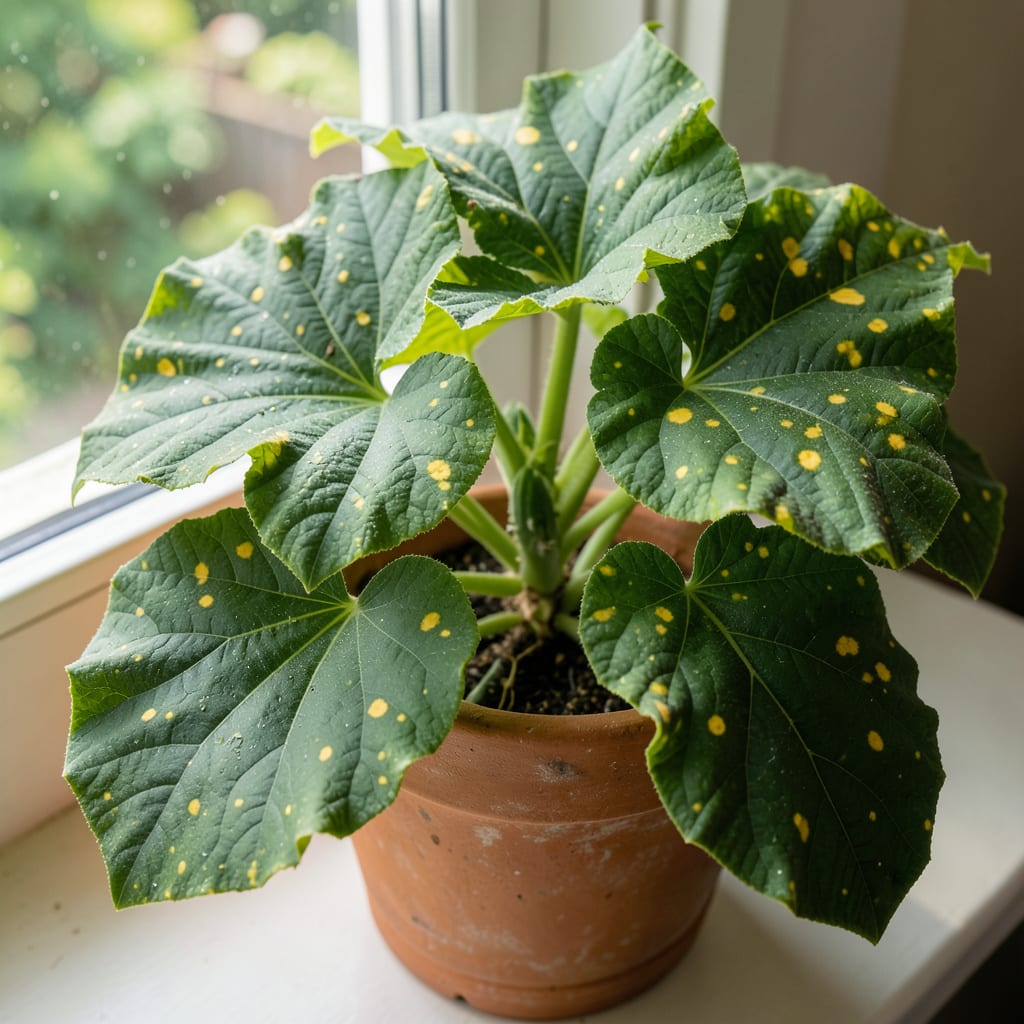
Spotted yellow leaves on your cucumbers aren’t just ugly—they’re a warning. I’ve lost entire vines to this before learning to read the signs early.
Most cases come down to three culprits: fungal infections spreading from wet leaves, sap-sucking pests leaving damage behind, or nutrient shortages showing up as discoloration. Each has a distinct pattern if you know where to look.
Organic fixes work fast when you catch it soon. A baking soda spray stops fungus, neem oil handles pests, and a soil test reveals missing nutrients. No harsh chemicals needed.
Prevention is simpler than cure. Good airflow, morning watering, and crop rotation keep most problems from starting in the first place.
Yellow spots on cucumber leaves often signal underlying issues that disrupt the plant’s health. Identifying the root cause is key to effective treatment. Below are the most common culprits, explained with actionable insights.
Fungi like Alternaria or Cercospora thrive in wet, humid conditions, causing circular yellow or brown spots with dark edges. These pathogens spread via spores in water or wind. Overhead watering and poor air circulation exacerbate the problem. To confirm, check for fuzzy growth on the undersides of leaves.
Sap-sucking pests such as aphids, spider mites, or whiteflies pierce leaf tissues, leading to yellow stippling or mottling. Their feeding disrupts chlorophyll production, and they often leave behind sticky honeydew, which attracts sooty mold. Inspect the undersides of leaves for tiny insects or webbing.
A lack of essential nutrients—particularly magnesium, potassium, or nitrogen—can manifest as yellow spots. Magnesium deficiency often causes interveinal chlorosis (yellowing between veins), while potassium deficiency leads to scorched edges. A soil test can pinpoint the exact imbalance.
Extreme heat, cold drafts, or inconsistent watering can stress cucumber plants, triggering yellow spots. Heat stress may cause sunburn-like patches, while overwatering leads to root rot, reducing the plant’s ability to absorb nutrients. Ensure consistent moisture and protect plants from temperature swings.
For organic fixes, address each cause directly: improve airflow for fungi, introduce beneficial insects for pests, amend soil for deficiencies, or adjust growing conditions for stress.
Tackling yellow spots on cucumber leaves starts with identifying the cause and applying the right fix. Here’s a practical guide to restore your plants’ health:
Fix: Remove infected leaves immediately to prevent spread. Apply a copper-based fungicide or a homemade mix of 1 tsp baking soda + 1 quart water + a drop of dish soap. Spray every 7–10 days until the issue clears.
Prevention: Water at the base of the plant (not the leaves) and ensure good air circulation. Space plants 18–24 inches apart. 💡 Pro tip: Mulch with straw to reduce soil-borne spores.
Fix: Blast aphids or spider mites off with a strong stream of water. For stubborn pests, use neem oil or insecticidal soap (follow label instructions). Repeat every 5–7 days as needed.
Prevention: Attract beneficial insects like ladybugs by planting companion flowers (e.g., marigolds). Inspect leaves weekly for early signs. ✨
Fix: Test soil pH (aim for 6.0–6.8). Amend with compost or a balanced organic fertilizer (e.g., 10-10-10). For magnesium deficiency, dissolve 1 tbsp Epsom salt in a gallon of water and spray foliage.
Prevention: Feed plants every 3–4 weeks during the growing season. Rotate crops annually to avoid depleting nutrients. 🎯
Fix: Let the top 1–2 inches of soil dry out between waterings. If roots are waterlogged, improve drainage by mixing in perlite or sand.
Prevention: Use raised beds or containers if your soil retains too much moisture. Water deeply but less frequently—about 1–1.5 inches per week. 🌡️
Fix: Provide temporary shade with a cloth or move potted cucumbers to a cooler spot. Trim damaged leaves to redirect energy.
Prevention: Harden off seedlings before transplanting. Use row covers in extreme heat and ensure plants get 6–8 hours of morning sun. ⏰
Fungal spots can double in size within 2-3 days in warm, wet conditions. Pest damage appears more gradually over 1-2 weeks. Act fast to prevent full plant loss.
Yes, if the fruit looks healthy. Wash thoroughly to remove any residue. Discard any cucumbers with soft spots or unusual colors.
No, the plant won’t recover without intervention. Damaged leaves won’t turn green again, but new growth will be healthy if you fix the root cause.
Water at the base in the morning, not the leaves. This prevents fungal spores from germinating and gives foliage time to dry. 1 inch of water weekly is ideal.
