
Beautiful Plants For Your Interior
Beautiful Plants For Your Interior
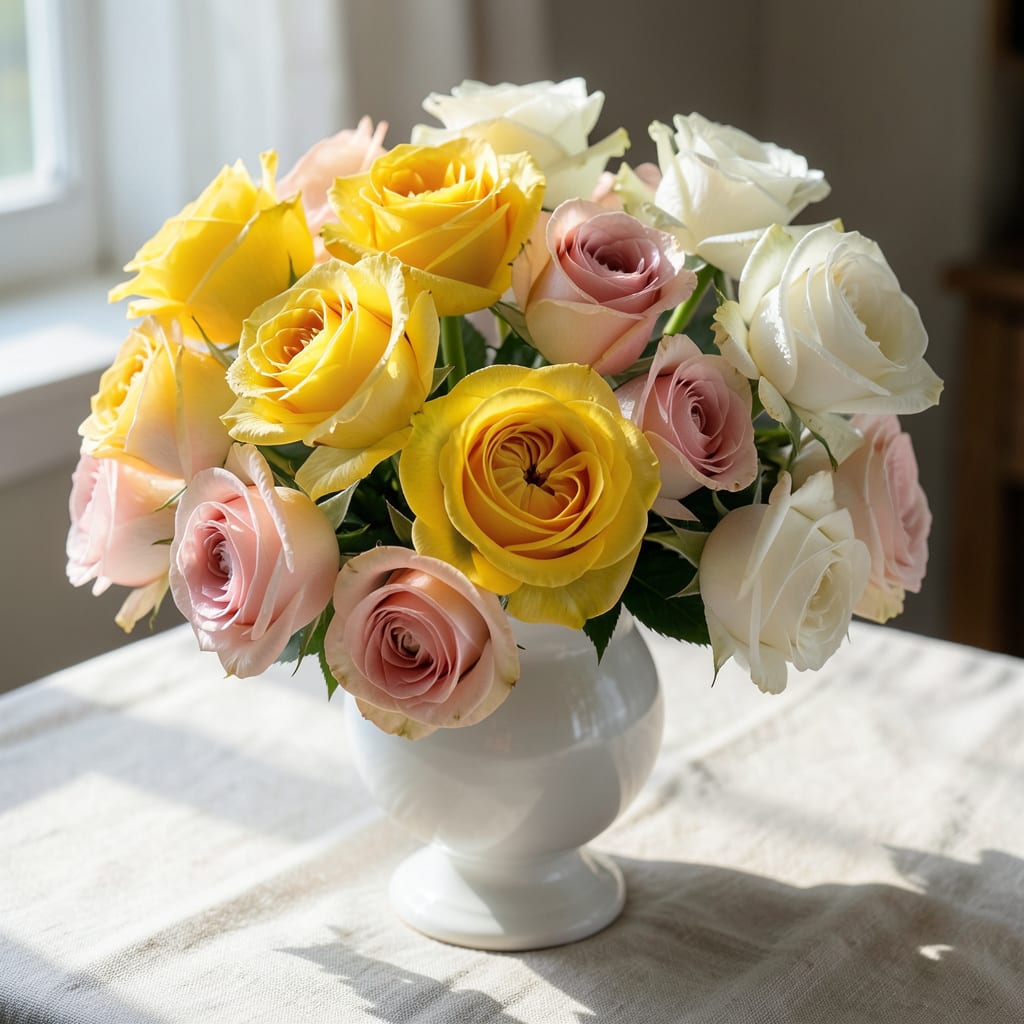
Three colors, one rose bush—simple magic. 🌟 I planted my first tri-color rose last spring, and the way the blooms shift from soft pink to buttery yellow to pure white stopped neighbors in their tracks.
These roses thrive with basic care: well-draining soil, 6+ hours of sun, and weekly watering. The secret is consistent pruning to encourage new growth, which brings out the full color range faster.
📚 In This Guide
Here’s the method I use to establish vibrant roses that bloom in yellow, pink, and white all season long.
Choose a location with full sun (at least 6-8 hours daily) and well-draining soil. Roses thrive in slightly acidic to neutral soil with a pH of 6.0-7.0. I always test the soil first—if it’s too alkaline, I amend it with sulfur or peat moss.
Loosen the soil to a depth of 18-24 inches and remove any weeds or debris. Mix in 2-3 inches of organic compost to improve fertility and drainage. A well-prepared bed gives roots room to spread and access to nutrients from the start.
Dig a hole twice as wide as the root ball and just as deep. For bare-root roses, soak the roots in lukewarm water for 1-2 hours before planting to rehydrate them. Place the rose in the hole, ensuring the bud union (the swollen area where the canes meet the roots) is 1-2 inches above soil level in cold climates or at soil level in warmer regions.
Backfill with soil, pressing gently to remove air pockets. Water deeply with 1-2 gallons of water to settle the soil around the roots. I’ve found that mulching with 2-3 inches of organic matter right after planting helps retain moisture and suppress weeds.
Keep the soil consistently moist but not waterlogged during the first growing season. Water at the base of the plant in the morning to allow foliage to dry before evening, reducing disease risk. A deep watering 2-3 times per week is better than frequent shallow watering.
Once new growth appears, apply a balanced rose fertilizer (like 10-10-10) every 4-6 weeks during the growing season. I switch to a low-nitrogen fertilizer in late summer to encourage blooming rather than leafy growth.
Prune in early spring, just as new growth begins. Remove dead, diseased, or crossing canes first, then shape the plant by cutting back one-third of the previous year’s growth. Always make cuts at a 45-degree angle just above an outward-facing bud to encourage open, airy growth.
Deadhead spent blooms regularly by cutting just above a 5-leaflet leaf to promote continuous flowering. Here’s the thing—this step is non-negotiable for repeat blooms. Watch for pests like aphids or black spot, and treat promptly with organic or chemical controls as needed.
In colder climates, protect roses from winter damage by mounding soil 12 inches high around the base of the plant after the first hard frost. For extra insulation, I add a layer of mulch or straw over the mound. This shields the bud union from freezing temperatures.
In spring, remove the protective mound as soon as the threat of frost has passed. Prune any winter-damaged wood back to healthy tissue. With proper care, your tri-color roses will reward you with stunning blooms for years to come.
Small adjustments in planting and care can dramatically improve your results.
Sunlight Strategy: That 6-8 hours of daily sun isn’t just a suggestion—it’s critical for vibrant blooms. I’ve seen roses struggle with only 5 hours, producing sparse, pale flowers. If your garden has partial shade, prioritize morning sun over afternoon heat, which can scorch petals in peak summer.
Soil Prep Pro Tip: Don’t rush the 18-24 inch soil loosening in Step 1. I learned this the hard way when shallow prep led to stunted growth. The deeper you go, the more room roots have to establish, and that 2-3 inches of compost makes a noticeable difference in first-year blooming.
Planting Depth Detail: For bare-root roses in Step 2, that 1-2 hour soak in lukewarm water revives dormant roots. Confession: I skipped this once and my roses took weeks longer to establish. Also, that 1-2 inch bud union elevation in cold climates prevents winter dieback.
Watering Wisdom: The 1-2 gallon deep watering after planting settles soil better than light sprinkles. During that first growing season, stick to 2-3 times weekly deep waterings at the base—morning is ideal. I use a moisture meter to avoid the guesswork.
Yellow roses symbolize friendship and joy, pink represents gratitude and admiration, while white signifies purity and innocence. Together, they create a meaningful, versatile bouquet perfect for various occasions.
Plant in early spring or fall when temperatures are mild (60-70°F). This allows roots to establish before extreme heat or cold. Avoid planting in peak summer or winter for best results.
Yes! Choose a large container (at least 18″ deep) with good drainage. Use quality potting mix and ensure full sun (6+ hours daily). Container roses may need more frequent watering.
Check for insufficient sunlight, improper pruning, or nutrient deficiencies. Roses need 6+ hours of sun, balanced fertilizer (10-10-10), and regular deadheading to encourage blooms.
