
Beautiful Plants For Your Interior
Beautiful Plants For Your Interior
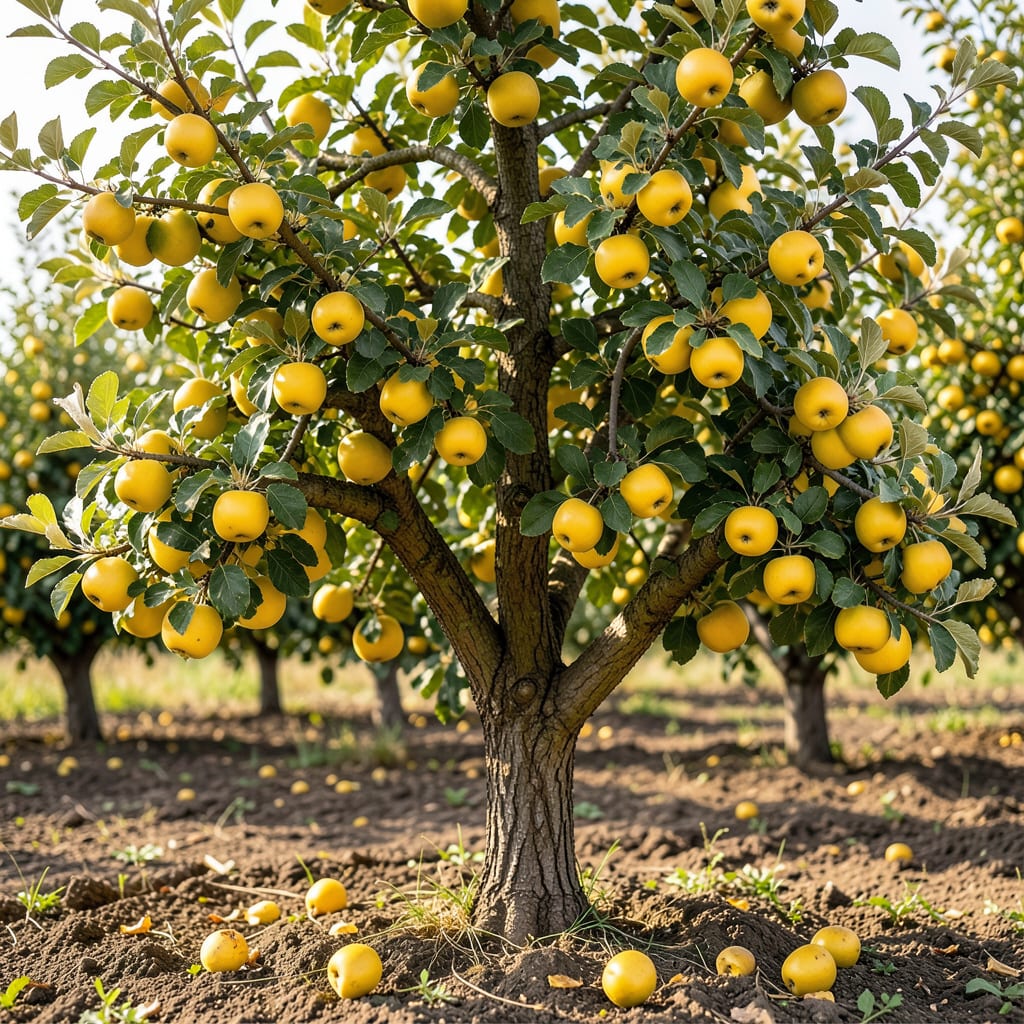
My first Yellow Delicious apple tree rewarded me with fruit in its third year. There’s nothing like biting into a sun-warmed apple you grew yourself, knowing it’s free from store-bought pesticides and wax.
This variety thrives with full sun and well-draining soil. With proper care, it’ll produce sweet, crisp fruit for decades, turning your backyard into a personal orchard.
📚 In This Guide
Here’s the method I use to establish healthy trees that bear fruit for decades.
Choose a location with full sun (at least 6-8 hours daily) and well-draining soil. Yellow Delicious trees thrive in loamy soil with a pH between 6.0-7.0. Avoid low-lying areas where cold air settles, as late frosts can damage blossoms.
Test drainage by digging a 1-foot deep hole and filling it with water. If it drains within 1-2 hours, the site is suitable. For clay-heavy soil, amend with compost or plant on a slight mound to improve drainage.
Dig a hole twice as wide as the root ball but no deeper. Set the tree in the hole so the graft union (visible as a slight bulge near the base) sits 2-3 inches above the soil line. This prevents the graft from being buried, which can cause the tree to revert to its rootstock.
Backfill with native soil, tampering gently to remove air pockets. Create a 3-inch tall watering basin around the base, about 2 feet in diameter, to help direct water to the roots during the first growing season.
Water deeply immediately after planting, using 5-10 gallons of water to settle the soil around the roots. For the first 2-3 weeks, water every 2-3 days unless rain provides at least 1 inch of moisture.
Apply a 2-3 inch layer of organic mulch (wood chips or straw) around the base, keeping it 6 inches away from the trunk to prevent rot. Mulch conserves moisture, suppresses weeds, and regulates soil temperature, which is crucial for young trees.
In late winter of the first year, prune the tree to establish a strong central leader. Remove any competing vertical shoots and shorten lateral branches by one-third. This encourages a balanced, open canopy that allows sunlight and air to penetrate.
Use clean, sharp pruners and make cuts at a 45-degree angle just above an outward-facing bud. Avoid heavy pruning after mid-summer, as it can stimulate new growth that won’t harden off before winter.
Fertilize in early spring before bud break with a balanced 10-10-10 fertilizer, applying it in a ring around the tree’s drip line. Avoid high-nitrogen fertilizers late in the season, as they can delay dormancy and reduce cold hardiness.
Monitor for common pests like apple maggots and codling moths. Hang pheromone traps in late spring and apply horticultural oil or neem oil as needed. Regularly inspect leaves and fruit for signs of damage or disease, and remove any affected material promptly.
Small details in planting and early care make the difference between a struggling sapling and a thriving tree.
Site Selection Secret: That 6-8 hours of daily sun isn’t just a suggestion—it’s critical for fruit production. I’ve seen trees in partial shade produce sparse, low-quality fruit. Test your drainage hole after heavy rain to confirm it empties within that 1-2 hour window before committing to the location.
Planting Depth Warning: The graft union must stay 2-3 inches above soil level or your tree may revert to inferior rootstock. I learned this the hard way when my first tree produced tiny, sour apples because I buried the graft. Create that 3-inch watering basin exactly as specified—it’s your insurance against dry roots during establishment.
Watering Precision: Those first 2-3 weeks of watering every 2-3 days are non-negotiable for root establishment. Use the full 5-10 gallons at planting—this settles soil and eliminates air pockets that can kill young roots. The 6-inch mulch gap around the trunk prevents rot while still conserving moisture.
Pruning Timing: Late winter pruning isn’t arbitrary—it’s when the tree is dormant but about to break bud. That 45-degree angle cut just above an outward-facing bud directs growth where you want it. Skip this and you’ll end up with a crowded center that blocks sunlight and air from reaching developing fruit.
A Yellow Delicious apple tree typically takes 4-5 years to produce its first fruit when grown from a grafted sapling. Dwarf varieties may fruit slightly sooner, while seed-grown trees can take 7-10 years. Proper care, like pruning and fertilizing, can speed up the process.
Early spring or late fall is ideal for planting, as the tree can establish roots before extreme temperatures. Avoid planting during summer heat or winter frost to reduce stress on the young tree.
Yes! These trees are not self-pollinating. Plant a compatible variety like Golden Delicious or Red Delicious within 50 feet for cross-pollination and a better harvest.
This could be due to poor pollination, overcrowding, or insufficient nutrients. Thin out excess fruitlets early in the season and ensure the tree gets enough water and fertilizer for healthier apples.
Yes! Consider varieties like Liberty, Enterprise, or Akane, which are disease-resistant and produce similarly sweet fruit. These options require less maintenance and fewer chemical treatments.
