
Beautiful Plants For Your Interior
Beautiful Plants For Your Interior
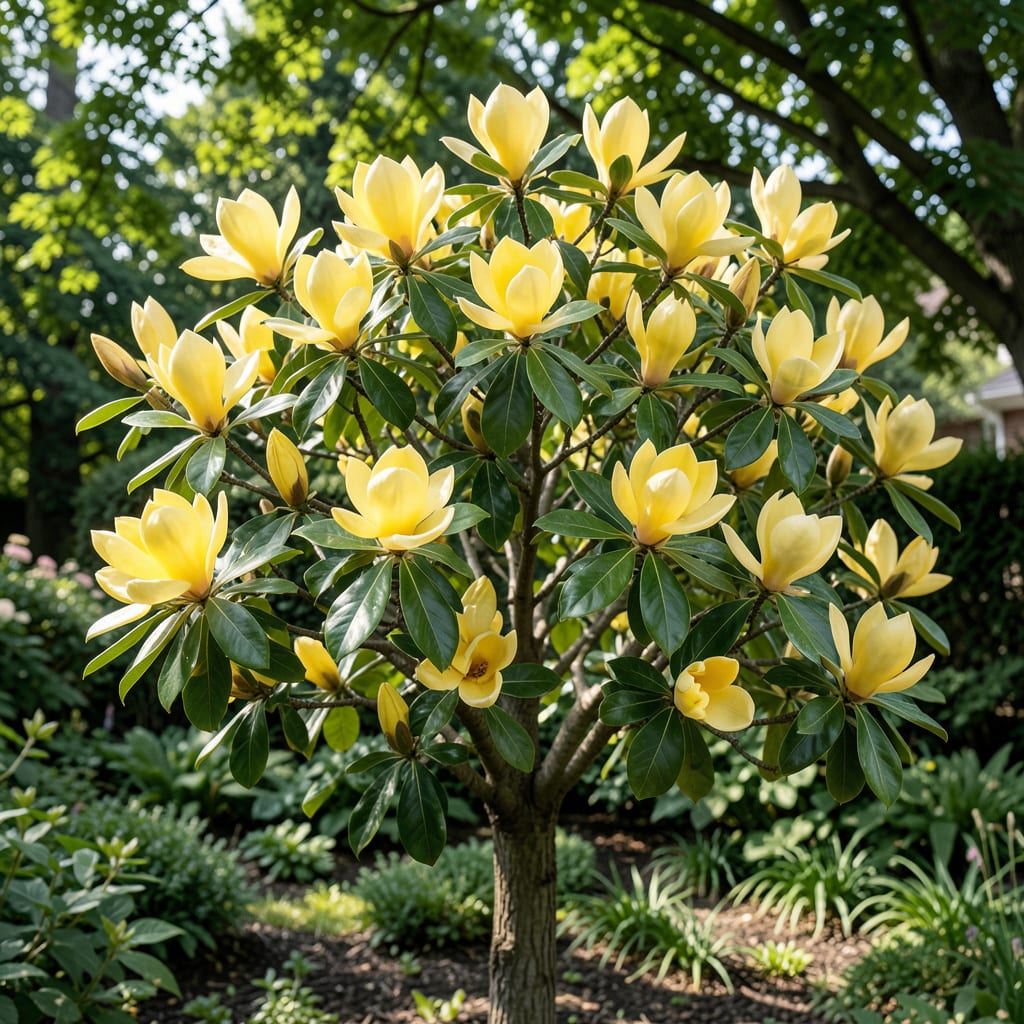
That first spring when my Yellow Bird magnolia burst into canary-yellow blooms, I understood why everyone stops to stare. It’s not just a tree—it’s a seasonal fireworks show.
Plant it in full sun to partial shade with well-draining soil, and you’ll get decades of early spring color. The flowers appear before leaves, making the display even more dramatic. Minimal pruning keeps it looking its best.
📚 In This Guide
Here’s my trusted approach for establishing this stunning variety in your landscape.
Choose a spot with full sun to partial shade—at least 6 hours of direct morning sunlight ensures the best blooming. Yellow Bird magnolias prefer well-draining, slightly acidic soil with a pH between 5.0 and 6.5. Avoid low-lying areas where water pools after rain.
I always test the soil drainage first by digging a 12-inch deep hole and filling it with water. If it drains completely within 1 hour, the location is suitable. This prevents root rot, which magnolias are particularly susceptible to in heavy clay soils.
Dig a hole that’s twice as wide as the root ball but no deeper. The extra width gives roots room to spread outward, which is crucial for fast establishment. I use the removed soil to create a small berm around the hole’s edge to help with water retention during the first year.
Loosen the sides of the hole with your shovel—this helps roots penetrate the surrounding soil more easily. If your native soil is poor, amending with organic matter is fine, but don’t create a “container effect” by making the hole too rich compared to the surrounding earth.
Gently remove the tree from its container and loosen any circling roots with your fingers. Place it in the hole so the top of the root ball sits 1-2 inches above the surrounding soil level—magnolias settle over time, and this prevents the trunk from being buried too deep.
Backfill with native soil, tampering lightly as you go to eliminate air pockets. I always create a 3-inch high water ring around the base, about 2 feet in diameter, to help direct water to the roots during establishment. Water thoroughly after planting to settle the soil.
For the first 2-3 weeks, water deeply 2-3 times per week, then taper to once weekly unless rainfall is insufficient. The soil should stay evenly moist but not soggy during the first growing season. I check moisture by sticking my finger 2 inches deep into the soil.
Apply a 2-3 inch layer of organic mulch (wood chips or shredded bark) in a 3-foot diameter circle around the tree, keeping it 6 inches away from the trunk. This conserves moisture and suppresses weeds while allowing air to reach the roots. Refresh the mulch annually.
Yellow Bird magnolias typically bloom in early to mid-spring, producing their canary-yellow flowers before the leaves emerge. If you notice leaf yellowing between the veins, your soil may be too alkaline—a soil test can confirm this. In that case, I recommend amending with elemental sulfur.
Prune only to remove dead, diseased, or crossing branches, and do this immediately after flowering to avoid cutting off next year’s buds. This variety has a naturally attractive shape and rarely needs structural pruning. Watch for scale insects, which appear as small bumps on stems and leaves.
These practical insights will help ensure your tree thrives from day one.
Sunlight Essentials: That 6 hours of direct morning sunlight mentioned in Step 1 isn’t just a suggestion—it’s critical for vibrant blooms. I’ve seen trees struggle in full shade, producing sparse flowers. If your yard has limited sun, prioritize morning light over afternoon, as it’s gentler on the foliage.
Drainage Test: The 1-hour drainage test in Step 1 is your best insurance against root rot. I learned this the hard way after losing a young magnolia in clay soil. If water lingers beyond an hour, consider amending the soil or choosing a raised bed location instead.
Planting Height: Placing the root ball 1-2 inches above soil level in Step 3 might look odd at first, but trust me—magnolias settle significantly. I’ve had to rescue trees planted too deep by carefully lifting and re-positioning them after noticing trunk issues.
Mulching Wisdom: That 6-inch gap from the trunk when mulching in Step 4 prevents bark rot, which I’ve seen ruin otherwise healthy trees. Use your hand to create a small bare circle around the base—it makes a surprising difference in airflow.
The yellow bird magnolia typically reaches 10–15 feet tall and 8–12 feet wide, making it a compact, manageable choice for smaller gardens. Its upright, rounded form fits well in landscapes or as a focal point.
This tree blooms in early to mid-spring, often before the leaves emerge. Its vibrant canary-yellow flowers add a cheerful burst of color to kick off the season.
If you love yellow blooms, consider the ‘Elizabeth’ magnolia or ‘Butterflies’ magnolia. Both offer similar color and spring interest but may vary slightly in size or hardiness.
Lack of blooms can result from young age (it may take 3–5 years), improper pruning, or insufficient sunlight. Ensure it gets full to partial sun and avoid heavy pruning after bud set.
