
Beautiful Plants For Your Interior
Beautiful Plants For Your Interior
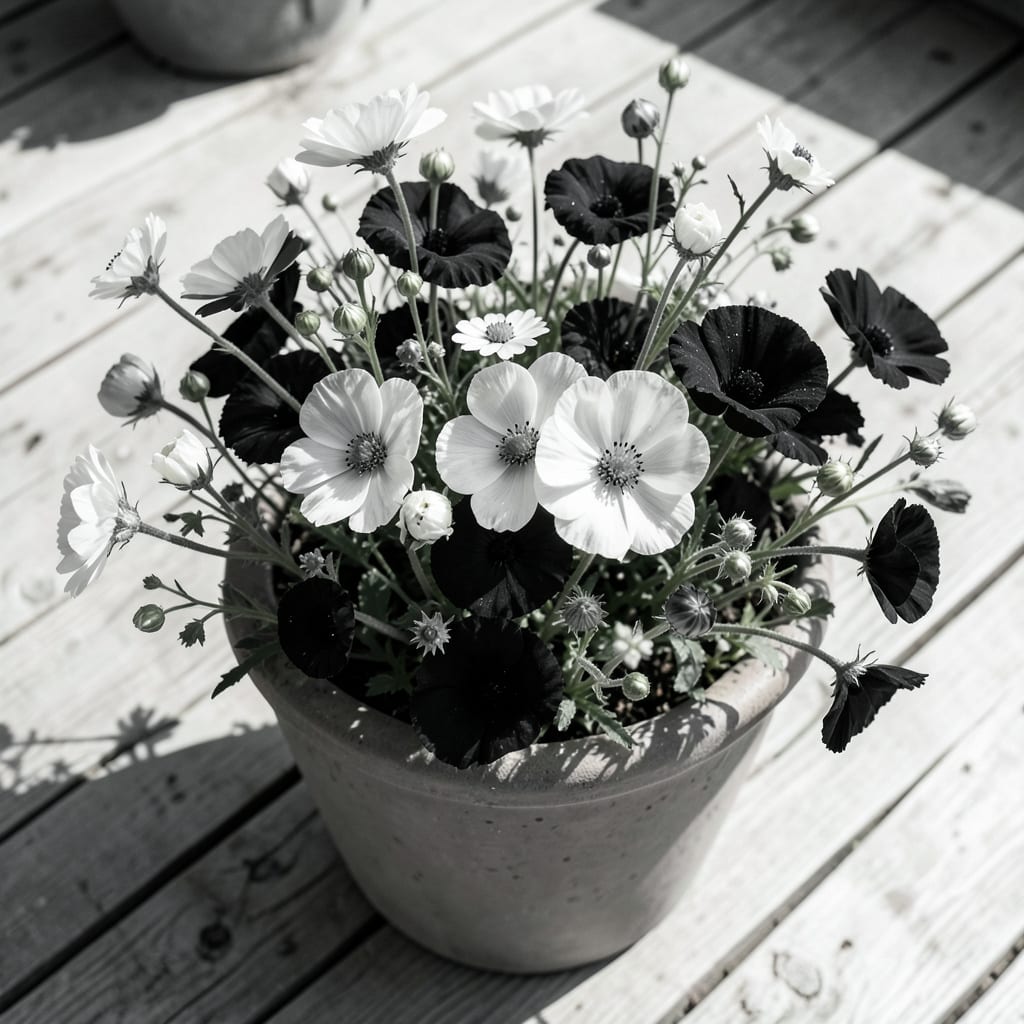
Black and white wildflowers bring timeless drama to any garden. I discovered their power when a simple border of these blooms transformed my chaotic flower beds into a sophisticated display.
They create striking contrast against green foliage or colorful companions, and work in both formal designs and wild cottage gardens. The monochrome palette makes every other color pop while maintaining effortless elegance.
📚 In This Guide
This monochromatic design creates striking visual impact with minimal color distraction.
Choose a location with full sun exposure (at least 6-8 hours of direct sunlight daily) as most white wildflowers bloom best in bright conditions. The soil should be well-draining—test by digging a 1-foot deep hole and filling it with water; if it drains within 1 hour, you’re good to go.
Remove all weeds and grass from a 5×5-foot area (adjust for your space). I use a garden fork to loosen the soil to a depth of 12 inches, breaking up any large clumps. This encourages deep root growth, which is especially important for the taller white varieties like Shasta daisies or white coneflowers.
Position your black and white elements with intentional spacing. For a natural look, place taller white blooms (2-3 feet) at the back of the bed and shorter varieties (1-2 feet) in front. The “black” in this design typically comes from dark foliage or near-black flowers like Queen of Night tulips or Black Adder agastache.
I create a rough sketch first, placing plants in their pots on the soil to visualize the pattern. Aim for odd-numbered groupings (3, 5, or 7) of each type for a more organic feel. Leave 18-24 inches between plantings to allow for mature spread.
Dig holes twice as wide as the root ball but no deeper. Place each plant in its hole, ensuring the crown sits slightly above soil level to prevent rot. For seeds, scatter them lightly and cover with ¼ inch of soil—press down gently but don’t bury too deep, as many wildflowers need light to germinate.
Water thoroughly after planting until the soil is moist to a depth of 6 inches. I use a gentle spray to avoid dislodging seeds or compacting soil. For the first 2-3 weeks, maintain consistent moisture, then gradually reduce frequency as roots establish.
Weed regularly, especially in the first season, as young wildflowers can be outcompeted. I find that a 2-inch layer of dark mulch (like black-dyed wood chips) both suppresses weeds and enhances the monochromatic aesthetic by providing contrast against white blooms.
Deadhead spent flowers to encourage continuous blooming and prevent self-seeding from disrupting your color scheme. Cut back entire plants by one-third after the first major bloom to promote a second flush of flowers. This is particularly effective with white phlox or black scabiosa.
Small details make the difference between a good display and a stunning one.
The Sunlight Factor: That 6-8 hours of daily sun mentioned in Step 1 isn’t just a suggestion—white wildflowers absolutely require it to thrive. I learned this the hard way when my first attempt in partial shade produced leggy, weak blooms. If your yard doesn’t get full sun, consider container gardening so you can move pots to follow the light.
Soil Test Shortcut: The 1-hour drainage test in Step 1 works perfectly, but here’s what nobody tells you—if water sits after that hour, don’t just dig deeper. Mix in compost or sand to improve drainage before planting. White varieties like Shasta daisies will rot in soggy soil.
Spacing Strategy: Those 18-24 inches between plantings in Step 2 might seem excessive at first, but trust me on this. Taller varieties like white coneflowers can spread 2 feet wide at maturity, and crowding leads to mildew and poor blooming. The odd-numbered groupings also create that natural, effortless look we’re going for.
Maintenance Secret: The 2-inch layer of dark mulch in Step 4 serves double duty. Beyond weed suppression, it creates that dramatic contrast that makes white blooms pop. I use black-dyed wood chips specifically because their deep color makes the whites appear even brighter, almost glowing in the garden.
Yes! While true black wildflowers are rare, you can create a monochrome look with deep purple (near-black) blooms like Queen of Night tulips and pure white flowers such as Shasta daisies or baby’s breath.
Plant in early spring or fall for cool-season varieties. Warm-season wildflowers thrive when sown in late spring. Check seed packets for specific timing based on your climate zone.
Absolutely! Try easy-care picks like black-eyed Susan (dark centers with white petals) or white yarrow. These are drought-tolerant and attract pollinators with minimal upkeep.
Add texture! Mix tall white foxgloves with low-growing black mondo grass. Use foliage like silver dusty miller to enhance contrast and keep the design dynamic.
