
Beautiful Plants For Your Interior
Beautiful Plants For Your Interior
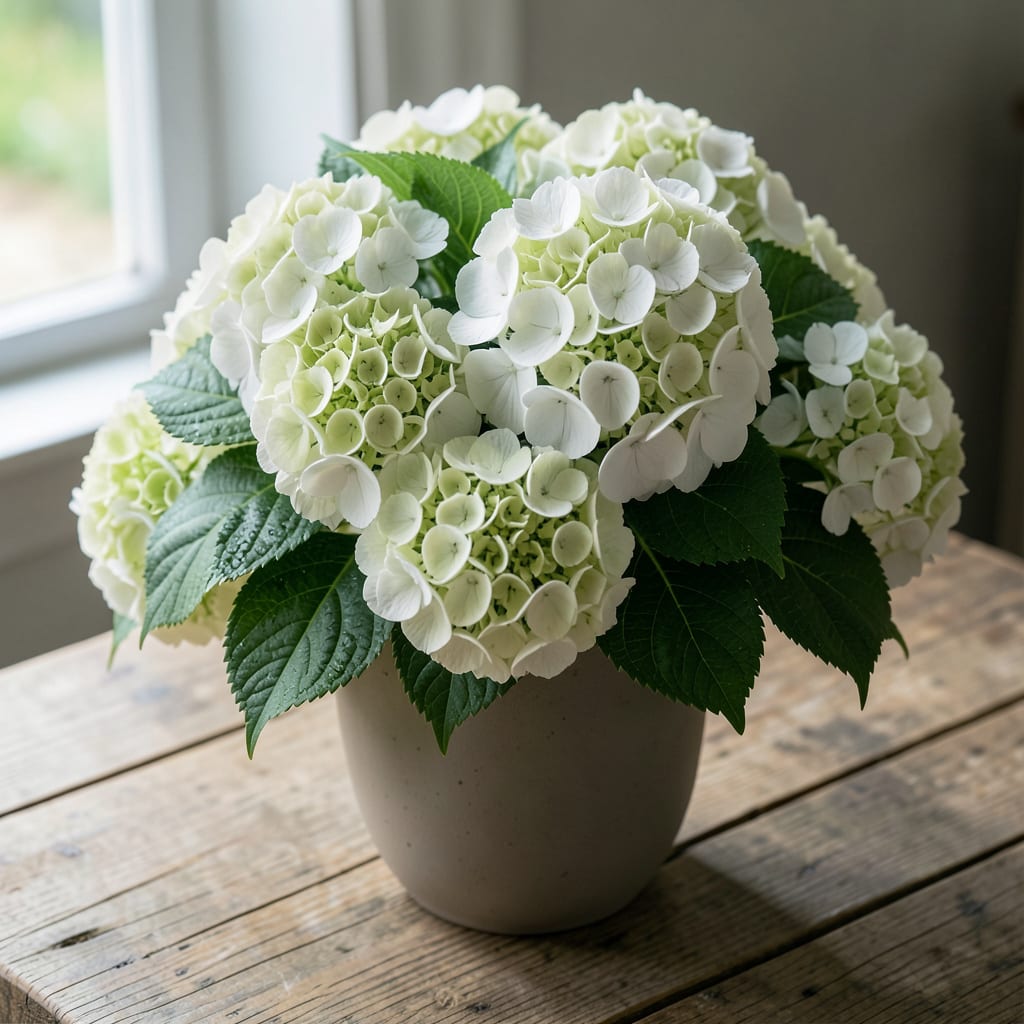
White hydrangeas turning green caught me off guard the first time it happened. The color shift isn’t a sign of poor health—it’s usually your soil talking to you.
Most often, the culprit is aluminum in the soil becoming available to the plant, which happens when pH drifts higher. Other times, it’s simply the blooms aging naturally. I’ve seen both scenarios in my own garden.
You can restore those crisp white blooms by adjusting soil pH or ensuring consistent watering. The fix is often simpler than you’d expect, and results appear within 2-3 weeks.
Whether you’re growing in containers or garden beds, this approach works the same. Here’s what to check first.
White hydrangeas turning green is often a sign of environmental or nutritional shifts. Here’s what’s likely behind the color change:
Hydrangeas are famous for their pH-sensitive bloom color. While white hydrangeas (like Hydrangea macrophylla ‘Annabelle’) are less affected than pink or blue varieties, highly alkaline soil (pH above 7.0) can cause a greenish tint. This happens because aluminum—critical for blue hues—becomes less available, and chlorophyll (the green pigment) dominates in the petals.
Too much nitrogen or phosphorus in the soil can trigger excess chlorophyll production. If your fertilizer is high in these nutrients (e.g., a 10-10-10 NPK ratio), the plant may prioritize leafy growth over flower color, leading to green-tinged blooms. White hydrangeas thrive on balanced, moderate feeding—overdoing it disrupts their natural pigmentation.
While white hydrangeas tolerate partial shade, intense direct sunlight can stress the plant and accelerate chlorophyll development in the blooms. This is especially true in hot climates where petals may “burn” or fade unevenly, revealing green undertones.
As white hydrangea flowers mature, they naturally fade to green or brown. This is part of their lifecycle—older blooms lose their vibrant hue as chlorophyll breaks down or becomes more visible. If only older flowers are turning green, it’s likely just time, not a problem.
If your white hydrangeas are turning green, don’t worry—this color shift is reversible! Below are targeted fixes for the most common causes, along with prevention tips to keep your blooms snowy white.
White hydrangeas thrive in neutral to slightly acidic soil (pH 6.0–7.0). If your soil is too alkaline (pH above 7.0), the flowers may turn greenish. Fix it: Test your soil with a kit, then amend it with aluminum sulfate (follow package instructions) or pepper vinegar (1 cup white vinegar per gallon of water, applied monthly). For a gentler approach, mix in compost or pine bark to naturally acidify the soil.
Prevention tip: 💡 Retest soil pH every spring and adjust before new growth starts.
Excess nitrogen or phosphorus can cause green tinges. Fix it: Switch to a balanced, low-phosphorus fertilizer (e.g., 10-10-10 or 12-4-8) and apply it only in early spring. Over-fertilizing worsens the issue! If your plant looks healthy but the flowers are off, flush the soil with water to leach out excess nutrients.
Prevention tip: ✨ Use organic mulch (like oak leaves) to slowly release nutrients without overloading the plant.
Too much shade can mute white hydrangeas, giving them a greenish cast. Fix it: Ensure your plant gets 4–6 hours of morning sun and dappled afternoon shade. If it’s in deep shade, gradually move it to a brighter spot over a few weeks to avoid shock.
Prevention tip: 🎯 Monitor sunlight patterns as seasons change—adjust placement if needed.
Overwatering or poor drainage can stress the plant, leading to color changes. Fix it: Water deeply but infrequently (1–2 times per week, depending on rainfall), and ensure the soil drains well. If the roots are soggy, improve drainage by amending the soil with perlite or sand.
Prevention tip: 🌡️ Stick your finger 2 inches into the soil—if it’s dry, it’s time to water.
No, it’s usually temporary and fixable. Adjust soil pH or nutrients to restore white blooms within 2-3 weeks.
Yes, excess nitrogen or phosphorus triggers chlorophyll production. Switch to a balanced, low-phosphorus fertilizer and avoid overfeeding.
Yes, intense sun can stress the plant, revealing green undertones. Aim for 4-6 hours of morning sun with afternoon shade.
Only if they’re aging naturally. If the color shift is due to pH or nutrients, leave them—they’ll recover with the right care.
