
Beautiful Plants For Your Interior
Beautiful Plants For Your Interior
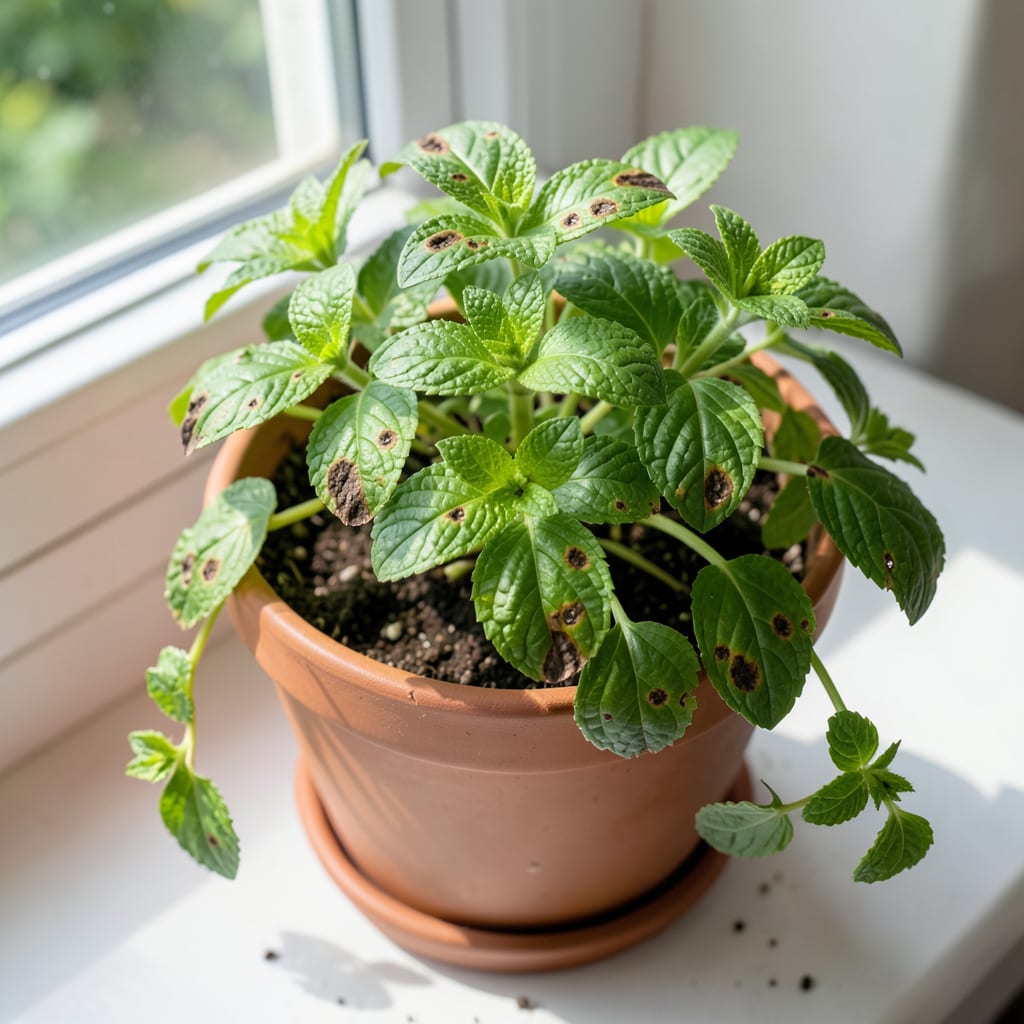
Brown spots on mint leaves are your plant’s SOS signal. I’ve seen this exact pattern when my own mint developed rust-colored patches overnight—always a sign something’s off with water, light, or invisible pests.
Most cases trace back to three culprits: overwatering that invites fungal growth, spider mites that leave tiny bite marks, or sunburn from sudden exposure. The good news? All three are fixable with simple adjustments to your care routine.
You’ll start seeing improvement within 3-5 days of addressing the root cause. The key is acting fast before spots spread to stems, which can mean losing the whole plant.
Works for potted mint on windowsills or garden beds alike. Here’s how to diagnose and treat each scenario properly.
Brown spots on mint leaves often signal stress or disease. Here are the most common causes, explained simply:
Mint is prone to fungal diseases like leaf spot or rust, especially in humid, poorly ventilated conditions. Fungi such as Alternaria or Puccinia thrive on wet foliage, creating circular or irregular brown patches. Overhead watering and crowded plants worsen the issue.
Root rot from excess moisture restricts nutrient uptake, causing leaves to develop brown, crispy edges or spots. Mint prefers consistently moist—but not soggy—soil. Compacted or clay-heavy soil exacerbates this by trapping water.
While mint loves sunlight, intense afternoon rays (especially in hot climates) can scorch leaves, leaving dry, brown patches. This often appears on the most exposed leaves first. Insufficient acclimation to direct sun can also trigger stress.
Sap-sucking pests like spider mites, aphids, or thrips pierce leaf tissues, causing localized browning or stippling. Their feeding disrupts cell integrity, and secondary infections may follow. Check leaf undersides for webbing or tiny insects.
A lack of magnesium or potassium can cause interveinal browning or spotty necrosis. Magnesium deficiency often starts with yellowing between veins, progressing to brown. Over-fertilization (especially with nitrogen-heavy mixes) may also burn roots, mimicking drought stress.
Once you’ve identified the cause, these targeted fixes will help nurse your mint back to health.
Let the top inch of soil dry out before watering again. Repot the plant in fresh, well-draining potting mix if the roots are soggy or rotten. Ensure the container has drainage holes to prevent waterlogging.
Prevention tip: Use a moisture meter 💡 to check soil dampness before watering—mint prefers slightly moist, not soggy, conditions.
Remove affected leaves immediately to stop the spread. Apply a copper-based fungicide or a homemade spray of 1 tsp baking soda + 1 quart water + a few drops of dish soap. Spray every 5–7 days until spots disappear.
Prevention tip: Improve air circulation around the plant and avoid wetting the leaves when watering. ✨
Wipe leaves with a soap-water solution (1 tsp mild soap per quart of water) to remove aphids or spider mites. For severe cases, use neem oil spray every 3–4 days until pests are gone.
Prevention tip: Inspect leaves regularly, especially the undersides, and keep the growing area clean. 🎯
Move the plant to a spot with bright, indirect light or provide shade during peak afternoon hours. If growing outdoors, use a shade cloth to filter intense sunlight.
Prevention tip: Acclimate indoor mint gradually to outdoor conditions to avoid shock. 🌡️
Feed your mint with a balanced, water-soluble fertilizer (10-10-10) every 4–6 weeks during the growing season. Yellowing leaves with brown spots often signal a lack of magnesium—add Epsom salt (1 tbsp per gallon of water) as a quick fix.
Prevention tip: Refresh the soil annually to maintain nutrient levels. 🔥
Yes, if caused by fungal infections or pests, they can spread quickly. Isolate affected plants and treat immediately with neem oil or fungicide. Always sterilize tools after pruning.
Water when the top 1 inch of soil feels dry. Mint likes moisture but hates soggy roots—overwatering is a common cause of brown patches. Use a pot with drainage holes.
Remove spotted leaves with clean scissors to stop the spread. Dispose of them in the trash, not compost, to prevent reinfection. This also improves air circulation.
For cooking, avoid leaves with spots—especially if fungal. Pests or diseases can leave residues. Healthy leaves are safe, but wash them thoroughly first.
