
Beautiful Plants For Your Interior
Beautiful Plants For Your Interior
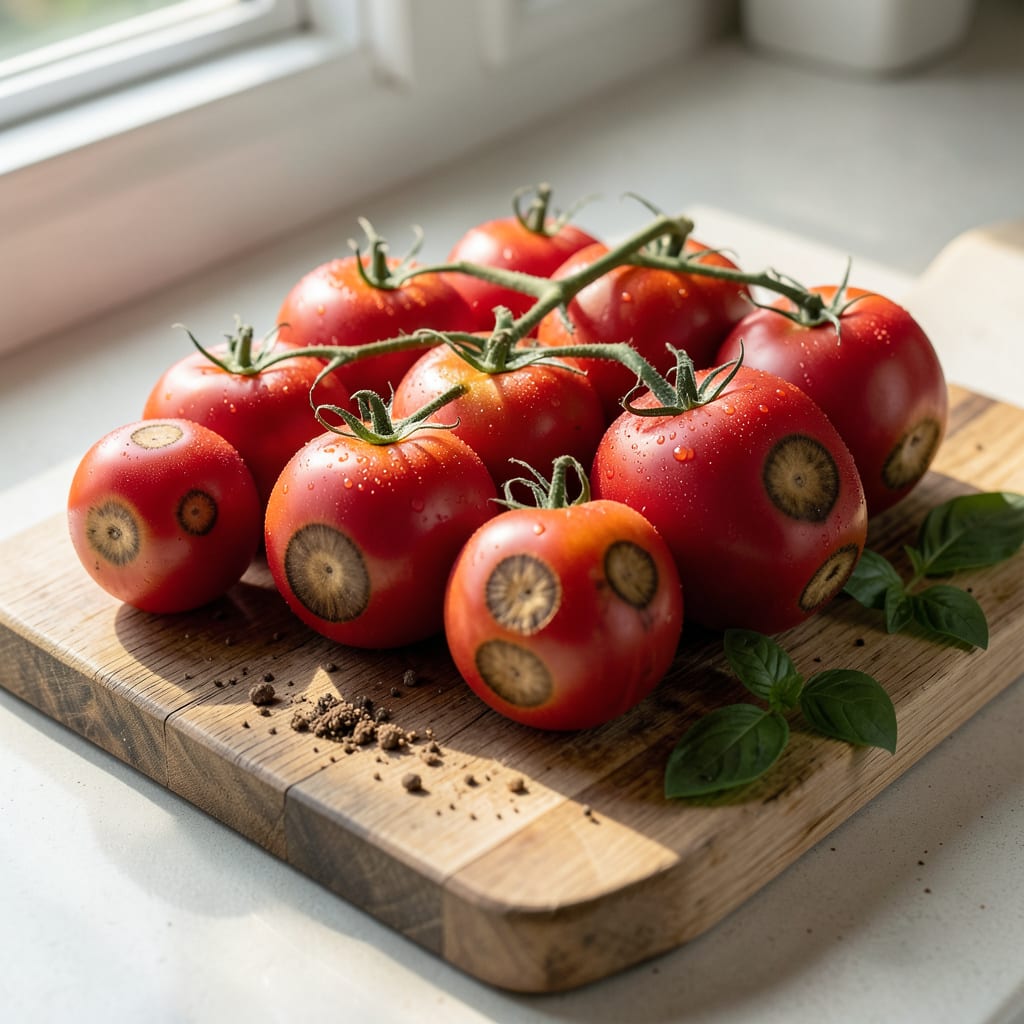
That sinking feeling when you spot brown patches on your tomatoes? I’ve been there. It’s usually blossom end rot, and it’s more common than you think.
This happens when plants can’t pull enough calcium from the soil, often due to uneven watering or poor soil conditions. The good news? It’s fixable and preventable with a few simple adjustments.
You’ll see results within 2-3 weeks of consistent watering and a calcium boost. The spots won’t heal, but new fruit will grow spot-free with the right care.
Works for all tomato varieties, whether you’re growing in containers or garden beds. Let’s turn those brown spots into a thing of the past.
Brown spots on the bottom of tomatoes, known as blossom end rot, are a common issue with a few distinct causes. Understanding these will help you address the problem effectively.
The most frequent culprit is calcium deficiency in the developing fruit. Calcium is crucial for cell wall structure, and when plants lack it, the tissue at the blossom end (opposite the stem) breaks down, turning brown and leathery. This often happens during rapid growth periods when the plant can’t absorb enough calcium from the soil.
Fluctuations in soil moisture disrupt calcium uptake. Overwatering or drought stress can both trigger blossom end rot. Too much water suffocates roots, while too little prevents nutrient absorption. Even short dry spells can starve the plant of calcium, leading to those unsightly brown patches.
If your soil is too acidic (pH below 6.0), calcium becomes less available to the plant. Tomatoes thrive in slightly acidic to neutral soil (pH 6.0–6.8). Testing your soil and amending it with lime (to raise pH) or sulfur (to lower pH) can restore balance and improve calcium accessibility.
Over-fertilizing, especially with high-nitrogen or high-potassium formulas, can interfere with calcium absorption. Nitrogen promotes leafy growth at the expense of fruit development, while too much potassium can block calcium uptake. Always follow fertilizer instructions and opt for a balanced formula.
Once you’ve identified the cause of brown spots on your tomatoes, these targeted fixes will help restore your plants to health.
If the issue is a lack of calcium, add crushed eggshells or bone meal to the soil. For a quicker fix, use a calcium-rich foliar spray like calcium chloride or nitrate. Prevention tip 💡: Maintain consistent soil moisture—fluctuations disrupt calcium uptake.
Water deeply and regularly, aiming for 1–2 inches per week. Use drip irrigation or soaker hoses to keep moisture levels steady. Prevention tip 💡: Mulch around plants to retain soil moisture and reduce evaporation.
Protect plants from extreme heat or cold with shade cloth or row covers. Ensure tomatoes get 6–8 hours of sunlight daily but avoid scorching midday rays. Prevention tip 💡: Plant heat-tolerant varieties if you live in a hot climate.
Cut back on high-nitrogen fertilizers, which can block calcium absorption. Switch to a balanced, slow-release fertilizer and test soil before adding amendments. Prevention tip 💡: Avoid fertilizing during drought—it stresses plants further.
Remove affected fruit and treat plants with neem oil or copper fungicide for fungal issues. For pests, use insecticidal soap or introduce beneficial insects like ladybugs. Prevention tip 💡: Rotate crops yearly to prevent soil-borne diseases.
With these adjustments, your tomatoes should bounce back—happy gardening! 🌿
Yes, the affected parts are safe to eat, though they may taste bitter. Simply cut off the brown areas before using. The rest of the tomato remains perfectly fine for cooking or fresh eating.
New fruit will show improvement within 2-3 weeks of consistent care. Existing spots won’t heal, but future tomatoes will develop normally with proper watering and calcium levels.
Large, fast-growing varieties like beefsteaks are more susceptible. Cherry tomatoes are less affected due to their smaller size and faster growth cycle.
Potted plants often experience this due to uneven watering or poor soil mix. Use containers with good drainage and water consistently to prevent it.
