
Beautiful Plants For Your Interior
Beautiful Plants For Your Interior
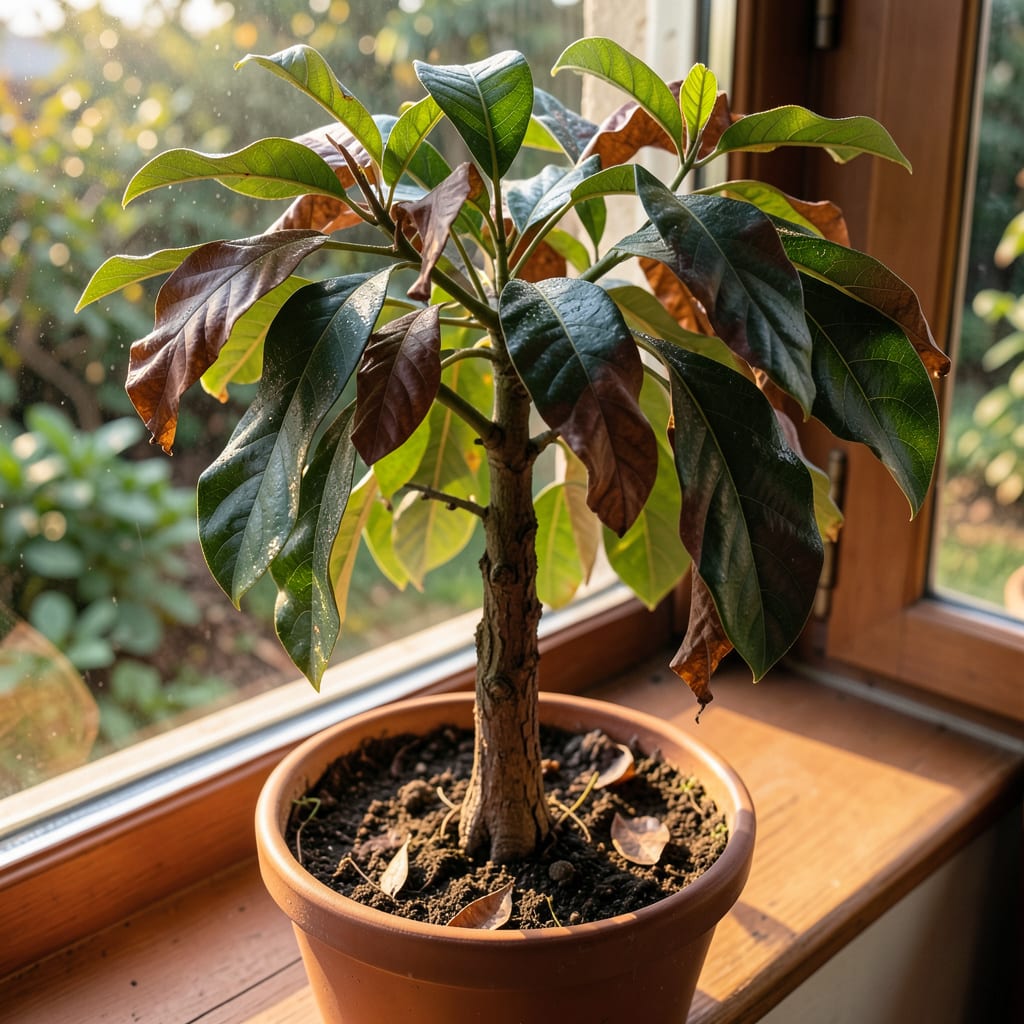
Brown leaves on your avocado tree aren’t just unsightly—they’re a distress signal. I’ve seen this happen to my own trees, and the causes range from simple fixes to more serious issues that need immediate attention.
Most often, it’s about water—either too much or too little. But don’t rule out environmental stress, nutrient deficiencies, or even pests. Each problem leaves its own clue in how the browning appears and spreads.
Here’s the thing—catching it early makes all the difference. A few crispy edges might just need a watering adjustment. Widespread browning could mean your tree is in real trouble.
The good news? With the right diagnosis, your avocado can bounce back faster than you’d expect. Let’s figure out what your tree is trying to tell you.
Brown leaves on your avocado tree are a distress signal, and several factors could be to blame. Here’s a breakdown of the most common causes, backed by science:
Avocado trees thrive in 60–80°F (15–27°C). Exposure to cold drafts below 30°F (-1°C) or heat spikes above 90°F (32°C) disrupts cellular function, leading to leaf scorching or necrosis. Frost damage is particularly severe, as ice crystals rupture plant cells, turning foliage brown and crispy.
Overwatering suffocates roots, preventing oxygen uptake and fostering root rot (Phytophthora fungus). Underwatering, on the other hand, causes dehydration, leading to leaf tip burn. Avocados need consistent moisture—aim for soil that’s damp but not soggy, with a well-draining substrate.
Lack of magnesium or zinc often manifests as browning leaves. Magnesium deficiency starts with yellowing between leaf veins (interveinal chlorosis), progressing to brown spots. Zinc deficiency causes small, narrow leaves with brown, dead tissue. A balanced fertilizer (e.g., 6-6-6 NPK) with micronutrients can correct this.
Spider mites and avocado lace bugs sap nutrients from leaves, causing stippling, yellowing, and eventual browning. Check the undersides of leaves for webbing or tiny insects. Neem oil or insecticidal soap can help control infestations early.
Anthracnose (Colletotrichum spp.) and bacterial leaf spot (Xanthomonas) create dark, sunken lesions that turn brown. These thrive in humid, poorly ventilated conditions. Prune infected leaves and apply copper fungicide preventatively.
Here’s how to tackle the most common causes of brown avocado leaves, with practical fixes and prevention tips to keep your tree thriving.
If your avocado tree is getting too much direct sunlight, especially in hot climates, the leaves can scorch and turn brown.
Both too little and too much water can lead to brown, crispy leaves. Underwatering causes dryness, while overwatering suffocates the roots.
Fungal issues like root rot or bacterial leaf spot can cause browning, often with spots or yellowing before the leaves turn brown.
Lack of essential nutrients, particularly magnesium or potassium, can lead to brown edges or tips on leaves.
Unfortunately no—once leaves turn brown, that damage is permanent. The good news is your tree can grow new healthy leaves once the underlying issue is fixed. Focus on correcting the problem, not reviving the damaged foliage.
Water deeply when the top 2 inches of soil feel dry, typically every 5-7 days in warm weather. Potted trees may need water every 2-3 days as they dry out faster. Always check soil moisture first.
Use a balanced fertilizer like 6-6-6 NPK with micronutrients, or choose one specifically formulated for citrus and avocados. Apply every 2-3 months during the growing season.
Yes, remove brown leaves to prevent disease spread and allow the tree to focus energy on new growth. Use clean pruners and make cuts at a 45-degree angle just above a leaf node.
