
Beautiful Plants For Your Interior
Beautiful Plants For Your Interior
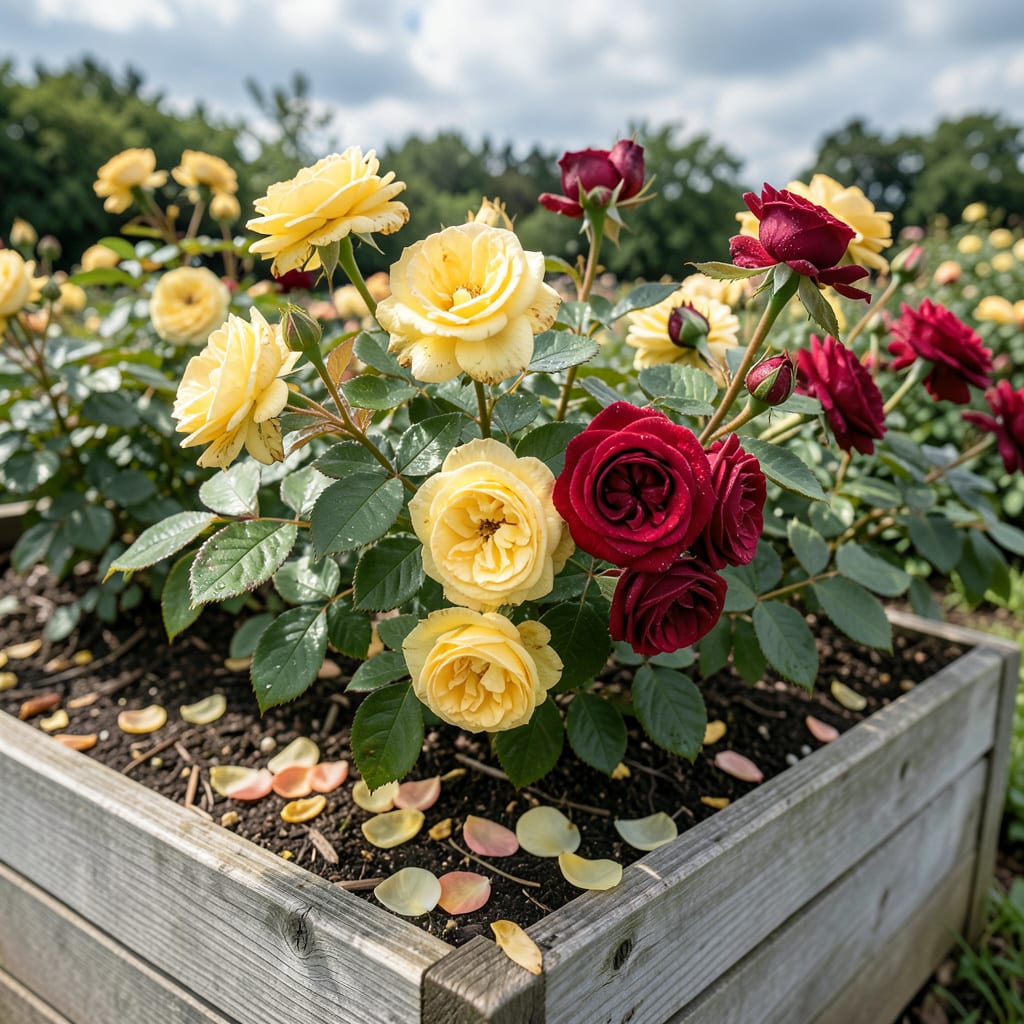
Seeing yellow leaves on your rose bushes feels like a gut punch. I’ve been there—watching healthy green turn sickly overnight and wondering what went wrong.
The usual suspects aren’t complicated: too much water, not enough iron, or soil that’s too alkaline for roses to absorb what they need. Nine times out of ten, it’s something fixable in your control.
You’ll be surprised how quickly roses bounce back once you identify the issue. Proper diagnosis means the difference between a struggling plant and one that explodes with vibrant blooms by next season.
Works for hybrid teas, climbers, and shrub roses alike. Here’s how to play detective with your bushes.
Yellowing rose bushes often signal underlying issues that disrupt their health. Here are the most frequent culprits:
Roses crave balanced nutrition. A lack of nitrogen causes uniform yellowing (chlorosis) in older leaves first, as the plant redirects nutrients to new growth. Iron deficiency, often due to alkaline soil (pH > 7.0), triggers yellowing between leaf veins (interveinal chlorosis) in young leaves. Similarly, magnesium shortages—common in sandy or acidic soils—create yellow patches with green veins, starting at leaf edges.
Soggy roots suffocate, blocking oxygen uptake and nutrient absorption. This leads to yellowing leaves, often accompanied by wilting or blackened stems. Roses prefer 1–1.5 inches of water weekly; excess moisture also fosters root rot (Phytophthora or Pythium fungi), which turns foliage yellow and stunts growth.
Spider mites and aphids suck sap from leaves, causing stippling, curling, and yellowing. Fungal diseases like black spot (Diplocarpon rosae) create yellow halos around dark spots, while powdery mildew coats leaves in white powder, reducing photosynthesis. Viral infections (e.g., Rose rosette virus) distort growth and yellow foliage in mottled patterns.
Extreme heat or cold disrupts chlorophyll production. Sunburn from intense UV exposure can bleach leaves, while cold drafts or frost damage trigger yellowing and necrosis. Poor air circulation in humid climates also stresses roses, making them prone to fungal issues.
Bring your rose bushes back to vibrant health with these targeted fixes for the most common causes of yellowing leaves and stems.
Nitrogen shortage: Apply a balanced, slow-release rose fertilizer (10-10-10) or a nitrogen-rich organic amendment like composted manure. Work it into the top 2–3 inches of soil, then water deeply. Prevention tip: Feed roses every 4–6 weeks during the growing season.
Iron or magnesium lack: Treat with chelated iron or Epsom salt (1 tablespoon per gallon of water) as a foliar spray or soil drench. Yellowing between leaf veins often signals this issue. 💡 Pro tip: Test soil pH first—roses prefer 6.0–6.5. Adjust with lime (to raise) or sulfur (to lower) if needed.
Overwatering: Let the top 1–2 inches of soil dry out between waterings. Improve drainage by mixing in perlite or coarse sand. Ensure pots have drainage holes. Prevention: Use a moisture meter to avoid guesswork.
Underwatering: Deep-soak roses 1–2 times weekly (more in extreme heat). Mulch with 2–3 inches of bark or straw to retain moisture. 🌡️ Check: Wilting in hot afternoons? Water early in the morning.
Spider mites/aphids: Blast off pests with a strong water spray, then apply neem oil or insecticidal soap. Repeat every 5–7 days until gone. Prevention: Encourage ladybugs and lacewings—natural predators!
Fungal issues (black spot, powdery mildew): Remove affected leaves and treat with a fungicide (copper or sulfur-based). Space plants for airflow and avoid overhead watering. ✨ Pro tip: Water at the base to keep foliage dry.
Nutrient deficiency often shows as yellowing between leaf veins or on older leaves first. Overwatering causes uniform yellowing with wilting or black stems. Check soil moisture 2 inches deep—if soggy, it’s likely overwatering.
Unfortunately, once leaves turn yellow, they won’t regreen. Focus on correcting the problem to support new, healthy growth. Remove severely yellowed leaves to redirect the plant’s energy.
Feed roses every 4-6 weeks during growing season with a balanced fertilizer. Use 10-10-10 or organic options like compost. Always water deeply after applying to help absorption.
Yes, with quick action. Prune affected areas, adjust watering, and treat soil with appropriate nutrients. Most bushes recover within 2-4 weeks if the root system remains healthy.
