
Beautiful Plants For Your Interior
Beautiful Plants For Your Interior
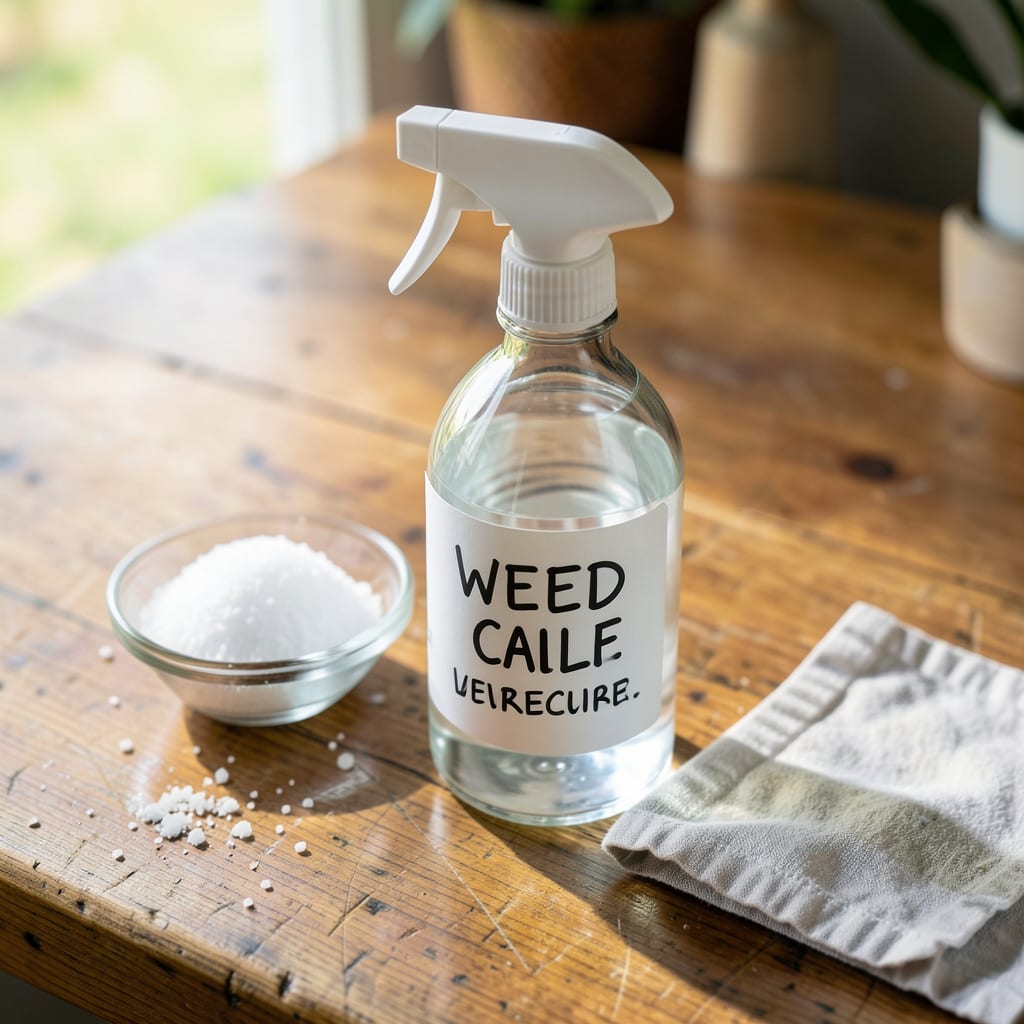
I discovered this natural approach after years of battling weeds between my pavers. It’s simple, effective, and avoids harsh chemicals that can harm the environment.
With just a few household items, you can create a powerful solution that targets weeds in driveways and walkways without damaging nearby plants when used carefully. The results are visible within 24-48 hours.
📚 In This Guide
Here’s the method I use to make an effective natural weed killer that works on driveways and walkways.
You’ll need white vinegar with at least 5% acetic acid—higher concentrations (up to 20-30%) work even better for tough weeds. I always use a clean 1-gallon spray bottle because it makes application easier and more precise. Avoid using vinegar that’s been diluted or previously opened, as the acidity may have weakened.
Also, grab a pair of gloves (vinegar can dry out your skin) and safety goggles if you’re using higher concentrations. I keep a small funnel handy to avoid spills when transferring the vinegar. This isn’t just about neatness—vinegar can damage surfaces like wood or painted areas if it spills.
Fill the spray bottle with undiluted white vinegar. If you’re tackling particularly stubborn weeds, you can enhance the solution by adding 1 cup of table salt and 1 tablespoon of liquid dish soap. The salt helps dry out the weeds, while the dish soap acts as a surfactant, helping the vinegar cling to the leaves.
Secure the spray nozzle tightly and give the bottle a gentle shake to mix everything. Don’t overdo it—just enough to combine the ingredients. If you’re using a higher concentration of vinegar, be extra careful with the nozzle, as the fumes can be strong.
Choose a day with full sun and no rain in the forecast for at least 24 hours. The sunlight helps the vinegar work faster by accelerating the drying process. Spray the solution directly onto the leaves and stems of the weeds, coating them thoroughly but avoiding any nearby grass or plants you want to keep.
I like to spray in the mid-morning, when the sun is strong but not at its peak. This gives the vinegar time to work before the heat of the day evaporates it too quickly. You’ll see the weeds start to wilt within a few hours, but full results may take 1-2 days.
Check the treated area after 24-48 hours. If the weeds are still green and healthy, you may need to reapply the solution. Some weeds, especially those with deep roots like dandelions, might require a second or even third application. Don’t be discouraged—persistence is key with natural herbicides.
For driveways and walkways, I find that a weekly application for 2-3 weeks usually does the trick for persistent weeds. Keep an eye on the weather, as rain can wash away the solution before it has a chance to work. If rain is expected within 6 hours of application, plan to reapply afterward.
Once the weeds are gone, take steps to prevent them from returning. Lay down a 2-3 inch layer of mulch or landscape fabric in garden beds to suppress new growth. For driveways and walkways, consider using a natural pre-emergent like corn gluten meal in early spring to stop weeds before they start.
I’ve found that regular maintenance is the best way to keep weeds at bay. A quick spray every few weeks during the growing season can save you a lot of time and effort later. Always store your vinegar solution in a safe place, away from children and pets, and clearly label the bottle to avoid any accidents.
Small adjustments can make this natural solution even more effective and safer to use.
Concentration Tip: Stick with vinegar that has at least 5% acetic acid as specified in Step 1. Higher concentrations (up to 20-30%) do work better for stubborn weeds, but they also require extra caution with gloves and goggles due to stronger fumes.
Application Timing: In Step 3, spraying during mid-morning in full sun is ideal because it gives the vinegar time to work before peak heat evaporates it. You’ll typically see wilting within a few hours, with full effects appearing in 1-2 days, as mentioned.
Weather Consideration: If rain is forecast within 6 hours of application, as noted in Step 4, reapply afterward. Rain can wash away the solution before it has a chance to take effect, especially during the critical first 24 hours.
Persistence Pays Off: For driveways and walkways, consistency is key. A weekly application for 2-3 weeks is often needed for persistent weeds, as outlined in Step 4. Deep-rooted weeds like dandelions may require multiple treatments.
Most weeds wilt within 24 hours, but tougher ones may take 2-3 applications over a week. Reapply on sunny days for best results.
No, use white vinegar with 5% acetic acid or higher (like horticultural vinegar). Household vinegar works, but stronger concentrations are more effective.
Yes! Vinegar is non-selective, so avoid spraying near desired plants. Use a shield or apply carefully to target weeds only.
Apply on sunny, dry days (morning or early afternoon) for maximum absorption. Rain can wash it away before it works.
For a gentler option, try boiling water or corn gluten meal (pre-emergent). For stubborn weeds, mix vinegar with dish soap or salt for extra strength.
