
Beautiful Plants For Your Interior
Beautiful Plants For Your Interior
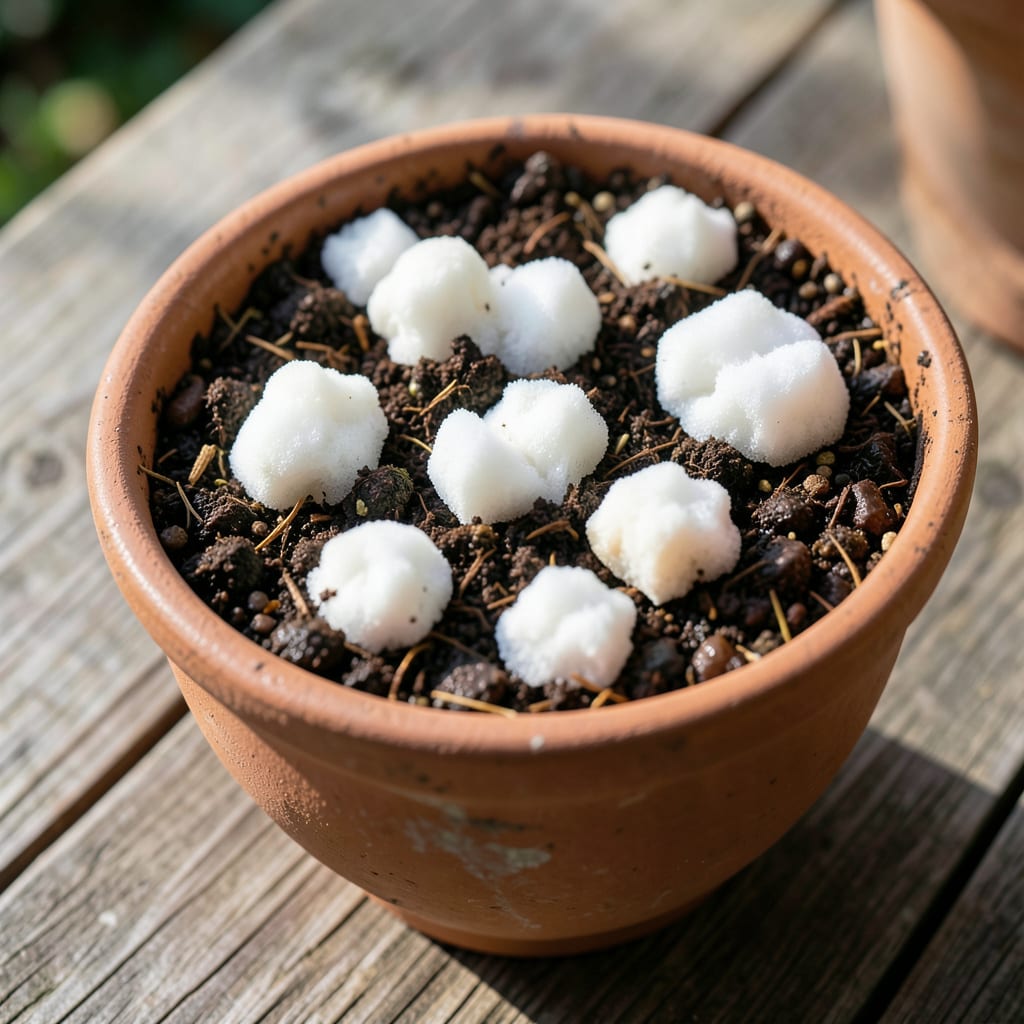
That white stuff in your potting soil isn’t always bad news. I’ve seen it scare new gardeners, but most causes are harmless and fixable.
Mold, mineral deposits, or perlite can all look alarming at first glance. The good news? Each has a simple organic solution that restores soil health without chemicals.
You’ll learn to tell them apart and know exactly how to respond. Proper watering and airflow usually prevent future outbreaks entirely.
Works for all container plants, from houseplants to vegetable starts. Here’s how to keep your soil clean and thriving.
The white stuff in your potting soil usually stems from one of several common culprits. Below are the most likely causes, explained in clear, scientific terms.
Fungi, particularly Saprophytic fungi, thrive in moist, organic-rich environments like potting soil. These fungi break down organic matter, and their thread-like structures (hyphae) form a white, web-like network called mycelium. While generally harmless, excessive mycelium can indicate overwatering or poor drainage. Fungi like Trichoderma or Penicillium are common in bagged soil mixes with high peat or compost content.
White crusty deposits often result from mineral buildup, especially in soils fertilized with tap water or synthetic fertilizers. Tap water contains dissolved salts (calcium, magnesium, sodium), which accumulate on the soil surface as water evaporates. Similarly, lime (calcium carbonate) may be added to adjust pH, leaving chalky white residues. This is more common in clay-heavy or poorly draining soils.
Tiny white specks could be eggs or larvae from soil-dwelling insects like fungus gnats, springtails, or mealybugs. Fungus gnat larvae, for example, lay eggs in damp soil, which appear as small, white, rice-like grains. These pests thrive in consistently moist conditions and can multiply rapidly if not addressed.
If the white stuff is granular and doesn’t dissolve or grow, it’s likely perlite or vermiculite—inorganic soil amendments added to improve aeration and drainage. Perlite is a volcanic glass that expands into tiny white beads when heated, while vermiculite is a mineral that puffs into worm-like strands. Both are normal and beneficial in potting mixes.
Tackling the white stuff in your potting soil starts with identifying the cause and applying the right fix. Here’s a straightforward guide to restoring your soil—and your plants—to health.
Fix: If you spot fuzzy white growth (like Saprophytic fungi), improve airflow immediately. Move your plant to a breezier spot or use a small fan on low. Remove the top layer of soil if the mold is widespread, then sprinkle a thin layer of cinnamon (a natural antifungal) on the surface. For stubborn cases, repot the plant with fresh, sterile potting mix.
Prevention: Avoid overwatering and ensure your pots have drainage holes. Water only when the top inch of soil feels dry. 💡 Pro tip: Add a handful of perlite to the mix to boost aeration.
Fix: White crusty residue often means mineral buildup from hard water or excess fertilizer. Scrape off the top layer of soil, then flush the remaining soil with distilled or rainwater until it drains clear. If the problem persists, repot with fresh soil and switch to a balanced, water-soluble fertilizer at half strength.
Prevention: Use filtered or distilled water for irrigation, and fertilize sparingly—follow the “less is more” rule. ✨
Fix: For mealybugs (white, cottony clusters), dab them with a cotton swab soaked in rubbing alcohol or spray the plant with neem oil (1 tbsp oil + 1 tsp mild soap per gallon of water). For fungus gnats, let the soil dry out completely between waterings and use yellow sticky traps to catch adults.
Prevention: Quarantine new plants for 2–3 weeks to avoid infestations. Keep the soil surface dry and avoid organic matter (like tea leaves) on top, as it attracts gnats. 🎯
Fix: White, powdery spots may be salt or lime from tap water or amendments. Flush the soil thoroughly with distilled water to leach out the salts. If the soil is heavily affected, repot the plant and rinse the roots gently under lukewarm water.
Prevention: Test your tap water’s pH and mineral content. If it’s high in salts or lime, switch to rainwater or bottled water for your plants. 🌡️
Generally, white fuzzy mold is harmless and even beneficial as it breaks down organic matter. However, excessive growth may indicate overwatering. Improve airflow and reduce watering to keep it in check.
Mold appears as a web-like or fuzzy layer, while perlite looks like tiny white beads. Mold grows and spreads, but perlite stays static. If unsure, gently touch it—perlite feels hard and gritty.
Repotting helps with severe mold, mineral buildup, or pests but isn’t always needed. For minor issues, adjusting watering habits or flushing the soil with distilled water may suffice.
A diluted vinegar solution (1 part vinegar to 3 parts water) can dissolve mineral buildup. Apply sparingly to avoid altering soil pH too much. Test on a small area first.
