
Beautiful Plants For Your Interior
Beautiful Plants For Your Interior
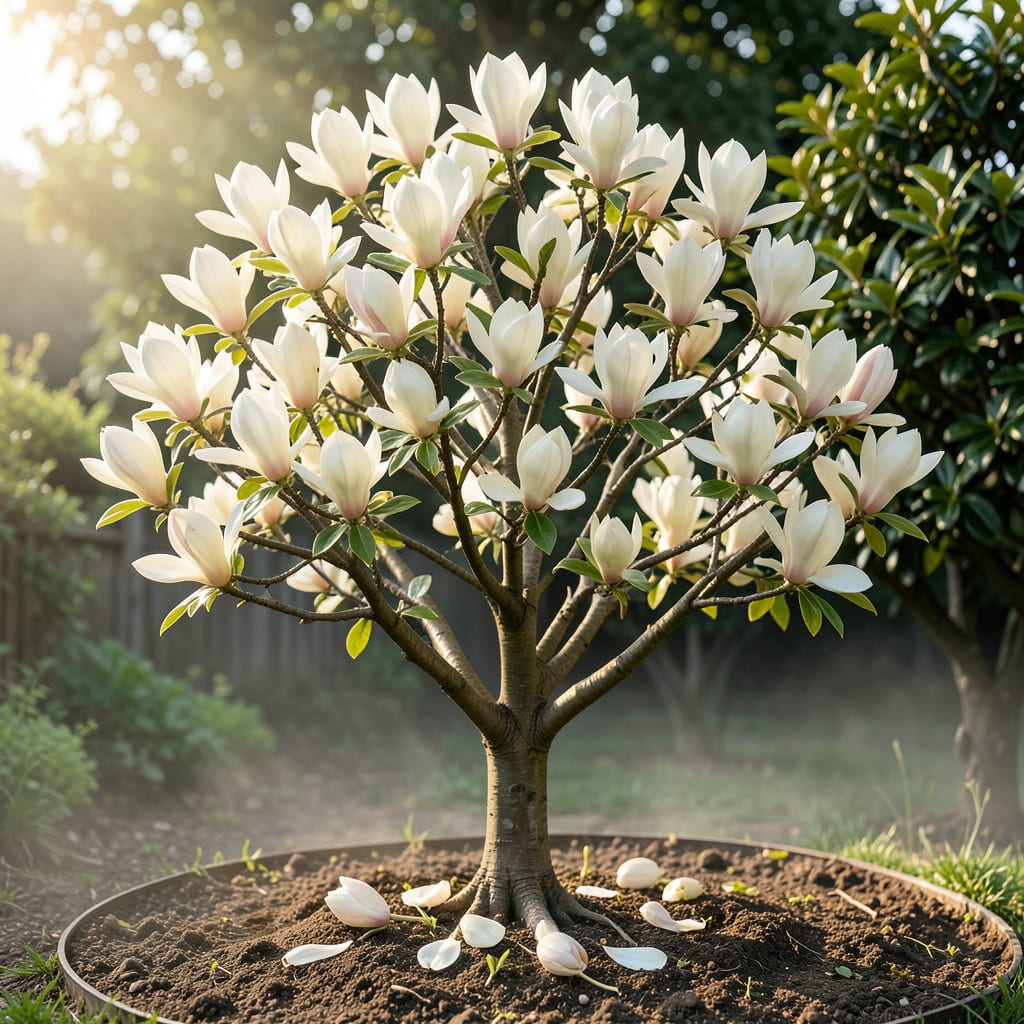
There’s nothing like the first whiff of magnolia blossoms in early spring. I planted my white star magnolia five years ago, and now it stops neighbors in their tracks every March.
This tree thrives in full sun to partial shade with well-draining soil. It’ll reward you with fragrant white blooms before the leaves even appear, and its compact size fits perfectly in most home landscapes.
📚 In This Guide
Here’s the method I use to ensure these stunning trees thrive and reward you with years of fragrant blooms.
Select a spot with full sun to partial shade—at least 6 hours of direct sunlight daily. White Star magnolias prefer well-draining, slightly acidic soil. Test your soil’s drainage by digging a 12-inch hole and filling it with water. If it drains within 2-3 hours, you’re good to go.
Avoid low areas where water pools, as soggy roots will rot. I always plant mine near a fence or wall for protection from strong winds, which can damage the delicate blossoms. Space the tree at least 15-20 feet from other large plants or structures to accommodate its mature size.
Dig a hole that’s twice as wide as the root ball and just as deep. Loosen the soil at the sides and bottom to encourage root growth outward. Remove any rocks, weeds, or debris that could hinder development.
Mix the excavated soil with 50% compost or aged manure to improve fertility and drainage. This step is crucial—magnolias hate heavy clay or sandy soil. If your soil is poor, consider amending a larger area around the hole to give roots room to spread.
Gently remove the tree from its container and loosen any circled roots to prevent girdling. Place the root ball in the hole so the top sits 1-2 inches above the surrounding soil—this accounts for settling. Backfill with the amended soil, tampering lightly to remove air pockets.
Create a 3-inch-high watering ring around the base to help retain moisture. Water deeply right after planting, using 10-15 gallons to settle the soil. I’ve found that mulching with 2-3 inches of organic material helps retain moisture and suppress weeds, but keep it 6 inches away from the trunk to prevent rot.
For the first 2-3 weeks, water 2-3 times per week, giving the tree 5-10 gallons each time. After that, reduce to once a week unless the weather is hot and dry. The goal is to keep the soil evenly moist but not waterlogged.
Check soil moisture by sticking your finger 2-3 inches down. If it feels dry, it’s time to water. A newly planted magnolia may take 1-2 years to fully establish, so stay consistent with watering and mulching during this period.
Apply a balanced, slow-release fertilizer in early spring and again in early summer, but avoid over-fertilizing, which can lead to excessive leaf growth at the expense of blooms.
Prune only when necessary—White Star magnolias have a naturally attractive shape. If you need to shape the tree, do so right after flowering to avoid cutting off next year’s buds. Remove any dead, diseased, or crossing branches with clean, sharp tools.
Keep an eye out for pests like scale or aphids, which can stress the tree. A strong spray of water or horticultural oil can usually handle minor infestations. In late winter, apply a fresh layer of mulch to protect roots from temperature fluctuations.
With proper care, your tree will reward you with stunning, star-shaped white flowers each spring, filling your garden with a sweet, citrusy fragrance.
Here are the key details that make the difference between a tree that struggles and one that flourishes.
The Sunlight Sweet Spot: That 6 hours of direct sunlight daily is non-negotiable for vibrant blooms. I learned the hard way that morning sun with afternoon shade works best—intense midday sun can scorch the delicate petals. Full sun to partial shade means at least half a day of light, not just dappled shade from nearby trees.
Drainage Test: When you dig that 12-inch hole for the drainage test, fill it completely with water and time it precisely. If it doesn’t drain within 2-3 hours, you’ll need to amend the soil or choose a different spot. Magnolias despise wet feet, and this simple test prevents years of frustration.
Planting Height: Always plant the root ball 1-2 inches above the surrounding soil in Step 3. This accounts for settling, and I’ve seen too many trees suffocate when planted too deep. The top of the root ball should be visible above ground level after watering.
Watering Wisdom: During those first 2-3 weeks, stick to the 2-3 times per week schedule with 5-10 gallons each time. It’s tempting to baby the tree with daily watering, but overwatering is just as deadly as underwatering. Check that 2-3 inches down with your finger—if it’s dry, it’s time to water.
This tree grows at a slow to moderate rate, typically adding 12-24 inches per year. With proper care, it can reach 15-20 feet tall in about 10-15 years.
Expect fragrant, star-shaped white flowers in early to mid-spring, usually March to April, before the leaves emerge. Blooms last 1-2 weeks.
Consider saucer magnolia (Magnolia × soulangeana) for larger flowers or sweetbay magnolia (Magnolia virginiana) for a more compact, evergreen option.
Common issues include immature age (takes 3-5 years), insufficient sunlight, or late frost damaging buds. Ensure it gets 6+ hours of sun and is planted in well-draining soil.
