
Beautiful Plants For Your Interior
Beautiful Plants For Your Interior
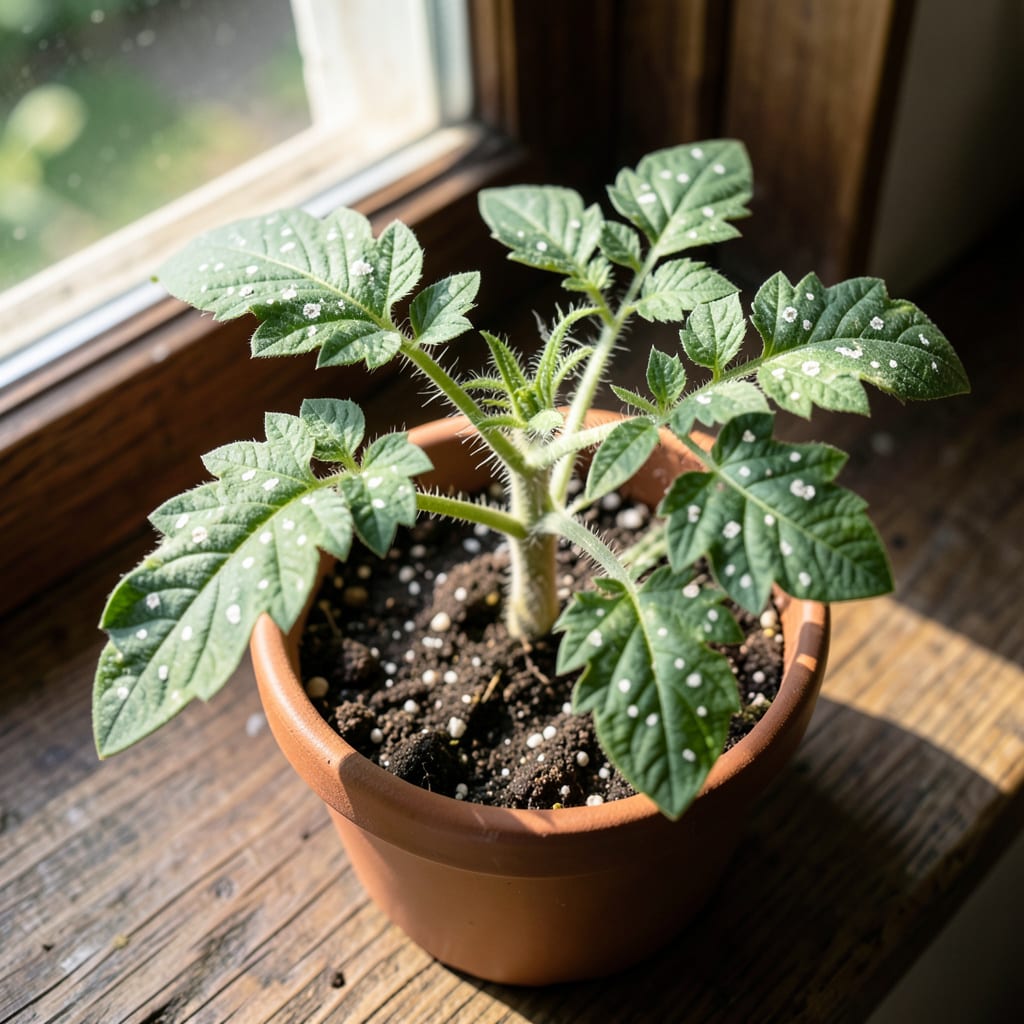
Those white spots on your tomato seedlings aren’t just unsightly—they’re a warning. I’ve seen entire trays of seedlings ruined by ignoring this early sign, but the good news is it’s fixable with the right approach.
Most cases come down to three culprits: fungal issues, pest damage, or environmental stress. The solution starts with isolating affected plants and adjusting your care routine before the problem spreads to the rest of your crop.
You’ll see improvement within 3-5 days of treatment if you catch it early. Healthy seedlings bounce back fast, and you’ll avoid the heartbreak of losing weeks of growth.
Works for indoor starts and outdoor trays alike. Here’s how to diagnose and treat it properly.
White spots on tomato seedling leaves often signal underlying issues that disrupt healthy growth. Below are the most common causes, explained with actionable insights to help you diagnose and address them.
Fungi like Powdery Mildew (Oidium neolycopersici) or Early Blight (Alternaria solani) thrive in humid, poorly ventilated environments. These pathogens produce white, powdery, or circular spots on leaves as they colonize the plant tissue. Overwatering, crowded seedlings, or damp foliage accelerate fungal spread.
Sap-sucking pests such as whiteflies, aphids, or spider mites leave behind white stippling or speckling as they feed. Their piercing mouthparts damage leaf cells, while honeydew residue (a sticky waste) can foster sooty mold, further discoloring foliage.
Hard water or foliar sprays with high mineral content (e.g., calcium or magnesium) may leave chalky white residues on leaves after evaporation. This is especially common in greenhouse settings or when using untreated tap water for misting.
Extreme temperature fluctuations, excessive sunlight (sun scald), or chemical burns from over-fertilization can cause localized white or yellowish patches. Seedlings exposed to cold drafts or intense UV rays may develop bleached spots as tissues die back.
Bacteria like Pseudomonas syringae create small, water-soaked lesions that turn white or tan as they dry. These spots often have a darker halo and can merge, leading to extensive leaf damage under wet, warm conditions.
Tackle those unsightly white spots with targeted solutions for each underlying cause. Here’s how to restore your tomato seedlings to vibrant health:
Mix 1 teaspoon of baking soda and 1 quart of water, then add a few drops of dish soap. Spray this solution on the affected leaves every 5–7 days until the spots disappear. Prevention tip 💡: Improve air circulation by spacing seedlings properly and watering at the base to keep foliage dry.
For spider mites or aphids, spray leaves with a neem oil solution (1 tablespoon neem oil + 1 teaspoon dish soap + 1 quart water). Repeat every 3–4 days until pests are gone. Prevention tip ✨: Inspect seedlings regularly and introduce beneficial insects like ladybugs to your garden.
If seedlings are scorched, move them to a spot with dappled sunlight or use shade cloth to filter intense rays. Gradually acclimate them to brighter light over 7–10 days. Prevention tip 🌡️: Harden off seedlings indoors near a sunny window before transplanting outdoors.
Address calcium or magnesium shortages with a foliar spray of Epsom salt (1 tablespoon Epsom salt + 1 gallon water) or crushed eggshells worked into the soil. Prevention tip 🎯: Use a balanced, slow-release fertilizer to ensure consistent nutrient supply.
Remove heavily infected leaves and apply a copper fungicide or hydrogen peroxide spray (1 part 3% H₂O₂ to 10 parts water). Prevention tip 💡: Avoid overhead watering and rotate crops yearly to reduce pathogen buildup.
Not always. They can come from pests, mineral deposits, or even sunburn. Check for webbing (mites) or sticky residue (aphids) before assuming it’s fungal.
Within 24-48 hours of noticing spots. Early treatment prevents spread to other seedlings. Isolate affected plants immediately.
Yes! A baking soda spray or neem oil works well for fungal issues and pests. Always test on one leaf first.
Existing spots won’t vanish but new growth will be healthy. Consistency is key—repeat treatments every 3-7 days.
