
Beautiful Plants For Your Interior
Beautiful Plants For Your Interior
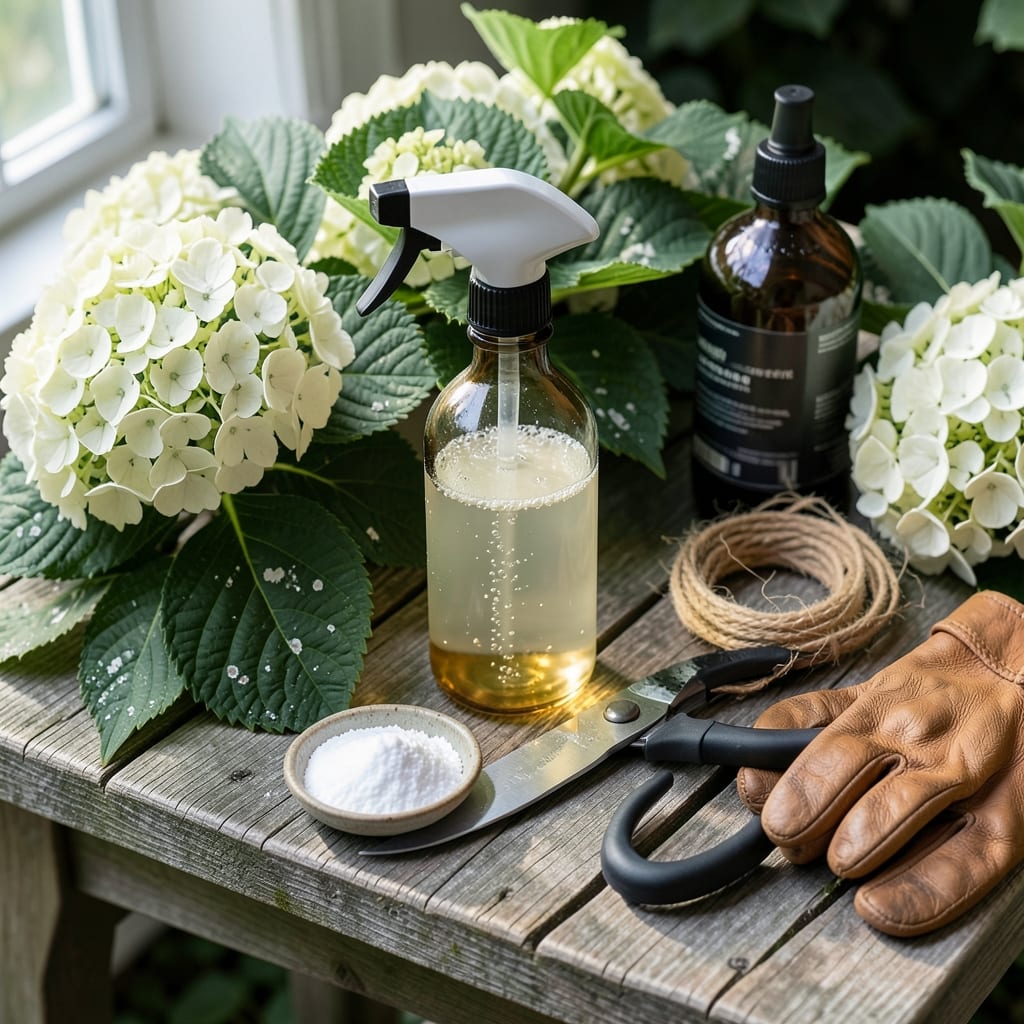
White spots on your hydrangea leaves aren’t just unsightly—they’re a warning sign. I’ve seen powdery mildew and fungal infections spread fast if ignored.
Catching it early makes treatment simple. With the right approach, you can restore healthy green foliage and prevent future outbreaks before they take over.
Tackle those white spots fast with these reliable supplies. Most are garage staples.
| Ingredient | Amount | Notes |
|---|---|---|
| Neem Oil 🌿 | 1 piece | Cold-pressed for fungicide |
| Baking Soda 🧪 | 1 lb | Food-grade for spray mix |
| Water 💧 | 1 gallon | For diluting treatments |
| Spray Bottle 💦 | 1 piece | 1-gallon capacity ideal |
| Pruning Shears ✂️ | 1 piece | Sterilize between cuts |
| Fungicide 🧪 | 1 piece | Copper-based for severe cases |
| Garden Gloves 🪴 | 1 piece | Protect hands from fungi |
| Disposable Bags 🗑️ | 5 pieces | For infected leaf removal |
[recipeingredientscaler]
Neem oil is my go-to for early fungal issues—cold-pressed works best. Home Depot or Lowe’s carry it in the organic section. For baking soda, any food-grade type from the grocery store does the trick (the good stuff, not the industrial grade). Copper fungicide is pricier but worth it for stubborn infections.
No neem oil? A mild dish soap solution (1 tbsp per gallon) can slow fungal spread. Baking soda spray (1 tsp per quart of water) works too but reapply after rain. Skip the fungicide if the infection is mild—start with pruning affected leaves and improving airflow.
Store neem oil in a cool, dark place—it degrades in heat. Keep spray bottles clean to prevent clogs. I label my treatments with mix dates so I know when to replace them.
Here’s the treatment method I use to stop fungal spread and restore healthy hydrangea foliage.
Put on the garden gloves and inspect the plant carefully. Prune away any leaves showing white spots using the pruning shears, cutting at the stem base where it meets the branch. Sterilize the shears between cuts with rubbing alcohol to prevent spreading the fungus.
Place all infected material directly into one of the 5 disposable bags. Don’t compost it—fungal spores can survive and reinfect. Seal the bag tightly and discard it with household trash. This immediate removal breaks the infection cycle before it spreads to healthy foliage.
Mix 1 tablespoon baking soda from the 1 lb Baking Soda with 1 gallon Water in the spray bottle. Add a few drops of dish soap to help the solution adhere to leaves. Shake thoroughly until fully dissolved.
Spray the entire plant, focusing on both upper and lower leaf surfaces where fungal spores often hide. Apply in the early morning so foliage dries quickly in the sun. Reapply every 7-10 days or after rain, as this prevents new spores from taking hold.
For active infections, use the neem oil. Mix 2 tablespoons with 1 gallon Water in the spray bottle and shake vigorously to emulsify. Neem oil disrupts fungal growth at the cellular level without harming beneficial insects when used properly.
Spray until leaves are thoroughly coated but not dripping. Focus on areas showing early white spotting first, then cover the entire plant. Repeat every 5-7 days until symptoms disappear and new growth appears healthy. Always spray in the evening to avoid leaf burn from sun exposure.
If white spots continue spreading after two weeks, use the fungicide. Copper-based fungicides are particularly effective against hydrangea fungal issues. Follow the product instructions precisely, typically mixing with water in the spray bottle.
Apply to dry foliage and avoid spraying during peak heat or when rain is forecast within 24 hours. This treatment often stops severe infections in 3-5 days. Wear the garden gloves when handling, as copper can irritate skin.
Start with healthy soil to avoid white spots on hydrangea. Use a balanced fertilizer and ensure proper drainage to reduce fungal risks. Consistency in watering—early morning is best—prevents moisture buildup on leaves, which can invite disease.
Avoid overhead watering to keep foliage dry. Instead, use a drip irrigation system or water at the base of the plant. This minimizes humidity around leaves, a common cause of fungal infections like powdery mildew, which appear as white spots.
For existing white spots, try a baking soda solution (1 tsp baking soda, 1 quart water, a few drops of dish soap). Spray affected leaves weekly. Neem oil is another organic fungicide that works wonders without harsh chemicals.
Remove infected leaves or stems immediately to prevent spread. Sterilize pruning tools with rubbing alcohol between cuts. Improve air circulation by thinning crowded branches, reducing conditions that favor fungal growth.
