
Beautiful Plants For Your Interior
Beautiful Plants For Your Interior
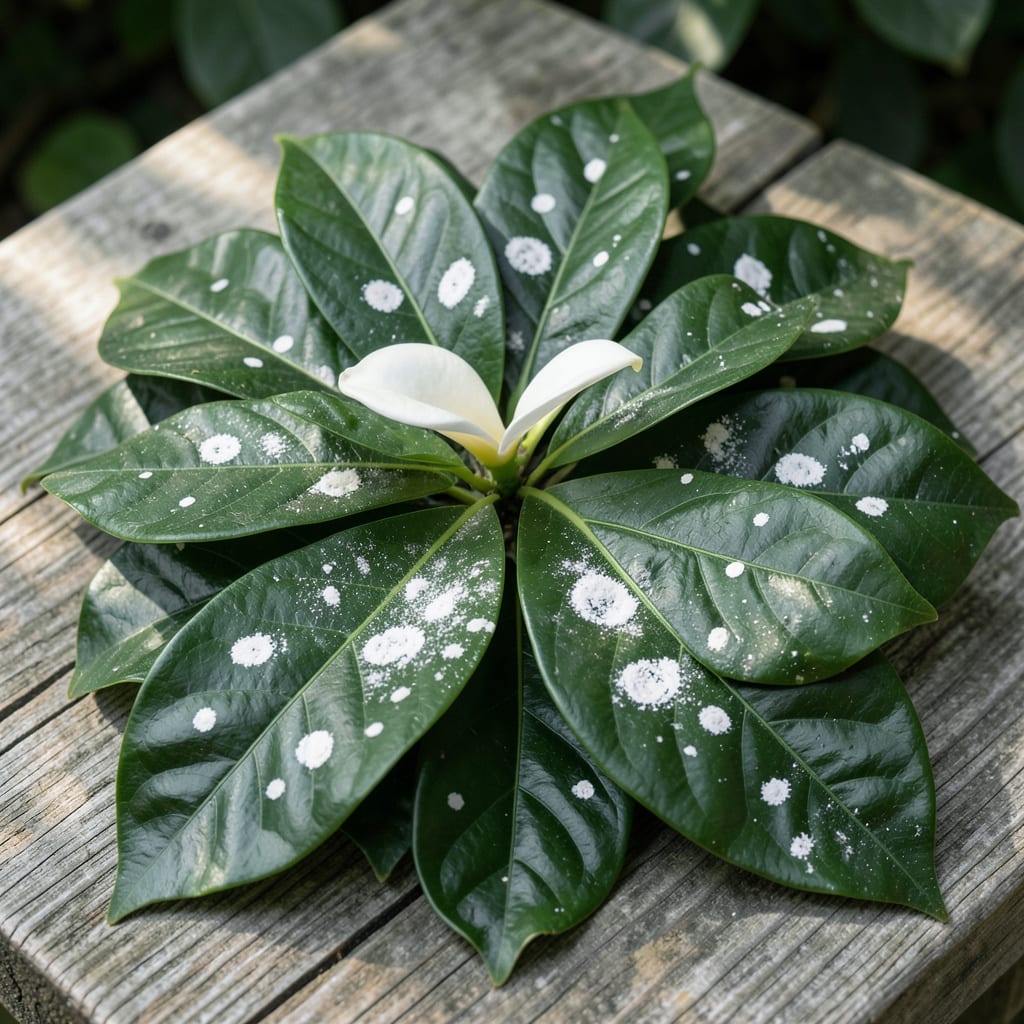
White spots on gardenia leaves always signal trouble. I’ve seen this enough times to know it’s usually a fungal issue, but pests or stress can cause it too.
The first step is identifying the pattern—powdery mildew looks different from scale insects. Once you spot the culprit, treatment becomes straightforward with the right approach.
You’ll need to adjust watering, improve air circulation, or apply a targeted treatment. Most plants recover fully within 2-3 weeks with proper care.
Prevention is simpler than cure. A little attention to humidity and spacing keeps gardenias thriving without the drama.
White spots on gardenia leaves are a red flag that your plant is under stress. Here are the most common causes, each with a clear explanation to help you diagnose the issue:
Powdery mildew and leaf spot fungi thrive in humid, poorly ventilated environments. These pathogens leave white, powdery, or circular spots on leaves. Powdery mildew (Erysiphe spp.) creates a dusty white coating, while fungal leaf spots (e.g., Cercospora) form defined, often concentric rings. Warm days (70–80°F) and cool, damp nights accelerate fungal growth.
Wet leaves are an open invitation for fungi and bacteria. When water sits on foliage—especially in low-light or still-air conditions—it creates a breeding ground for spores. Always water at the base of the plant early in the day to allow foliage to dry quickly.
Mealybugs and scale insects secrete a white, waxy residue that mimics fungal spots. These pests pierce leaf tissues to feed, weakening the plant and leaving sticky honeydew that attracts sooty mold. Check the undersides of leaves and leaf axils for cottony clusters (mealybugs) or hard, shell-like bumps (scale).
Gardenia leaves may develop white or yellowish spots due to nutrient deficiencies (e.g., iron or magnesium) or sunburn. Iron deficiency causes interveinal chlorosis (yellowing between veins), while excessive direct sunlight can bleach patches of tissue. Ensure your gardenia gets dappled sunlight and acidic, well-draining soil (pH 5.0–6.0).
Dealing with white spots on your gardenia leaves? Here’s how to tackle each cause head-on with simple, effective solutions.
If powdery mildew or leaf spot fungi are to blame, remove infected leaves first to prevent spreading. Then, apply a copper-based fungicide or neem oil spray every 7–10 days until the issue clears. Prevention tip: 💡 Improve air circulation by spacing plants and trimming dense foliage. Water at the base to keep leaves dry.
Mealybugs, scale, or spider mites leaving white residue? Wipe leaves with a cotton swab dipped in rubbing alcohol to remove pests. Follow up with insecticidal soap or horticultural oil. Prevention tip: ✨ Inspect new plants before introducing them to your garden and keep the area free of debris.
White spots from too much direct sun? Move your gardenia to a spot with bright, indirect light or provide shade during peak afternoon hours. Prevention tip: 🎯 Acclimate plants gradually to stronger light to avoid shock.
Mineral deposits from tap water? Flush the soil with distilled or rainwater to leach out excess salts. Wipe leaves gently with a damp cloth. Prevention tip: 🌡️ Use filtered or collected rainwater for watering to avoid future buildup.
White spots from sudden temperature swings? Keep gardenias in a stable environment (65–75°F during the day, 60°F at night). Avoid drafts or heat sources. Prevention tip: 🔥 Use a humidity tray or mist leaves to maintain consistent moisture levels.
Check the texture. Fungal spots are flat, while pests like mealybugs leave cottony residue. Also inspect leaf undersides for tiny insects.
Yes, a 1 tsp baking soda per quart of water spray can help with mild fungal issues. Apply weekly, but avoid in direct sun to prevent leaf burn.
Damaged leaves won’t heal, but new growth will be healthy. Remove badly spotted leaves to redirect energy to fresh foliage.
Check once a week during growing season. Early detection means easier treatment and less damage to your plant.
